The Aegean Supply War
– A ww2stories.org Exclusive –
As the war closed in on the Nazis in mid-1944, an aerial Amada of 71 Allied planes set off to ‘prang’ a German convoy desperately trying to resupply the Greek island of Crete. Ross J. Robertson with Dimitri Galon and Dr Konstantinos Giannakos investigate the story and its impact on the Aegean Supply War.
On June 1st, 1944, the Third Reich was facing insurmountable problems on all fronts. Stretched too thinly across the conquered territories, Hitler’s overly ambitious designs were rapidly collapsing into a war of logistical survival. North Africa had been lost. The defence of Italy had degraded into an internecine war of attrition. Even worse, the failed Russian campaign had proven to be an unstoppable drain on men and resources. Invasion from England was imminent, while relentless Allied bombing crippled war production and supply from deep within the Fatherland itself.
Despite these pressures, the occupying Germans remained in Greece and its islands. Indeed, such was their determination that ‘Operation Accolade’, Winston Churchill’s push to liberate the Dodecanese on the back of Italian capitulation in Sept. 1943 had failed spectacularly. However, German strength had since been whittled away by the demands of other theatres. The Luftwaffe in particular had been forced to acquiesce their domination over Greek skies. Nonetheless, the region’s geopolitical importance demanded a robust German presence to deter Turkey from entering the war while maintaining a sea route to and from the Black Sea. It also tied Allies forces in the Eastern Mediterranean down and forestalled any second invasion attempt.
Because of the tonnage involved, the only viable way of sustaining island garrisons with provisions and war materiel was by sea. Yet, the Kriegsmarine in the Aegean were largely bereft of vessels, even after many had been commandeered from the Italians following their capitulation. In fact, there were so few large transportation ships that the effects of any loss were magnified several times over. Eager to exploit this predicament, the Allies dispatched submarines and flew as many sorties as possible to hunt down local German shipping.
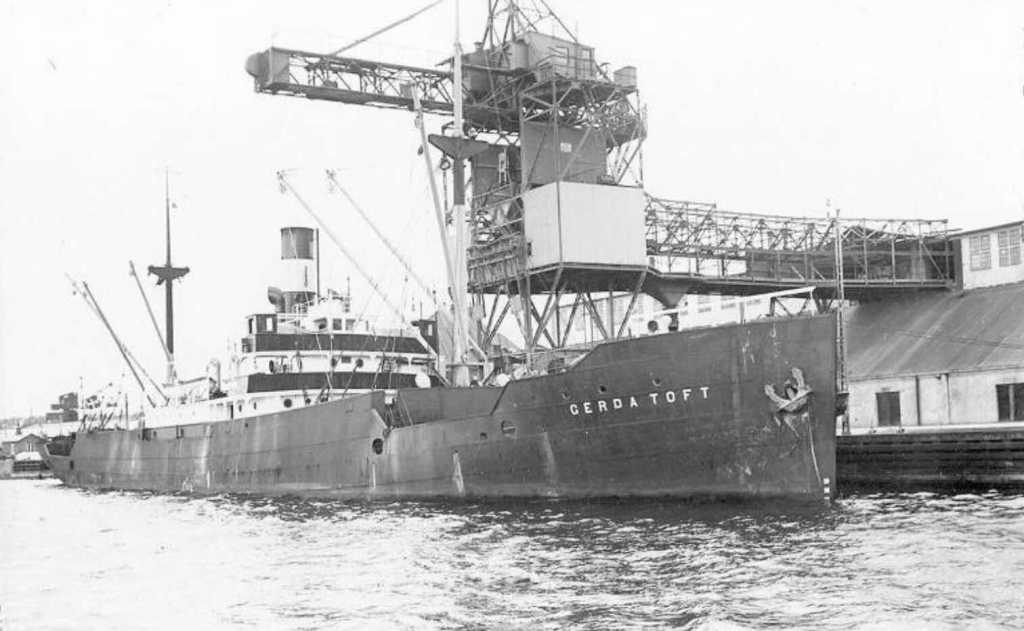
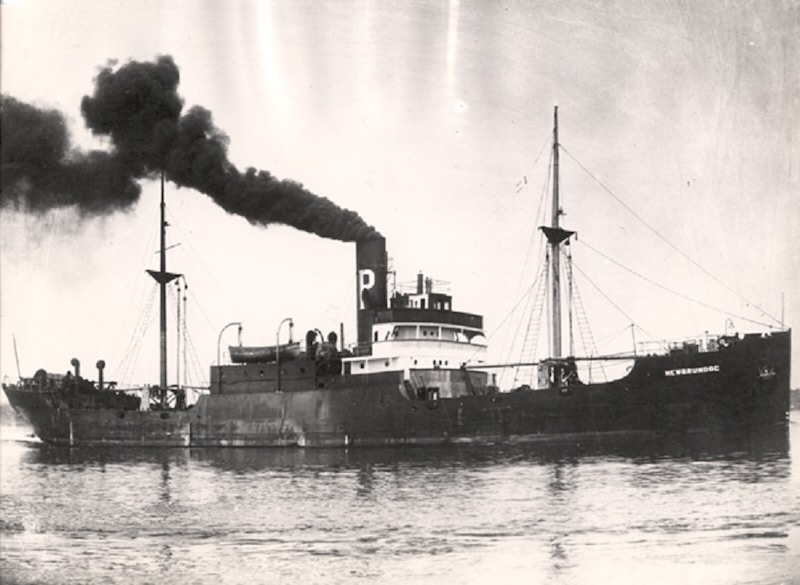
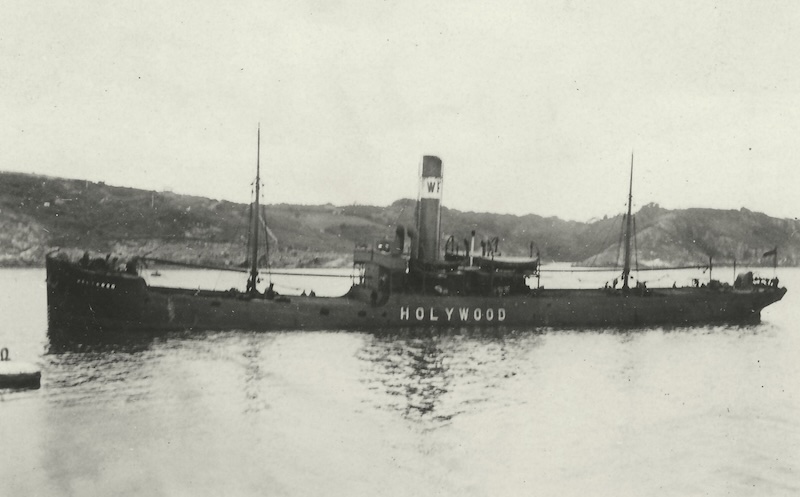
Image: Dimitri Galon ©
One of the vessels of interest during this Aegean Supply War was the 2,000 GRT cargo steamer Gertrud (also spelt Gertrude). 1 After narrowly surviving a bombing attack on April 16th, 2 a RAF 680 Squadron high altitude photo reconnaissance Spitfire XI captured it on film in Candia Harbour, Crete on May 2nd. Next day, it was seen again on two separate occasions near the island of Melos (also spelt Milos) as part of a seven ship convoy. On the 5th, it was photographed again back at Piraeus Harbour, where it remained for some time. 3 After taking on cargo, it was seen on the 20th to join fellow merchantmen, the Sabine (2,300 GRT), 4 and Tanais (1,500 GRT). 5 Both vessels had been anchored off shore in nearby Salamis Straits for more than a week. 6 There was now a lull in the cat and mouse game. All three merchantmen had to wait for a protective escort force before they could set sail under the assigned code name ‘0livenöl’ (Olive Oil).
TAG TEAM
To Allied intelligence, this was an opportunity in the making. Round-the-clock surveillance by Martin Baltimore Mk Vs of 454 Squadron RAAF and the Wellington Mk XIIIs of 38 Squadron RAF was ordered. 7 Daytime Beaufighter patrols were also stepped up and selected squadrons put on immediate standby for an impending attack. On May 31st, a pair of 603 Squadron RAF Bristol Beaufighter Mk Xs on a reconnaissance sweep reported five Arado-196’s and three Me-109’s orbiting north of Melos, thereby making the imminent departure of the convoy apparent. 8
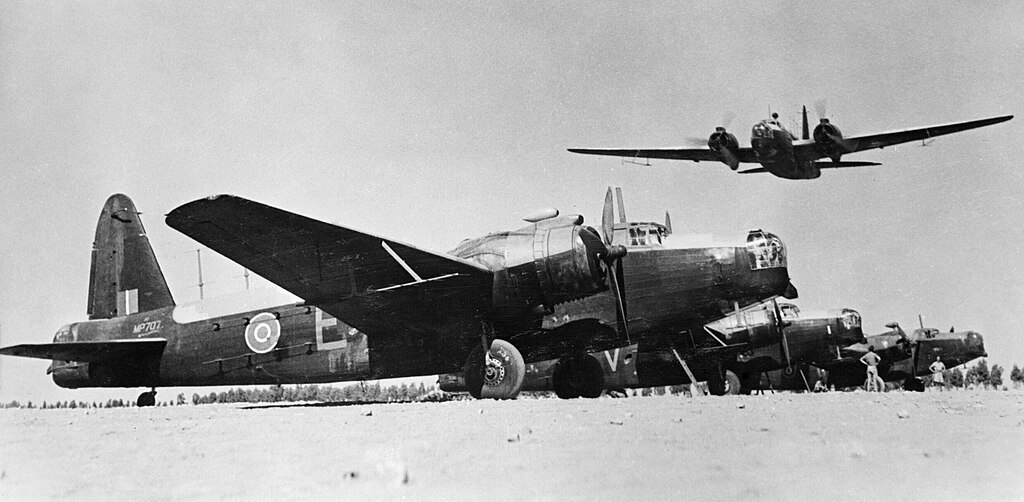
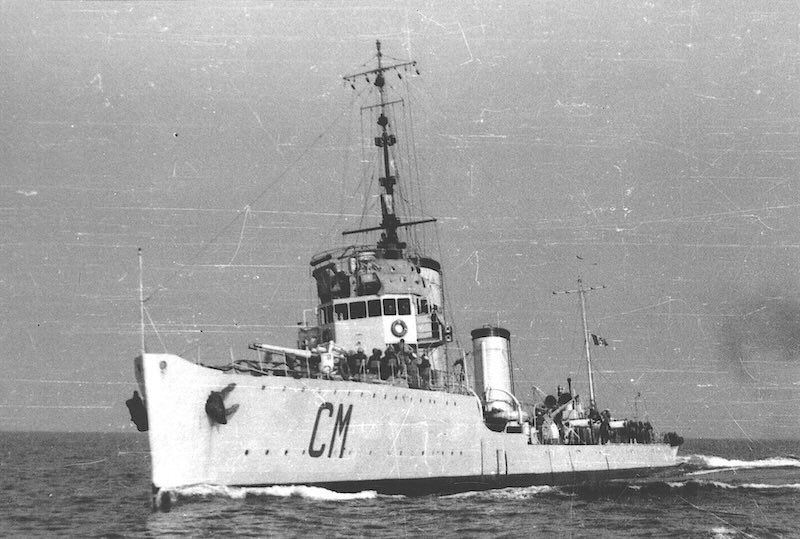
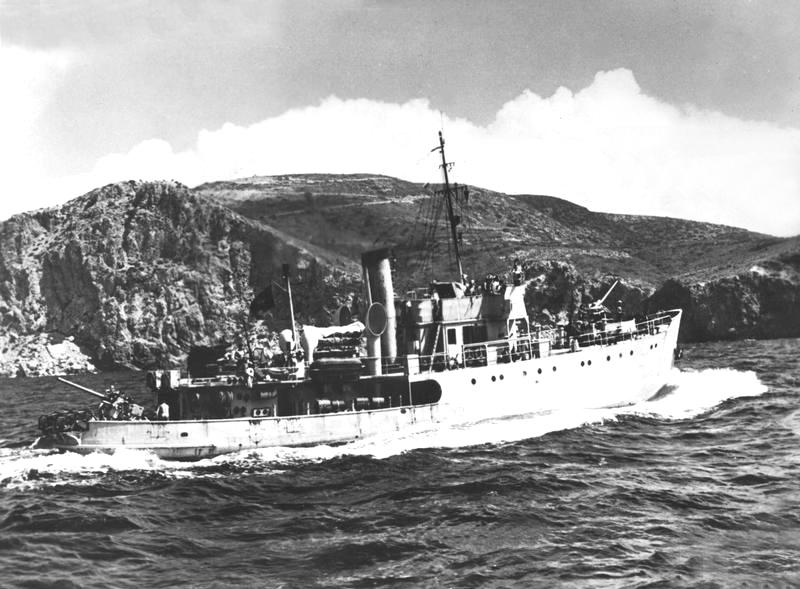
As it happened, it was a 38 Squadron Wellington flown by Fg Off L. Gossen which first spotted the convoy in transit, travelling in the darkness of the early hours of June 1st. 9 It comprised the three large merchantmen defended by four ‘foreign torpedo boats’ (TA-14, TA-16, TA-17, TA-19 – referred to by the English by their former Italian designation; ‘destroyers’), 10 three submarine hunters (UJ-boats), 11 and two minesweepers (R-boats). 12 13 14 Flares were dropped, illuminating the quarry, which responded with intense flugabwehrkanone (better known by its English abbreviation, ‘flak’). The sighting was radioed in and the convoy followed for as long as possible. At 02:10 hrs, the convoy changed course. With fuel running low, Fg Off Gossen was forced to head back to base ten minutes later, but not before dropping a full payload of bombs from 8,000 ft. They all missed. 15 However, the attack certainly dashed any German hope that they had somehow slipped away from the mainland unnoticed. The hunt was now well and truly up.
ON THE WARPATH
The sighting received a good measure of excitement back at Berka, an RAF air station outside Benghazi in Cyrenaica (now part of Libya), 16 where a basic plan of attack had already been drawn up by HQ Air Officer Commanding No. 212 Group. 17 18 Starting at first light, a succession of eight Baltimores of 454 Squadron RAAF were dispatched from Berka to shadow the convoy throughout the day. 19 Worryingly, thick early morning mist frustrated the first flight, 20 but the convoy was eventually reacquired by the second, eighteen miles due south of the island of Syros bearing 185° and travelling at 8 knots. 21

As the Baltimores stalked their prize in turn, they came up against flak from the escort vessels, the cargo steamers themselves (they were armed), and fire from the escort aircraft. 22 Most were Me-109s, but many Arado-196 floatplanes and several Ju-88’s were also involved throughout the day. One of the Baltimores was attacked a multitude of times by four persistent Me-109s, yet stayed on mission. 23 Its pilot, Fg Off ‘Jack’ Ennis, was later awarded a DFC for his dogged determination. [T1] Another only managed to radio in a single sighting report at 13.03 hrs, before never being heard of again. 24
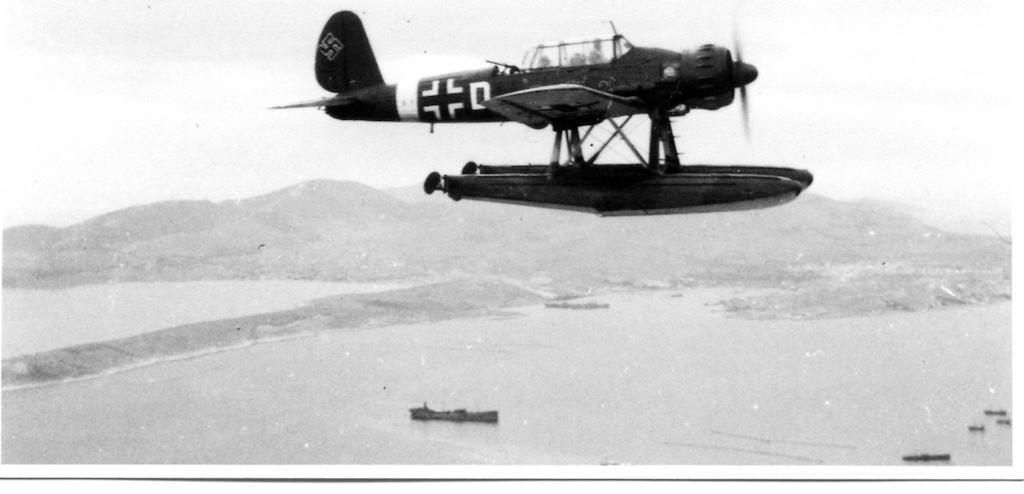
Despite there being no known claim in the surviving Luftwaffe records, this loss has always been attributed to the escort aircraft. However, the June 3rd, 1944 entry of the German Naval Staff, Operations Division War Diary [T2] notes that the merchantman Tanais “shot down one enemy aircraft between Milos and Crete on June 1st” while part of the convoy. 25 The Balimore’s one and only sighting report placed the convoy at 36°30′ N, 24°50′ E – which is south east of Melos. 26 The fate of pilot WO George Liels or any of his three member crew is not mentioned. [T1]

Image: AWM ©
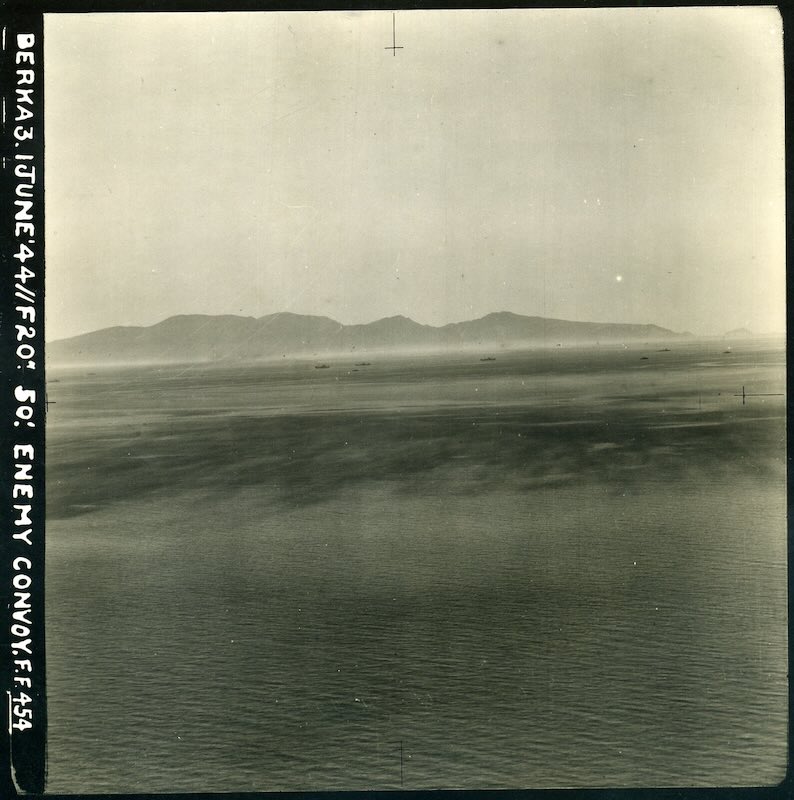
Image: Courtesy of Chris Goss ©
THE CHANGING FACE OF THE CONVOY: Throughout the relocation and shadowing process, reports as to the exact composition of the convoy varied. For instance, the original sighting made at 00:30 hrs by Fg Off Gossen’s 38 Squadron Wellington specifies the convoy to be three merchant vessels, eight small escorts and one destroyer (i.e. torpedo boat). [A1] The second sighting made by Lt Dryden’s 454 Squadron Baltimore at 09:00 hrs reckoned it to be “3 small merchant vessels, 2 merchant vessels, medium, 1 destroyer and 4 auxiliary vessels.” [A2] This second sighting is recorded by the actual attack planners at HQ 212 Group as “2 VM , 3 VS [small merchant vessels], 1 DD [destroyer] and 4 auxiliary escorts.” The same source reports Fg Off Ennis’ Baltimore reporting the convoy at 09:50 hrs as being made up of “5 MVs flying balloons, a destroyer and five smaller escorts” The planners also note that following Baltimore piloted by WO Liels added another destroyer to this list in its only transmitted sighting report before (presumably) being shot down. [A3] Such variance can be accounted for by the difficult circumstances aircrews had to operate under. Obviously, any aerial engagement would impede the accuracy of a sighting, and the Baltimores of 454 Squadron were constantly harassed. Without electronic aids, sightings were also restricted by the limitations of the naked eye and crew members’ field of view. Binoculars were extensively employed, but effectiveness could be compromised by long periods of use and the vibrations of a piston-engined aircraft. Moreover, sightings were invariably made at oblique angles, which increased the effects of haze and distance. Only high altitude flights could offer a clearer ‘bird’s eye view’, and even these were subject to atmospheric conditions, clouds and, in the case of aerial photography, optical resolution. Sightings were also affected by subjective interpretation, thereby making specific details intrinsically error prone.
Each sighting report made the convoy’s destination increasingly apparent. An urgent directive was soon sent out by Air Officer Commanding-in-Chief of the theatre, Air Marshal Keith Park: 27 “As the Navy has no ships available, it remains to the Air Force to put this convoy down. The German military garrison in Crete is badly in need of supplies and the destruction of one or more ships of this convoy will be an important victory. There is bound to be flak and there may be fighter opposition, and the A.O.C-in-C. wishes you good luck and good hunting in your important mission.” [T1]
At 17:25 hrs, the eighth and last Balimore on shadowing duty placed the convoy at 35°58′ N, 25°03′ E – less than fifty miles from Candia Harbour, Crete. Now was the time to strike – or in RAF parlance, ‘prang’ the convoy.
GEARING UP
The components of a strike force had already been hurriedly assembled at two locations near Tobruk, Cyrenaica; a sizable airfield known as Bu Amud, 28 and the large RAF station at Gambut. 29
Six Spitfire IXs and four Mustang IIIs of 213 Squadron RAF based in Idku, Egypt 30 were scrambled for immediate departure to Bu Amud. The June 1st entry in the Squadron’s Operations Record Book captures the frantic urgency; “This morning at 10:00 hrs the Squadron was informed that 10 aircraft would be required for a special mission to operate from Bu Amud. Within barely half an hour of receiving that message, pilots were airborne, having had long range tanks fitted in record time to the Spitfires.” 31 These fighters would join eight Spitfire IXs of 94 Squadron RAF already based at Bu Amud, thereby making up an eighteen fighter plane escort for the bombers.


Fifteen Baltimore Mk Vs of 15 Squadron SAAF also stationed at Bu Amud were joined by a further three aircraft of 454 Squadron RAAF flying in from Berka. Twelve Martin Marauder B-26s of 24 Squadron SAAF out of Gambut were also tasked with the mission, making a total of thirty bombers.
Six Beaufighters of 16 Squadron SAAF based at Berka were joined by ten more Beaufighters of 252 Squadron RAF, eight of 603 Squadron RAF, and two of 227 Squadron RAF (another two had been sent from Berka III, but became unserviceable due to mechanical issues). 32 This made a total of 26 Beaufighter Mk Xs. Of these, 20 were equipped with either 25 or 60 lb high explosive solid-shot RPs (Rocket Projectiles), the latter in particular offering enough punch to be well suited for anti-shipping strikes in lieu of the torpedo. 33 As proven in trials, even the 25 lb rockets were quite capable of piercing the hull of a ship and passing right through a cargo of coal to emerge out the other side leaving a gaping hole 3-4 ft wide. 34
CHOCKS AWAY!
The courage and competence of the men involved was about to be put to the test.
The most immediate challenge, of course, was actually getting there – no mean feat, given the technology of the day. Indeed, the strike force was depleted en route. Two 16 Squadron SAAF Beaufigters retired with mechanical issues. Additionally, one of the 15 Squadron SAAF Baltimores had engine trouble, also forcing it to head back to North Africa early. 35 36 37 This eventually left seventy-one aircraft.
Moreover, due to the sheer distances involved, fuel expenditure was considerable. Not only did this mean that the convoy had to be relocated quickly, but it necessitated a swift and accurate attack. There was little margin for error, especially for the fully-laden Baltimore’s which would be flying close to their operational limits.
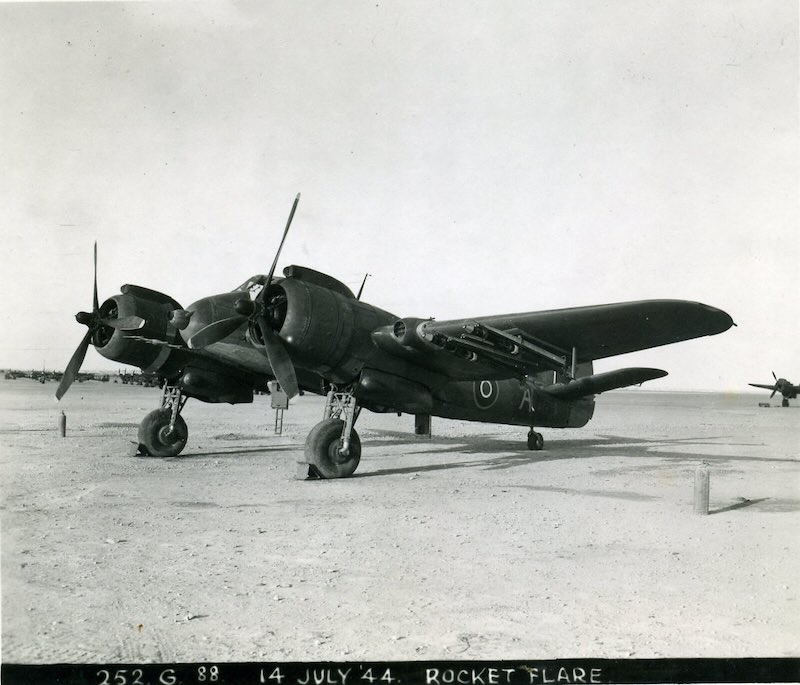
The Beaufighters took off first at around 16:30 hrs, assembled and set course at 16:45 hrs. 38 All bombers were aloft by 17:15 hrs. They assumed box formations, with the Marauders as pathfinders, and set course at 17:34 hrs. 39 Flying at 10,000 ft with their fighter escort (Mustangs for top cover, the Spitfires for close escort), 40 they took a direct route over Crete, encountering inaccurate light flak at Ierapetra on the southern coast, and heavy flak 10 miles north-east of Kastelli Pediada. 41 42 43
Meanwhile, the faster Beaufighters had given a wide berth to Crete so as to avoid land-based anti-aircraft defences. First, they headed towards Kythera, an island lying south of the Peloponnese, sighting it at 18:24 hrs. Then, they swung around and raced south-east, at extremely low altitude (50 ft) – ‘nought feet’ in RAF vernacular – 44 45 to avoid prying eyes and evade detection by any RDF installations (i.e. Radar) that had not already been knocked out in previous missions. 46 This gave them the best possible chance of maintaining the element of surprise. 47
Vindicating the efforts made by all those involved thus far – not least the navigators – the convoy was sighted at 18:57 on a southerly course just 28 miles off Candia, which was almost exactly where it was expected to be. 48 According to the Operations Report filed by 16 Squadron SAAF, the merchantmen were “heavily laden and carrying deck cargo.” 49 They were travelling abreast, with a line of four escort ships flanking astern on both the port and starboard sides. One torpedo boat was slightly behind on the starboard side, and another was travelling perpendicular across the path of the convoy. Each vessel was 300 or 400 yrds apart. 50 The convoy flew eight or nine barrage balloons and was circled by Me-109’s, Ju-88s and Arado 196s.
OPEN FIRE!
Fortunately for posterity, the Kriegsmarine 21st Anti-Submarine Flotilla War Diary offers fascinating accounts written from the German perspective by each UJ-boat commander. Because the bombers had been sighted over Crete, a high altitude attack had been fully expected and all possible preparations made. 51 The encroaching Allied aircraft are described as being approximately thirty five in number formed in three distinct groups. One of the 3.7 cm anti-aircraft guns on UJ-2105 was given “permission to fire” by commander Oblt Loida to serve as a warning. However, the aircraft continued their approach, so the other vessels in the convoy began firing at will. 52 No bombs were dropped. Rather, the Allies flew through the flak, looped to the west and approached again from the north-west at an altitude calculated by the Germans to be 3,500 m (11,500 ft). The 3.7 cm flak resumed firing from all vessels. On UJ-2101, commander Oblt Brinckmann’s attention was firmly fixed on the lead Marauder in the first group. When it released two green flares, he knew from experience that the game was finally up. He immediately ordered “Three times Utmost Speed!” and “Rudder hard to starboard!” in a desperate bid to escape what was literally about to befall his crew. 53
RELEASE, RELEASE, RELEASE!
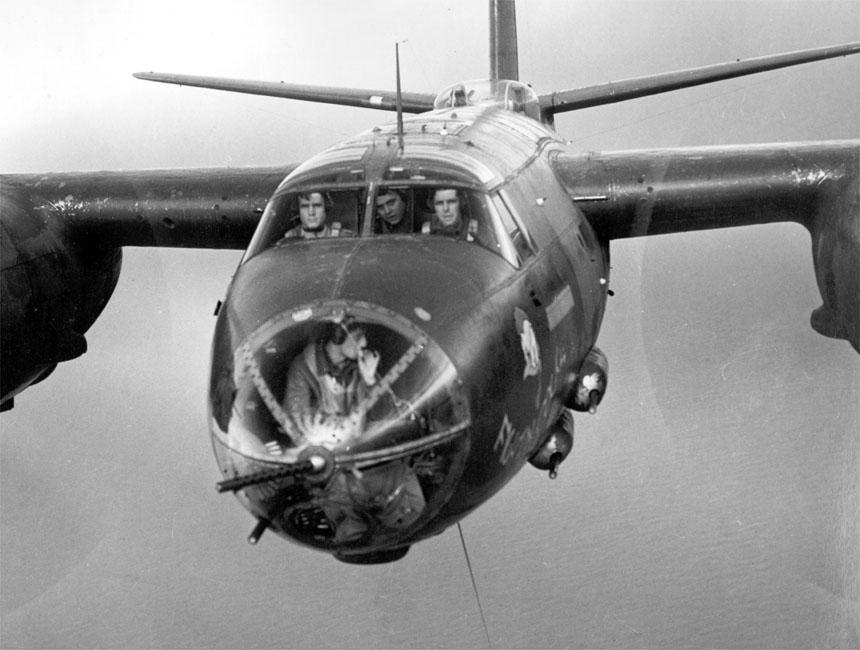
Image: USAAF ©
Led by Lt Col Margo DFC, the twelve Marauders in two box formations were on their bomb run, bearing 150° from 11,000 ft. No mention of flares is made but the 24 Squadron Operations Report specifies that it was only when the bomb bay doors opened that the convoy took “violent evasive action.” 54
While the convoy broke formation and the air started refilling with anti-aircraft fire, including rocket shells, the skill – not to mention nerve – of the bombardiers was tested to the limit. Their mark was the largest merchantman. On the box leader’s command, release was at 19:03 hrs. Bomb bursts from the 1st box undershot by 100 yrds, making an explosive line towards the target with the majority of bombs going right across the Sabine’s bow. Nevertheless, no direct hits were scored. Ironically, the evasive manoeuvres meant that one of the escort vessels found itself run in amid the bursts, but it narrowly escaped. Seconds later, all bombs from the 2nd box missed, falling behind the Sabine and detonating on the sea surface. 55
Oblt Brinckmann on UJ-2101 recounts; “I have never experienced such a mass bombing while on escort.” 56 Then he describes the approach of the second group.“I turned back out of the carpet of bombs, again hard to starboard and all ahead at three times Utmost Speed. Again the bombs covered the area, but no hits were observed.” 57 The convoy continued to scatter, with each vessel taking its own direction in the hope of avoiding destruction. However, they maintained a barrage of intense flak fire directed at the bombers.
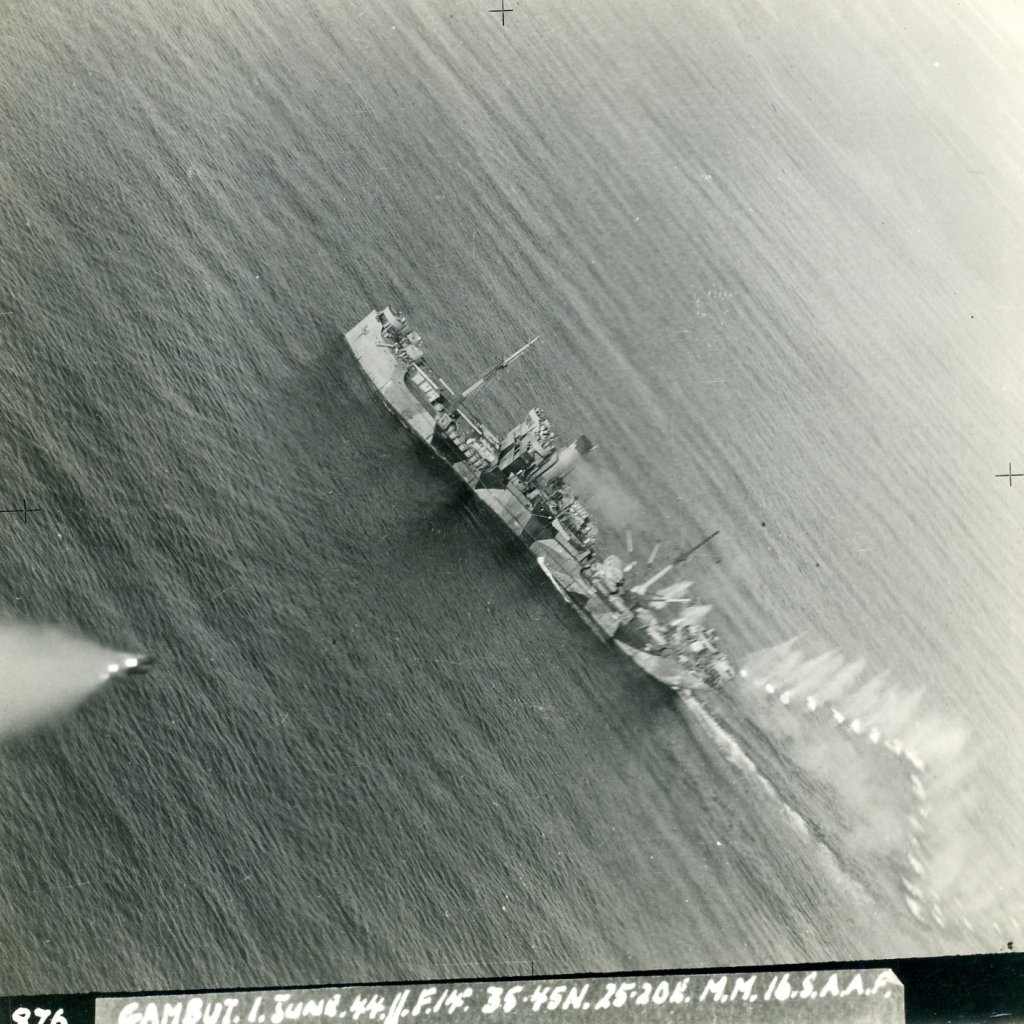
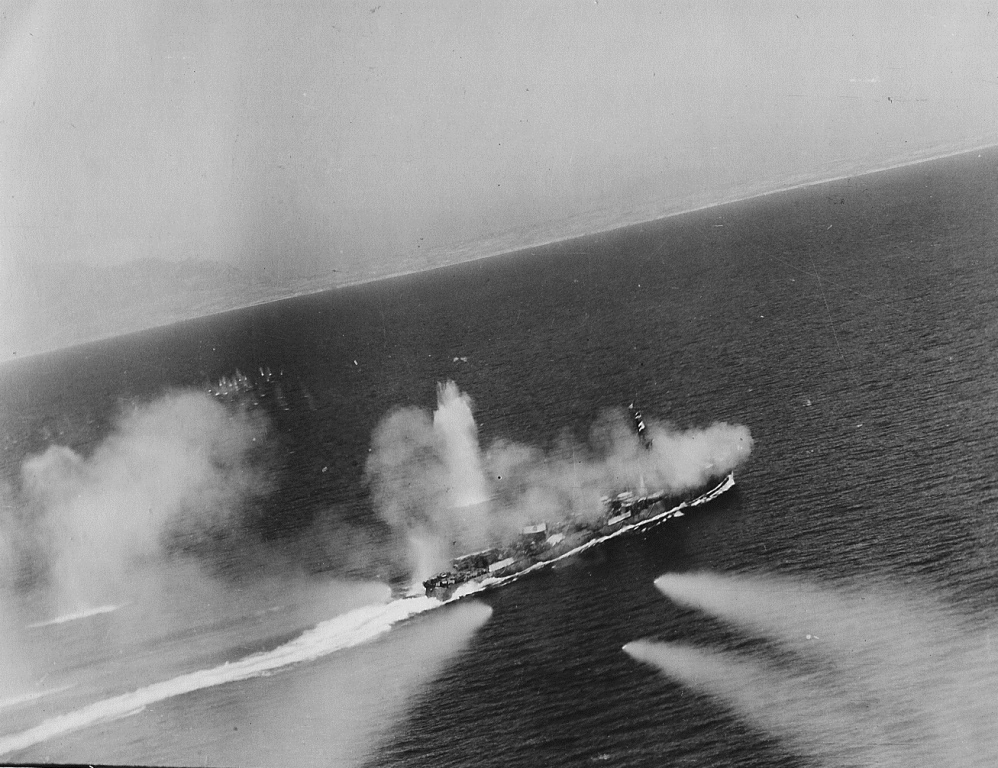
With Maj Cormack DFC in the lead, it was time for the Baltimores to strike. 58 Flying slightly lower on more or less the same bearing, the eighteen aircraft arranged in three boxes released their dangerous payloads onto the confusion below. Once more, Oblt Brinckmann ordered UJ-2101 hard to starboard at maximum speed the very instant he saw the weapons drop. 59 Bombs from the 1st box straddled the Sabine (i.e. fell on either or both sides of the target) along the length of the ship. It appeared that a direct hit – or very close to it – was scored on the stern. In fact, one bomb did find its mark and the devastation wrought was considerable. The 2nd box released bombs on the Gertrud, which unintentionally shot down its own barrage balloon as the Baltimores flew over. The rain of bombs undershot by 50 yrds to port, even as the vessel was turning hard to port, right into harms way. These near misses were enough to cause flame and smoke to erupt from amidships, presumably igniting some of the cargo on deck. Meanwhile, bomb blasts had enveloped the Sabine in spray, obscuring it from view and compromising the accuracy of bombs from the 3rd box. They straddled the vessel and no further hits were achieved. Both the Sabine and Gertrud were seen losing speed, and “seemed stationary after the attack.” 60 61
Although UJ-2101 had not been hit, a new danger presented itself to Oblt Brinckmann and his men; “Unfortunately, I had shot down my own balloon with my flak, which tumbled down burning. Engineer Obermaat Pechman had the presence of mind to get a pair of cutters and sever the tether cable, leaving the propeller clear.” 62
Of the bombardment, Oblt Brinckmann states there was; “No disruption during high attack, no sorties.” 63 In fact, the Luftwaffe did strike and the Spitfires of 94 and 213 Squadrons played a key role in keeping them at bay. As a pair of Me-109’s went for the Baltimore formation from the rear, Spitfires attacked at extreme range (700-900 yrds) and drove them off. No claims are recorded. 64
However, any hope of a simple ‘hit and run’ was dashed when a Me-109 somehow got through the fighter escort screen and closed in on one of the boxes from behind. It opened fire on a Baltimore at a range of 240 yrds. The port wing was hit and the port tyre burst. Turret gunner Lt Harper responded with his twin .50 cal machine guns, blasting the nose of the assailant with tracer seen to bounce off the propeller. Turret gunner Lt Burnard in a neighbouring Baltimore also fired, and hits were seen at the Me-109s wing root. It broke away at 100 yrds or so, climbed and side-slipped under the Baltimore formation. Typical of the understatements from the men of the time who risked life and limb every time they took to the skies, leader of the second box of Baltimores, Sqn Ldr George Gray noted; “Interestingly, the burning 109 passed right across my view through the bombsight as we were on the run in and caused a bit of a distraction.” [T3] Now fully engulfed, the crippled plane went down in flames, even as it was still pursued by Spitfires. 65 66
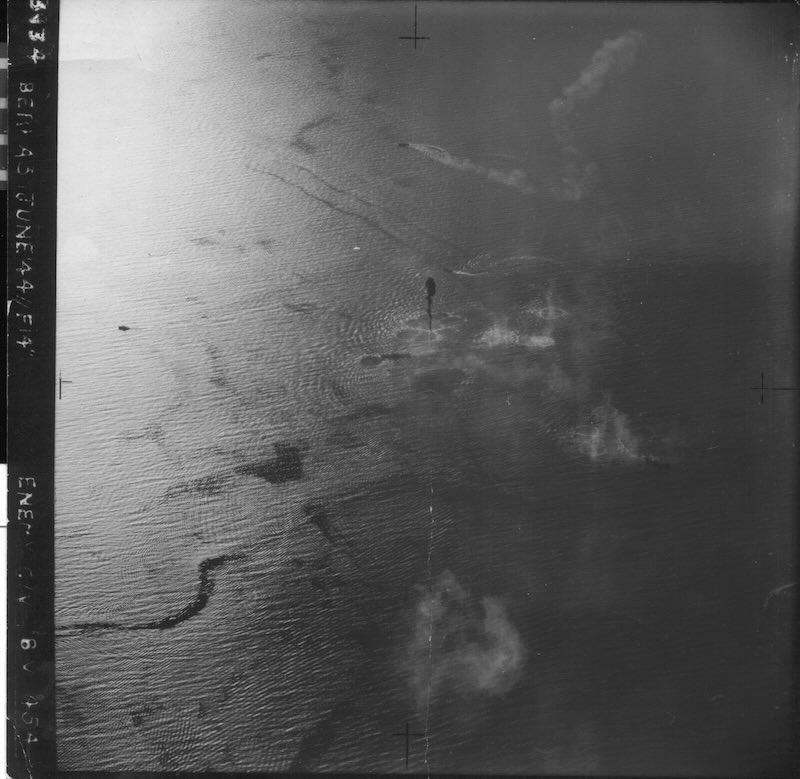
In all, a total of 105 x 500 lb and 42 x 250 lb high explosive bombs had been dropped. 67 While only one direct hit had been scored, the attack had left two columns of thick smoke rising to 3,000 ft. 68 It was time for the bombers to head back to base and let the Beaufighters to do their work.
TO FOLLOW…
The opening wave had left the convoy battered but afloat, dodging flak and explosions as thick smoke plumed over the Aegean. As bombers peeled off, leaving one direct hit and several near misses, the convoy struggled to regroup, now visibly damaged and slowing. Yet, the Allies had only begun their assault. In Part II, the faster, lower-flying Beaufighters are poised unleash a relentless and close-range attack, forcing the convoy into a life-or-death battle amid deadly strafing runs. The skies over the Aegean will soon erupt again, and the German ships must fight to survive another round.
We value your opinion!
Your feedback is important to us. If you enjoyed this article and would like to see similar content, show your appreciation by clicking the ‘Claps’ icon below. Also, ensure you stay up-to-date with our latest articles by subscribing to our Newsletter. You’ll receive new posts directly to your email inbox. Thank you for your support!
‘History has to be shared to be appreciated’
It’s FREE! Subscribe to our Mailing List. We’ll keep you in the loop.
Cover photo: Sabine under attack by 16 Sqn SAAF on 01.06.1944. Courtesy Chris Goss ©
Pt 1 FOOTNOTES
Note: A list of abbreviations and their explanations can be found at the end of this article.
- GERTRUD (ex St. ALAIN, GERDA TOFT) (1,960 GRT, 1,167 NRT). Dimensions (length, beam, draft): 90.05m x 13.30m x 5.70 m. Power: 1x triple expansion engine (2 cylinders and 1 boiler), x2 propeller. History: Built 1930 as GERDA TOFT by Antwerp Engineering Co., Antwerp, Belgium, for the A/S Jutlandia Comp. (Manager Jens Toft), Christiania (Copenhagen), Denmark. 17.04.1940 requisitioned from the French government in Bordaux and renamed ST. ALAIN (owner Republique Francaise/Societé Navale de l´Ouest, Le Havre). 28.11.1942 due to the Never Agreement property of the German Reich (owner Deutsches Reich/Manager Mittelmeer-Reederei GmbH, Hamburg), renamed GERTRUD (spelt by the British as GERTRUDE). Fate: Sunk in Candia Harbour following Allied air raid 02.01.44.
↩︎ - A description of events (attached as Appendix 1 to the 16 Squadron SAAF Operations Report of 01.06.44) entitled ‘An Account of the Successful Combined Attack on the Enemy Convoy North of Candia Harbour on June 1st 1944’ and written by H.Q. 212 Group states that; “The 2,000 ton German merchant vessel “GERTRUDE” returned to PIRAEUS the 5th May, after an uneasy stay in CANDIA HARBOUR, where she had been narrowly missed by a stick of bombs dropped by Marauders of 24 (SAAF) Squadron during an attack on the 16th April.” (AIR-54-185_10)
↩︎ - The 680 Squadron RAF (1st Detachment) (Spitfire XIs & Mosquito XVIs, based in Tocra, Cyrenaica (now Libya)) Operations Record Book ‘Summary of Events’ for May 1944 states that; “The main operational interest in May centred on the activities of the ‘Gertrude’ – formerly known as ‘Gerda Toft’ during the early days of the month. When the month opened, this merchant vessel was in harbour, evidently preparing to sail. On the afternoon of the 2nd, it was sighted and photographed at Candia by F/Lt. F.L. Lomas, RAAF. The following morning, W/O T.O. Muller RAAF sighted and photographed a convoy of seven ships twenty miles south of Melos, at 11:15 hrs. The pilot, who was flying a Spitfire, immediately reported the sighting over the R/T and the message was successfully picked up by 16 Sector. The pilot had no sooner finished the transmission than he was jumped by a Me109, which came above him out of the sun. He eluded it by half-rolling and diving steeply, temporarily blacking out. When he recovered, no enemy aircraft was visible. He turned west and two or three minutes later, observed two single-engined aircraft behind him. He opened up and was able to outdistance them in about five minutes. The interpretation of the photographs later showed that the ‘Gertrude’ was in the convoy. The convoy was again sighted in the afternoon of the same day by F/Lt. F.L. Lomas RAAF, who reported the position as 10 miles west-north-west of Melos. On the afternoon of the 5th, F/O R.W. Lowe photographed Piraeus and the interpretation showed that the ‘Gertrude’ had reached the harbour safely. She was to remain there for the remainder of the month before setting out again on what was destined to be her last voyage.” (AIR-27-2198-15)
↩︎ - SABINE (ex SALVATORE, ASHINGTON, NEWBRUNDOC, DONALD E. MCKAY, CANADIAN ENGINEER) (2,281 GRT, 1,305 NRT). Dimensions (length, beam): 79.48m x 13.28m. Power: 1x triple expansion engine (1,210 psi). 1x propeller. Speed: 10 Knots. History: Built 1921 by Collingwood Shipbuilding Co. in Toronto Canada as CANADIAN ENGINEER for the Canadian Engineer Ltd., Toronto (Mng. Canadian Government Merchant Marine). 1925 property of N.M. Paterson & Co. Ltd., Fort William, Ontario renamed DONALD E. MCKAY. 1926 renamed NEWBRUNDOC, in the same year sold to Northern S.S. Co. Ltd. and renamed ASHINGTON. 1931 property of The Erling Steamship Co., Helsinki and renamed ERLING. 1933 sold to Matteo Scuderi, Catania (Italy) and renamed SALVATORE. On 8.9.1943 was requisitioned by the German Army in Piraeus and handed over to the Mittelmeer-Reederei GmbH, Hamburg. Renamed the SABINE. Fate: Sunk on 1.6.1944 by British aircraft north of Crete.
↩︎ - TANAIS (ex HOLYWOOD) (1,545 GRT, 965 NRT). Dimensions (length, beam): 74,49m x 11,58 m (beam). Power: x1 triple expansion engine, x1 propeller. Speed: 9 Knots. History: Built 1907 by J. Blumer & Co. in Sunderland (UK) as HOLYWOOD for W. France Fenwick & Co. Ltd., London. 1935 sold to Synodinos Bros, Piraeus (Greece) and renamed TANAIS. On 26.4.1941 sank in Suda (Crete) by the German Luftwaffe. Repaired by the German Army. On 5.8.1943 sank by sabotage in the port of Piraeus. Repaired by the German Army. Fate: torpedoed and sank by the British submarine HMS VIVID north of Crete on 9.6.1944.
↩︎ - A description of events (attached as Appendix 1 to the 16 Squadron SAAF Operations Report of 01.06.44) written by H.Q. 212 Group states that; “In the four days after the “GERTRUDE’S” return, unloading was completed, and she was seen by photographic reconnaissance to have begun loading again. Daily high level reconnaissance [from 680 Squadron RAF Spitfires] of PIRAEUS keep her movements in check, and on the 20th of May, she was seen to have entered SALAMIS STRAITS and thus joined the 2,300 “SABINE” and the 1,500 ton “TANAIS” which had been lying in the straits for more than a week.” (AIR-54-185_10)
↩︎ - A description of events (attached as Appendix 1 to the 16 Squadron SAAF Operations Report of 01.06.44) written by H.Q. 212 Group states that; “It was appreciated at this Headquarters [A.O.C. 212 Group] that the enemy would probably leave PIRAEUS in the late afternoon and attempt the final stage of his hazardous voyage in daylight. From 23rd of May onwards, this searching was intensified, four Baltimores being used daily, increased on the 27th, when it seemed the sailing of the three vessels must come at any moment, to six aircraft. Weather on one or two days prevented high level reconnaissance [from 680 Squadron RAF Spitfires] but the Baltimores kept the shipping lanes under a watchful eye.” (AIR-54-185_10)
↩︎ - The 603 Squadron RAF (Beaufighter Mk Xs, based in Gambut, Cyrenaica) Operations Record Book ‘Summary of Events’ for May 1944 states that; “31/May. 44. Two sections of two aircraft each again went out on the evening recce of the PIRAEUS – MELOS – CRETE shipping route. The first pair was obliged to return before completing their reconnaissance as the engine of one machine was cutting frequently. The second pair completed the reconnaissance and, while sighting no shipping of importance, did sight five Arado 196’s and three ME.109’s, which indicated that the enemy convoy was on the move. Wellingtons of No. 38 Squadron later in the night sighted the convoy at sea and preparations were accordingly made for maximum strike effort on the following day.” (AIR-27-2080-9)
↩︎ - The 38 Squadron RAF (Wellington XIII’s, based in Berka III, Cyrenaica) Operations Record Book for June 1944 states that; “[Aircraft] ‘C’ [Wellington JA 318, piloted by Fg Off Lou Gossen] sighted an enemy convoy [at 00:30 hrs] in position 37°3x’ N – 24°04′ E. 3 MVs – 8 Evs – xo.120 sp. 1 DR. Sent a sighted report, illuminated convoy and then attacked with bombs. Concentrated light and heavy A/A. It is probable that if this aircraft had not sighted this most important convoy, it would have reached CANDIA safely instead of being decimated, as it subsequently was.” (AIR-27-401-12)
↩︎ - The four ‘destroyers’ (TA-14, TA-16, TA-17, TA-19) were actually part of the 9th Torpedo-Boat Flotilla (9th Torpedobootsflottille) (Fkpt. Dominik, R.K.), which was operated in the Aegean from September 1943 to October 1944. Each of the six vessels in the Flotilla (TA14, TA15, TA16, TA17, TA18, TA19) [FN3] was assigned a TA prefix meaning Torpedoboot Ausland (Foreign Torpedo Boat), as they were commandeered from the Italians after their capitulation in September 1943. All vessels were originally classed as Regia Marina (Royal Italian Navy) destroyers, but reclassified as torpedo boats in the late 1930s due to light armaments and small sizes in relation to newer destroyers. Their Torpedo Boat designation should not be confused with the smaller, faster and purpose-built Motor Torpedo-Boats (Schnellbootes or E-boats). Moreover, in the British war records, the older captured vessels continued to be referred to as ‘Destroyers’.
↩︎ - UJ-boats (Unterseebootsjäger or U-Jägern) were submarine hunters. The three vessels involved were UJ-2101, UJ-2105, and UJ-2110. They were part of the 21st Flotilla (Kkpt Dr. Brandt), which was operational in the Mediterranean from the end of 1942 until mid 1944.
↩︎ - R-boats (Räumboote) were Motor Minesweepers. Apart from their main operational task of clearing mines, they were often deployed for other duties like convoy escorts or rescue missions. The two in the convoy were R-211 and R-34.
↩︎ - Byron Tesapsides, author of ‘Die deutsche Luftwaffe in Griechenland’, describes the convoy; “01.06.44 Air combat 25 nm north of Heraklion with the convoy of 4 T-boats (TA-14, TA-16, TA-17, TA-19), 3 submarines chasers (UJ-2101, UJ-2105, UJ-2110) and 2 R-boats (R-34 and R-211) with the steamers “GERTRUD”, “TANAIS” and “SABINE”. [FN4]
↩︎ - Chris Goss, author of ‘Combat Over the Mediterranean’, describes the convoy; “During the evening of 31 May 1944, a substantial convoy set sail from Piraeus on mainland Greece bound for Candia (Heraklion Harbour) in Crete. It consisted of the merchant ships Tanais, Gertrud and Sabine escorted by four of what the Germans called Torpedoboot Ausland or T-Boots, (TA-14, TA-16, TA-17 and TA-19), three submarine hunters or UJ-Boot (UJ-2101, UJ-2105 and UJ-2110) and two smaller fast torpedo boats (R-34 and R-211).” [FN5]
↩︎ - A description of events (attached as Appendix 1 to the 16 Squadron SAAF Operations Report of 01.06.44) written by H.Q. 212 Group states that; “This tenacious searching [i.e. by Squadron 454 RAAF Baltimores and Squadron 38 RAF Wellingtons] found its reward when at 00:30 hrs on the 1st of June, F/O Gossen in Wellington ‘C’ of 38 Sqdn sighted a convoy of 3 MV’s, 4 large escort vessels and 4 smaller escorts, in the Southern end of the MANDIRI Channel out on a South Easterly course at 10 knots. Flares were dropped causing the vessels to open up with concentrated flak, and the convoy was shadowed. It altered course at 02:10 hrs, and then minutes later, the Wellington bombed from 8,000 ft, without results being observed.” (AIR-54-185_10)
↩︎ - RAF Berka [also spelt Berca] (32°05′ N, 20°04′ E) was located in what is now the Al Birkah suburb of Benghazi, Cyrenaica and comprised a cluster of three airfields (Berka I to III).
↩︎ - Air Commodore N. S. Allinson led A.O.C. No. 212 Group in Cyrenaica. He had assumed this command on 01.03.1944. (Brig. Molony, C.J.C., ‘The History of World War Two, United Kingdom Military Series Vol. 5: The Mediterranean and Middle East,’ H.M. Stationery Office, 1973.)
↩︎ - A description of events (attached as Appendix 1 to the 16 Squadron SAAF Operations Report of 01.06.44) written by H.Q. 212 Group states that; “In the meantime, all the available aircraft were assembled and the broad plan of attack was planned by the A.C.C. No. 12 Group.” (AIR-54-185_10)
↩︎ - The 454 Squadron RAAF (Baltimore Mk Vs, based in Berka, Cyrenaica) Operations Record Book for June 1944 (01.06.44) states that; “Eight Baltimores reconnoitred the Central Aegean for the enemy convoy sighted in early hrs of the morning by a Wellington of 38 Squadron. In all, 8 Baltimores covered the convoy’s movements throughout the day until the convoy eventually reached Candia (Crete) and was subsequently attacked by numerous aircraft, including 3 Baltimores of this Squadron (see following sorties).” (AIR-27-1895-12)
↩︎ - Of Baltimore ‘B’ FW-477, the 454 Squadron RAAF Operations Record Book for June 1944 (01.06.44) states that; “F/L Humphreys and crew [Fg Off W.D. Logan, Flt Sgt. G. Joyce Flt Sgt. C. Lancaster] were the first airborne to search for the convoy, but owing to think fog hampering visibility, it was not seen.” (AIR-27-1895-12)
↩︎ - A description of events (attached as Appendix 1 to the 16 Squadron SAAF Operations Report of 01.06.44) written by H.Q. 212 Group states that; “One [Baltimore] made no sightings but the other sighted the convoy at 09:00 hrs, eighteen miles due South of SYROS. He reported the composition as 2 VM, 3 VS, 1 DD [sic] and 4 auxiliary escorts [sic] on a Southerly course at 8 knots, flying balloons and with an air escort of four M.E. 109’s at 1000 ft The enemy fighters gave chase, closing to a mile before breaking off.” (AIR-54-185_10)
↩︎ - Of Baltimore ‘Q’ FW-499, the 454 Squadron RAAF Operations Record Book June 1944 (01.06.44) states that; “This crew [Lt. A.T. Dryden, Fg Off J.B. Scott, Flt Sgt E. Lomas, Flt Sgt J. Grif] was successful in sighting the convoy and at 09:00 reported it as being in position 37°04′ N, 24°55′ E comprised of 5 small merchant vessels [sic], 2 merchant vessels medium [sic], 1 destroyer [sic], and 4 auxiliary vessels [sic] on course 185 degrees, 8 knots. The convoy also had air cover of ME 109s of which 4 came in to attack but were successfully eluded.” (AIR-27-1895-12)
↩︎ - Of Baltimore ‘P’ FW-466, the 454 Squadron RAAF Operations Record Book June 1944 (01.06.44) states that; “In order to keep full watch on the convoy, our Baltimores were keeping to schedule in frequent take-off’s and this was the third to report the convoy’s position which, at 09:50 was still moving on a southerly course and at this time was in position 36°49′ N, 25°02′ E, composition co. and xxxed the same. This aircraft was also sighted by the air cover over the convoy, and once more our aircraft was chased away, this time by 4 ME 109s.” (AIR-27-1895-12)
↩︎ - Of Baltimore ‘T’ FW-399, the 454 Squadron RAAF Operations Record Book June 1944 (01.06.44) states that; “Although this crew [WO G.W. Liels, Fg Off E.E. Quinlan, Fg Off M.C. Short, Fg Off M.J.G. Schultz] sent one message reporting the position of the c/v, nothing was heard from it again, and it is surmised that the Balt. was most probably shot down by the enemy aircraft protecting the convoy.” (AIR-27-1895-12)
↩︎ - The German Naval Staff, Operations Division War Diary entry on June 3rd, 1944 states that; “The steamer “Tanais” of the Crete convoy shot down one enemy plane between Milos and Crete on 1 Jun.” (War Diary German Naval Staff, Operations Division. Part A, Volume 58. June 1944.)
↩︎ - A description of events (attached as Appendix 1 to the 16 Squadron SAAF Operations Report of 01.06.44) written by H.Q. 212 Group states that; “The third sighting came from the next aircraft as 2 VM, 3 VS, 2 DD and 4 EV about 8 miles S.W. of PHOLECANDROS at 13:13 hours still pursuing the same course with an escort of M.E. 109’s, Ju. 88’s and AR. 196’s. No further signals were received from this aircraft, piloted by W/O Liels, and it is missing.” (AIR-54-185_10)
↩︎ - Air Marshal Sir Keith Park was Air Officer Commanding-in-Chief at Headquarters, Royal Air Force, Middle East (formerly Middle East Air Command), assuming command on 14.01.1944. (Brig. Molony, C.J.C., ‘The History of World War Two, United Kingdom Military Series Vol. 5: The Mediterranean and Middle East,’ H.M. Stationery Office, 1973.)
↩︎ - The RAF Bu Amud Airfield (LG-147) (31°56′ N, 24°10′ E) was located approx. 30 km east-south-east of Tobruk, Cyrenaica.
↩︎ - The RAF Gambut Station (31°52′ N, 24°29′ E) located approx. 50 km east-south-east of Tobruk, Cyrenaica was a complex of six airfields (Gambut 1 (LG-159), 2 (LG-142), 3 (LG-143), 4 (LG-156), 5 (LG-159), and 6 (LG-158)).
↩︎ - The Idku Airfield (LG-229) (31°16′ N, 30°14′ E) was located approx. 10 km east-north-east of Alexandria, Egypt.
↩︎ - Quotation from 213 Squadron RAF (Spitfire IXs & Mustang IIIs, based in Idku, Egypt) Operations Record Book June 1944 (01.06.44). (AIR-27-1317-11)
↩︎ - Four Beaufighters of 227 Squadron RAF were sent from Berka III to Gambut to take part in the attack on the convoy. Only two actually participated in the attack on the convoy due to “slight defects” experienced by the other two aircraft. (AIR-27-1410-11)
↩︎ - Beaufighters could carry one 1,650 Ib (749 kg) or 2,127 lb (965 kg) torpedo, but crews reportedly hated doing so as they blocked the forward escape hatch on the underside of the aircraft. With the average size of shipping targets diminishing in the Mediterranean theatre (it was 2,909 in 1940, but only 1,429 GRT in 1944), [FN6] R.P.s were more effective than torpedoes because they were more likely to hit smaller vessels which had shallower draughts (i.e. a torpedo might simply pass underneath the target). However, R.P.s required a far closer approach to the target, thereby putting the crews more at risk.
↩︎ - Evaluation by Beaufighter pilot, Sqn Ldr Jack Davenport DFC, 455 Squadron RAAF. He was part of Coastal Command’s on-going efforts to evaluate various rocket types and firing techniques. During trials conducted over 6 weeks in 1944 on a target ship off the Norfolk coast, Davenport found that; “This [25lb] rocket would go into one side of the ship, through a cargo of coal and out the other side leaving a hole three or four ft. in diameter.” [FN7] By the end of the war, Davenport would become Wing Commander DSO, DFC & Bar, GM and an Australian war hero.
↩︎ - 16 Squadron SAAF (Beaufighters/Berka III) Schedule of Operations, June 1944. (Operations and Remarks) states that; “[aircraft] ‘K’ [Lt. Conway and Lt. Muchner] and ‘J’ [Maj. Clements and Lt. Hubbard] returned early with engine trouble.” (AIR-54-61_2)
↩︎ - 16 Squadron SAAF (Beaufighters/Berka III) Operations Report No. SC-2 120 dated 01.06.44 specifies that at 18:10 hrs, aircraft ‘K’ [Lt. Conway and Lt. Buchner] landed at Gambut “with electrical system u/s. At 20:05, aircraft ‘J’ [Maj. Clements and Lt. Hubbard] landed at Gambut “with s/b engine running rough and cutting.” (AIR-54-185_10)
↩︎ - 15 Squadron SAAF (Baltimores/Berka) Operations Report No. 153 dated 01.06.44 has a retrospective handwritten note that aircraft ‘S’ [Lt. Davis, Lt. Biggs] “returned early.” (AIR-54-59_5)
↩︎ - The 227 Squadron RAF (Beaufighter Mk X’s, based in Berka III, Cyrenaica) Operations Record Book for June 1944 (01.06.44) states that; “Two aircraft on fighter escort to shipping strike force of Beaufighters 252, 603 and 16 S.A.A.F. Squadrons. At 16:45 set course.” (AIR-27-1410-12)
↩︎ - The 24 Squadron SAAF (Marauder B-26 B.C.s, Gambut, Cyrenaica) Operations Report No. B130 dated 01.06.44 states that; “FORMATION RENDEZVOUSED WITH 10 SPITFIRES AND 4 MUSTANGS AT BIR AMUD AND S/COURSE AT 17:34 HRS FOR TARGET.” (AIR-54-72_3)
↩︎ - A description of events (attached as Appendix 1 to the 16 Squadron SAAF Operations Report of 01.06.44) written by H.Q. 212 Group states that; “Seven Spitfires of 94 Squadron (as top cover) and six Spitfires and four Mustangs of 213 Squadron (as close escort) accompanied the bomber formation.” However, the 213 Squadron RAF (Spitfires & Mustangs/Idku) Operations Record Book for June 1944 (01.06.44) states that; “Spitfires provided close cover and Mustangs top cover to a formation of Marauders and Baltimores of 24 and 15 SAAF Squadrons.” Given the latter account is recorded by the Squadron itself, it seems likely that it is more reliable. (AIR-54-185_10 & AIR-27-1317-12)
↩︎ - 603 Squadron RAF (Beaufighter Mk X’s, based at Gambut, Cyrenaica) Operations Record Book ‘Summary of Events’ for June 1944 (01.06.44) states that; “The attack was finally launched in the late afternoon, the Beaufighter formation taking off first followed soon afterwards by the Marauders and Baltimores, who were to proceed by a more direct route and strike the first blow.” (AIR-27-2080-11)
↩︎ - According to 15 Squadron SAAF (Baltimore Mk Vs, based in Berka, Cyrenaica) Operations Report No. 153 dated 01.06.44; “H.A.A. 10 miles N.E. Kastelli Pediada and L.A.A. area Ierapetra – inaccurate.” (AIR-54-59_5)
↩︎ - The 454 Squadron RAAF (Baltimores/Berka) Operations Record Book June 1944 (01.06.44) states that; “A/A [anti-aircraft] fire was extremely heavy from the ships in the convoy and from shore based A/A positions.” (AIR-27-1895-12)
↩︎ - 16 Squadron SAAF (Beaufighter Mk X’s, based in Berka III, Cyrenaica) Operations Report No. SC-2 120 dated 01.06.44 specifies the Beaufighter transit height to be 50 ft from take off at 16:45 hrs and the sighting of Kythera at 18:24 hrs. The height range during the attack at 19:08 hrs (position 35°45′ N, 25°20′ E) is recorded to be 50-500 ft. (AIR-54-185_10)
↩︎ - 227 Squadron RAF (Beaufighters/Berka III) Operations Record Book for June 1944 (01.06.44) states that; “At 16:45 set course. 17:15 I.F.F. off [Identify Friend or Foe Mk III transponder]. 18:24 KYTHERA. 19:08, position 35°45′ N, 25°20′ E main strike force attacked enemy convoy.” (AIR-27-1410-12)
↩︎ - On May 5th 1944, 4 Beaufighters of 603 Squadron RAF (with a Spitfire escort) used R.P.s to attack Freya and Wúrzburg R.D.F. (Radar) installations at Palaiokhora, while another 4 aircraft attacked a second installation at Leonda. Although hits were seen in both attacks, the ultimate effectiveness remained uncertain. Both locations were in southern Crete and part of the German’s early warning detection network. (AIR-27-2080-10 & AIR-27-2080-9)
↩︎ - When flown at extremely low altitude, Beaufighters were particularly good as a stealthy first strike weapon. Instead of commonly used poppet valves, their air-cooled, radial Hercules engines used quieter sleeve value mechanisms. Beaufighters were extensively used the Pacific theatre where they were reportedly given the menacing nickname “Whispering Death” by the Japanese.
↩︎ - A description of events (attached as Appendix 1 to the 16 Squadron SAAF Operations Report of 01.06.44) written by H.Q. 212 Group states that; “The accuracy and timing of this operation could be commended when the convoy, estimated to be about 30 miles north of CANDIA at 19:00 hrs, was in actual fact, sighted by the striking force at 18:57 hrs, 28 miles north of the port. It was flying at least 8 balloons and on sighting aircraft took violent evasive action.” (AIR-54-185_10)
↩︎ - 16 Squadron SAAF (Beaufighters/Berka III) Operations Report No. SC-2 120 dated 01.06.44 specifies; “3 MV (1500, 2000, 2500 tons) heavily laden and carrying deck cargo.” (AIR-54-185_10)
↩︎ - 24 Squadron SAAF (Marauders/Gambut) Operations Report No. B130 dated 01.06.44 states that; “4 M/S LEADING ABREAST – DESTROYER QUARTER BEAM STARBOARD = 4 FLAK SHIPS ASTERN IN LINE STARBOARD – 4 FLAK SHIPS IN LINE PORT – 1 CRUISER [sic] ACROSS CONVOY AHEAD. SHIPS SPREAD 3/400 yrds APART.” (AIR-54-72_2) However, 16 Squadron SAAF (Beaufighters/Berka III) Operations Report No. SC-2 120 dated 01.06.44 specifies; “3 VM in line ahead with 1 DD astern, 1 DD to S/Board and One DD to port. 2 UJ boats to s/b and 3 or 2 UJ boats to port.” The former account also includes a diagram of the convoy formation and as they were the first to attack before the convoy broke up, it is considered more reliable. (AIR-54-185_10)
↩︎ - A description of events (found in the German 21st Anti-Submarine Flotilla War Diary (1st June to 15th July 1944) written by UJ-2105 commander, Oblt Loida states that; “On June 1st, 1944 at about 6:00 p.m. the convoy “Olive Oil” was at 35°47.2’N 25°5.5’0. U- Jäger “2105” had the forward position on the St.B [starboard flank]. Between 17:00 hrs and 17:30 hrs, the radio room reported various air reports from enemy aircraft, which were flying north, mainly east of Crete. The convoy leader on TA 19 then announced to all vessels via UK communication: “A major attack is to be expected first.” At 17:30 hrs, all preparations for the imminent attack had been made on U-Jäger “2105”. The boat was on high alert. The Geschütze (artillery guns) were manned, enough standby ammunition was available.”(Kriegsmarine 21st Anti-submarine Flotilla War Diary June 1944)
↩︎ - A description of events (found in the German 21st Anti-Submarine Flotilla War Diary (1st June to 15th July 1944) written by UJ-2105 commander, Oblt Loida states that; “As a warning, the 3.7 cm cannon was given “permission to fire”. All vessels then fired at the group of 6 machines that were approaching in an orderly manner. The enemy unit flew over the convoy and made a B.B. (port side) loop to approach again from the stern. At around 18.03 hrs, the attack with bombs took place.” (Kriegsmarine 21st Anti-submarine Flotilla War Diary June 1944)
↩︎ - A description of events (found in the German 21st Anti-Submarine Flotilla War Diary (1st June to 15th July 1944) written by UJ-2101 commander, Oblt Brinckmann states that; “From reports from the Luftwaffe that were available at noon, it emerged that enemy formations had started, along with our own fighters. We could therefore prepare ourselves for a number of things and make the appropriate preparations.” At 17:55 hrs; “Approach altitude 4,000 m. The formation flies over the convoy without dropping bombs, makes a loop to the west and flies in again from the north-west. Measured altitude 3,500 m.” At 17:58 hrs; “Fire at will for 3.7 cm [Flak]. I closely watched the lead plane of the 1st group flying ahead. When it fires 2 green flares, which according to previous experience is the signal to release the bombs, I went ahead on x3 AK [three times Utmost Speed] with hard starboard rudder away from the carpet of bombs.” (Kriegsmarine 21st Anti-submarine Flotilla War Diary June 1944)
↩︎ - The 24 Squadron SAAF (Marauders/Gambut) Operations Report No. B130 dated 01.06.44 states that; “VIOLENT EVASIVE ACTION AFTER BOMB BAY DOORS OPENED, BUT NOT WHEN APPROACHING TARGET.” (AIR-54-72_2)
↩︎ - The 24 Squadron SAAF (Marauders/Gambut) Operations Report No. B130 dated 01.06.44 states that; “FORMATION ATTACKED CONVOY IN TWO BOMBSAT 19:05 HRS CO. 150° FROM 11,000 FT Q.S 183/210 M.P.H BOMBS OF 1ST BOX STARTED UNDER SHOOT OF 100 YRDS AND CARRIED ON TO RIGHT WITH GREATER MAJORITY OF BOMBS CROSSING NOSE OF SHIP OF 2,300 TONS. ONE SMALL FLAK SHIP DOING EVASIVE ACTION RAN IN AMONGST BOMB BURSTS. 2ND BOX BOMBS MISSED TARGET FELL IN SEA ASTERN OF TARGET SHIP. LIGHT & HEAVY AA FROM FLAK SHIPS INTENSE. INACCURATE.” (AIR-54-72_3)
↩︎ - A description of events (found in the German 21st Anti-Submarine Flotilla War Diary (1st June to 15th July 1944) written by UJ-2101 commander, Oblt Brinckmann states that; “17:59 hrs. First carpet of bombs between starboard escorting vessels and the convoy. I have never experienced such a mass bombing while on escort.” (Kriegsmarine 21st Anti-submarine Flotilla War Diary June 1944)
↩︎ - A description of events (found in the German 21st Anti-Submarine Flotilla War Diary (1st June to 15th July 1944) written by UJ-2101 commander, Oblt Brinckmann states that; “18:03 hrs. Approach of the 2nd group from the same direction. At the moment the bombs were released, I turned back out of the carpet of bombs with hard starboard and 3 x AK ahead. This time the carpet of bombs covered the area, no hits were observed. (Kriegsmarine 21st Anti-submarine Flotilla War Diary June 1944)
↩︎ - 15 Squadron SAAF (Baltimores/Berka) Operations Review June 1944 states that; “On the 1st June, 3 Formations of 6 Baltimores each, and led by Maj. Cormack D.F.C. with Lt Abercrombie as Observer in ‘G’; and S/Ldr Cashmore and F/Lt Gray of 454 Sqn R.A.A.F. in second formation consisting of 3 A/C of 454 Sqn and 3 of 15 S.A.A.F. and Capt. Van Amerongen and Capt. Barfield as leaders of the third formation.” (AIR-54-59_2)
↩︎ - A description of events (found in the German 21st Anti-Submarine Flotilla War Diary (1st June to 15th July 1944) written by UJ-2101 commander, Oblt Brinckmann states that; “18:05 hrs. Attack of the 3rd group from the same direction. Went out again with hard starboard and 3x AK ahead at the moment the bombs released. The carpet lay mostly between the starboard bow and escort. The formation no longer makes a new approach, but flew off south.” (Kriegsmarine 21st Anti-submarine Flotilla War Diary June 1944)
↩︎ - 15 Squadron SAAF (Baltimores/Berka) Operations Report No. 153 dated 01.06.44 states that; “Convoy sighted 18:57 on Southerly Co. consisting 3 M/Vs and 6-8 escort vessels and flying 8/9 balloons. Convoy immediately started violent evasive action. X xxxxer X/Xx attacked at 19:03 on a course of approx. 140, height 9,200/10,000 ft Bombs from first box seemed to straddle larger M/V and a direct hit, or very near on stern. M/V obscured by spray during bombing run of 3rd box. 2nd box near miss on larger M/V between it and 2nd M/V, 3rd box combed in separate Vic. attacking both M/Vs X.N.O. but flame and smoke seen to rise amidships second and more Northerly M/V on turn off. Both M/V lost speed and seemed stationary after the attack. Considerable L.A.A. and moderate H.A.A. experienced from convoy, mostly inaccurate. Rocket shells with trails of smoke seen.” (AIR-54-59_5)
↩︎ - 15 Squadron SAAF (Baltimores/Berka) Operations Review June 1944 states that; “The first box straddled the leading M/V along its fore and Aft line, with a possible direct hit on stern, and M/V was completely obscured by spray as third box released bombs which also straddled this ship. The 2nd box aimed at the second M/V and undershot by 50 yrds on port beam as ship turned hard to port, and which shot it’s own balloon down as formation passed over. Considerable light A/A and moderately heavy A/A was encountered with some rocket shells, but mostly inaccurate.” (AIR-54-59_2)
↩︎ - A description of events (found in the German 21st Anti-Submarine Flotilla War Diary (1st June to 15th July 1944) written by UJ-2101 commander, Oblt Brinckmann states that; “Unfortunately, I had shot down my own balloon with my flak, which flew down burning. Engineer Obermaat Pechman had the presence of mind to get a pair of pliers and cut the locking cable, leaving the propeller clear. No disruption during high attack, no sorties.” (Kriegsmarine 21st Anti-submarine Flotilla War Diary June 1944)
↩︎ - A description of events (found in the German 21st Anti-Submarine Flotilla War Diary (1st June to 15th July 1944) written by UJ-2101 commander, Oblt Brinckmann states that; “No disruption during high attack, no sorties.” (Kriegsmarine 21st Anti-submarine Flotilla War Diary June 1944)
↩︎ - The 213 Squadron (Spitfires & Mustangs/Idku) RAF Operations Record Book (01.06.21) states that; “Cover was maintained satisfactorily by Spitfires throughout attack on convoy and 2 M.E.109s were attacked at extreme range (700-900 yrds) by F/L C.D.A. Smith and W/O F.E. Mitchell as they attempted to attack rear vic of Baltimores. No hits were recorded. Spitfires continued escort without further interruption.” (AIR-27-1317-12)
↩︎ - 15 Squadron SAAF (Baltimores/Berka) Operations Report No. 153 dated 01.06.44 states that; “4 S/P A/C seen low over convoy – slow and creamish in colour. 1 E/A identified as ME109 attacked one of our A/C from 7 o’clock, closing to 240 yds and opened fire striking port wing and port tyre. Turret gunner replied and hits observed in nose and tracer bounce off spinner. ME 109 broke off engagement at 100′-150′ climbed and side-slipped under tail of one A/C – seen by other A/C to go down in flames into sea. Another A/C also opened fire on this E/A, strikes seen at wingroot.” (AIR-54-59_5)
↩︎ - 15 Squadron SAAF (Baltimores/Berka) Operations Review June 1944 states that; “One ME 109 attacked one Baltimore and hit port wind and burst the tyre, the turret gunner Lt. Harper, returned the fire and scored hits in nose and spinner of the ME 109; turret gunner of ‘R’, Lt. Burnard, also fired at E/A and strikes seen at wing root, after which E/A side-slipped and was seen to go down in flames pursued by Spitfires.” (AIR-54-59_2)
↩︎ - A description of events (attached as Appendix 1 to the 16 Squadron SAAF Operations Report of 01.06.44) written by H.Q. 212 Group states that; “The Marauders and Baltimores carried mixed loads of 250 lb and 500 lb bombs. A total of 105 x 500 and 42 x 250 lb being dropped.” (AIR-54-185_10)
↩︎ - A description of events (attached as Appendix 1 to the 16 Squadron SAAF Operations Report of 01.06.44) written by H.Q. 212 Group states that; “As the Beaufighters of 227, 603 and 16 (SAAF) Squadrons approached, they saw two columns of black smoke rising to 3000 ft. from the vessels.” (AIR-54-185_10)
↩︎
Pt 1 & 2 REFERENCES (MAIN TEXT & ASIDES)
[T1] Lax, Mark. ‘Alamein to the Alps: 454 Squadron RAAF 1941-1945,’ Bytes ‘n Colours, 2006.
[T2] War Diary German Naval Staff, Operations Division. Part A, Volume 58. June 1944.
[T3] (Quotation from) Lax, Mark. ‘Alamein to the Alps: 454 Squadron RAAF 1941-1945,’ Bytes ‘n Colours, 2006, (originally cited in) Pearson, Ross. ‘Australians at War in the Air 1939-45,’ Vol II, Kangaroo Press, 1995.
[T4] Goss, Chris. ‘Combat over the Mediterranean: The RAF in action against the Germans and Italians through rare Archive Photographs,’ Frontline Books. 2017.
[T5] Alexander, Kristen. ‘Jack Davenport – Beaufighter Leader’, Allen & Unwin, 2009.
[T6] Tesapsides, Byron. ‘Die Deutsche Luftwaffe in Griechenland – IM II. Weltkrieg 1941-1945. Einheiten – Standorte – Offiziere – Fp. Nummern – Gefechte.’ (The German Air Force in Greece during the Second World War 1941-1945. Units – Locations – Officers – Fp. Number Battles.) Eigenverl. d. Verf., 2008.
[T7] War Diary German Naval Staff, Operations Division. Part A, Volume 60. August 1944.
[T8] War Diary German Naval Staff, Operations Division. Part A, Volume 62. October 1944.
[T9] War Diary German Naval Staff, Operations Division. Part A, Volume 61. September 1944.
Pt 1 & 2 FOOTNOTES (ASIDES)
[A1] The 38 Squadron RAF (Wellingtons/Berka III) Operations Record Book for June 1944 (01.06.44) states that; “[Aircraft] ‘C’ [Wellington JA 318, piloted by Fg Off Lou Gossen] sighted an enemy convoy [at 00:30 hrs] in position 37°3x’ N – 24°04′ E. 3 MVs – 8 Evs – xo.120 sp. 1 DR.” (AIR-27-401-12)
[A2] Quotation from the 454 Squadron RAAF (Baltimores/Berka) Operations Record Book for June 1944 (01.06.44). (AIR-27-1895-12)
[A3] Quotation from a description of events (attached as Appendix 1 to the 16 Squadron SAAF Operations Report of 01.06.44) written by H.Q. 212 Group. (AIR-54-185_10)
[A4] Quotation from 16 Squadron SAAF (Beaufighters/Berka III) Operations Report No. SC-2 120 dated 01.06.44. (AIR-54-185_10)
[A5] A description of events (attached as Appendix 1 to the 16 Squadron SAAF Operations Report of 01.06.44) written by H.Q. 212 Group states that; “It [the outcome of the convoy attack] is also a great encouragement for the future of the rocket as an anti-shipping weapon.” (AIR-54-185_10)
[A6] 16 Squadron SAAF (Beaufighters/Berka) Review of Operations, June 1944 (Tactical Notes) states that; “The highlight of the month’s activities was the liquidation of a heavily escorted, Crete-bound enemy convoy on the 1st June by a combined force of Marauders, Baltimores and Beaufighters. In this well coordinated attack, the comparatively small Beaufighter losses for the excellent results achieved indicate what may be accomplished by a properly constituted strike-force of Rocket-Beaufighters attacking after adequate anti-flak preparation by a suitably large number of anti-flak Beaus.It is also felt that contributing to the small losses was the fact that the first wave of aircraft over the target, instead of making the customary break-away after the attack, flew straight on over the convoy so that when the strike Beaus approached, the enemy gunners were facing in the opposite direction (as the photographs later indicated).” (AIR-54-61_2)
Pt 1 & 2 REFERENCES (FOOTNOTES)
[FN1] Paterson, Lawrence. ‘U-Boats in the Mediterranean 1941-1944’, Skyhorse Publishing Inc. 2019.
[FN2] http://www.uboat.net
[FN3] Mallmann Showell, Jak P. ‘Hitler’s Navy: A Reference Guide to the Kreigsmarine 1935-1945,’ Seaforth Publishing, 2009.
[FN4] Tesapsides, Byron. ‘The German Air Force in Greece during the Second World War 1941-1945. Units – Locations – Officers – Fp. Number Battles.’ Eigenverl. d. Verf., 2008.
[FN5] Goss, Chris. ‘Combat over the Mediterranean: The RAF in action against the Germans and Italians through rare Archive Photographs,’ Frontline Books. 2017.
[FN6] Dr. Hammond, Richard. ‘Air Power and the British Anti-Shipping Campaign in the Mediterranean, 1940-1944,’ Air Power Review, 2013.
[FN7] Alexander, Kristen. ‘Jack Davenport – Beaufighter Leader’, Allen & Unwin, 2009 quoting ‘A Wing and a Prayer’, RAAF Association archives interview, 2 April 1981.
[FN8] http://www.lexikon-der-wehrmacht.de
[FN9] http://www.ww2.dk
ABBREVIATIONS
AA = Anti Aircraft
A/C = Aircraft
A.K. (Äusserste Kraft) = Emergency/Utmost Speed
Ar. 196 = Arado 196 floatplane.
A.H.Q = Air Headquarters
A.O.C. = Air Officer Commanding
Balt = Martin Baltimore
Beau = Bristol Beaufighter
BO. = Beaobachter (Observer)
Capt = Captain
Co. (CO. & c/o) = Course
cal = calibre (in inches)
DD = Destroyer
DFC (D.F.C.) = Distinguished Flying Cross
E/A = Enemy Aircraft
FF. = Flugzeugfuehrer (Pilot)
HAA (H.A.A.) = Heavy Anti Aircraft (fire)
HQ (H.Q.) = Headquarters
hrs (Hrs) = hours
I.F.F. = Identify Friend or Foe transponder
in = inch
Fkpt = Fregattenkapitän
Flt Ldr (F/Ldr) = Flight Leader
Flt Lt (F/Lt) = Flight Lieutenant
Fg Off (F/O) = Flying Officer
Flt Sgt (F/Sgt) = Flight Sergeant
ft = feet
Kkpt = Korvettenkapitän
LAA (L.A.A.) = Light Anti Aircraft (fire)
Lt = Lieutenant
Ltn. = Leutnant (Lieutenant)
Maj = Major
Me-109 (M.E. 109) =
M.G. = Machine Gun
Mk = Mark (i.e. version or variant)
mm = millimetre
M.T. = Military Transport
M/V = Motor Vessel
N = North
N.W. = North West
Oblt. = Ober Leutnant (Flying Officer)
Ofw. (or Obfw) = Oberfeldwebel (Flight Officer)
Olt = Oberleutnant
Oprep = Operations Report
Plt Off (P/O) = Pilot Officer
P.R.U. = Photo Reconnaissance Unit
RAAF (R.A.A.F.) = Royal Australian Air Force
RAF (R.A.F.) = Royal Air Force
S = South
SAAF (S.A.A.F.) = South African Air Force
s/b (stbd.) = starboard
S/Course (s/c) = Set Course
Sqn Ldr (S/Ldr) = Squadron Leader
Sqdn = Squadron
SS = Steam Ship
S.W. = South West
Uffz. = Unteroffizier (Non-Commissioned Officer)
U.I. = Unidentified
U/S (u/s) = unserviceable
Vic. (vic) = V-formation flying
Vis. = Visibility
VM = Medium merchant vessel
VS = Small merchant vessel
Wg Cdr (W/Cdr) = Wing Commander
WO (W/O) = Warrant Officer
W/T = Wireless Transmitter
yrds = yards


 ww2stories