Where WWII warbirds return to the sky, and history comes alive in sound and motion.
– A ww2stories.org Exclusive –
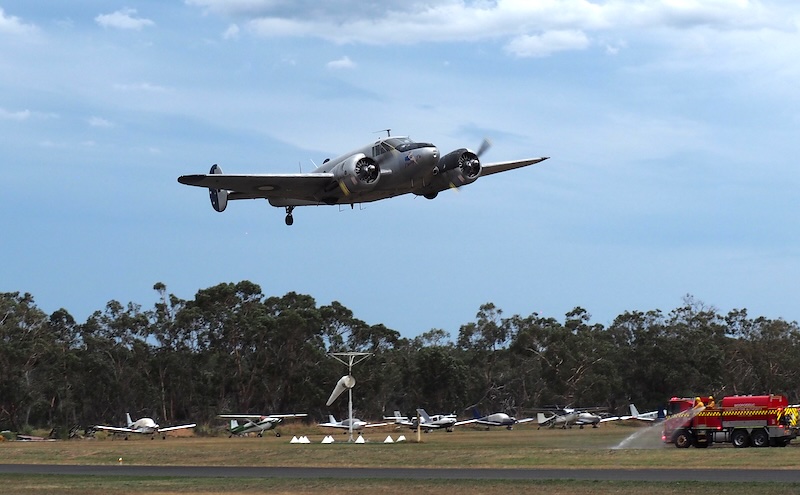
Join Ross J. Robertson and ww2stories.org for this exclusive feature on the 2026 Tyabb Airshow, Melbourne, Australia. Experience the sights and sounds of WWII warbirds in flight, from the close-up roar of radial engines starting up to the thunder of the Spitfire, Avenger and Corsair as they take to the sky, bringing the machinery and reality of WWII vividly back to life.
In an age when genuine WWII aircraft are becoming increasingly rare sights in the sky, opportunities to witness these historic machines in flight are more valuable than ever. Many surviving warbirds now spend most of their lives preserved in museums or private collections, making public flying displays a special experience for aviation enthusiasts and younger generations alike.
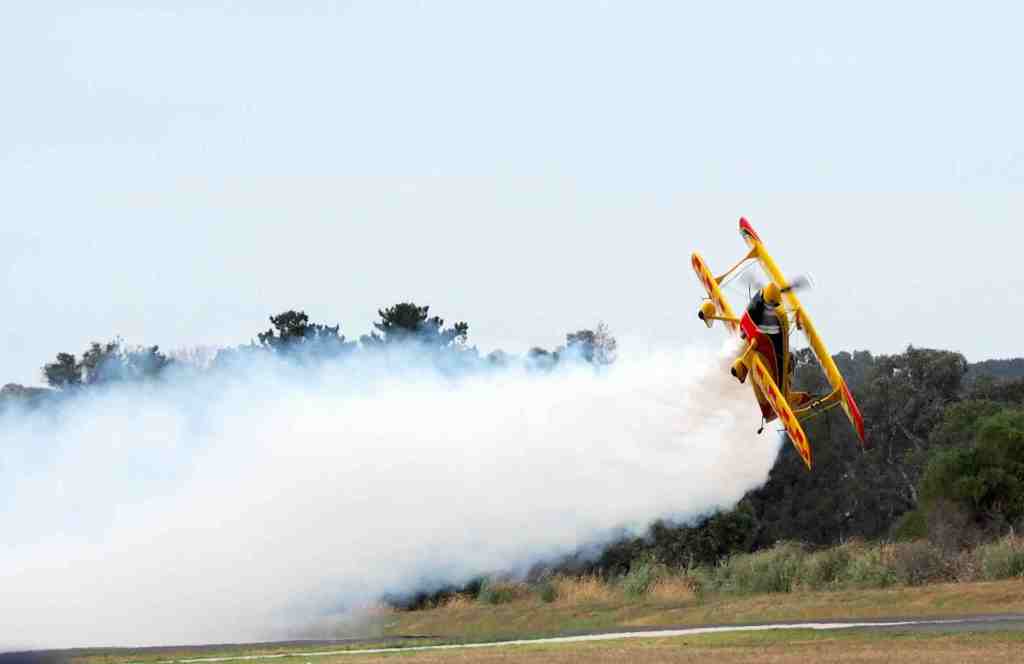
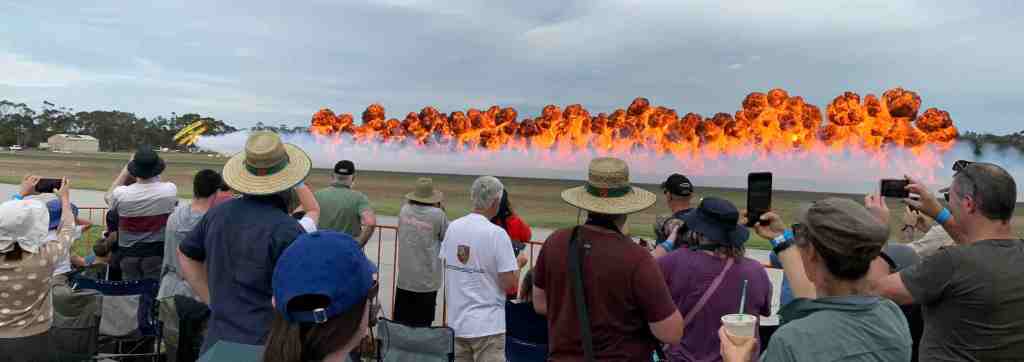
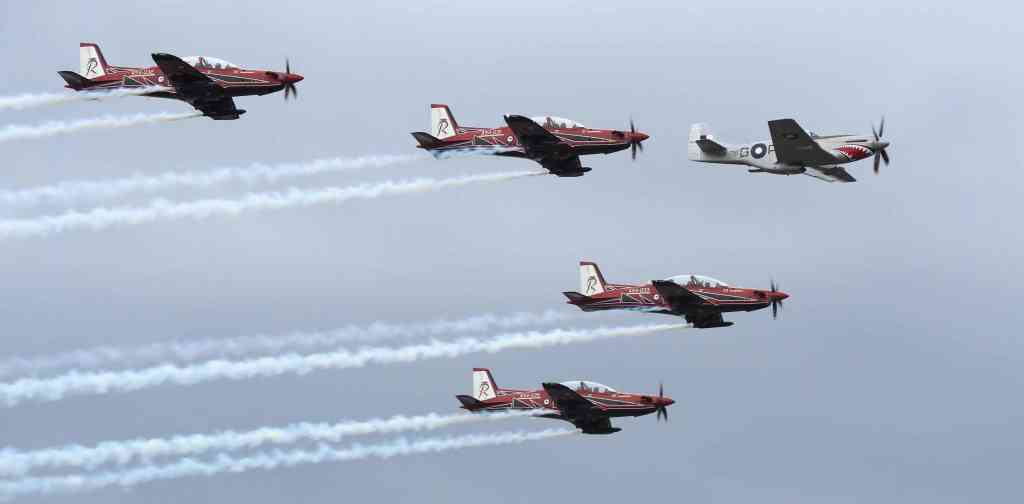
The 2026 Tyabb Airshow provided precisely that opportunity. Held in March 2026 at Tyabb airfield on the Mornington Peninsula near Melbourne, Australia, the biennial event combined modern biplane aerobatics, pyrotechnic displays, and the RAAF Roulettes with a carefully curated mix of historic warbirds, training aircraft, and more modern military aviation. It also provided a meaningful platform for ww2stories.org to extend its focus from historical narrative to the tangible artefacts of WWII in operational form – the preserved aircraft themselves, representing the engineering, industrial effort, and combat reality of WWII, where the ‘nuts and bolts’ of wartime aviation remain alive through flying examples rather than static museum displays.
The experience of these aircraft in flight is deeply sensory and immediate. It begins just metres away as each aircraft prepares to participate in the show. Each engine starts on the apron, coming to life with a sudden, forceful burst of sound and vibration. The air quickly fills with the dense scent of aviation fuel and warm oil as the radial engines settle into a steady, uneven idle.
Supermarine Spitfire Mk VIII
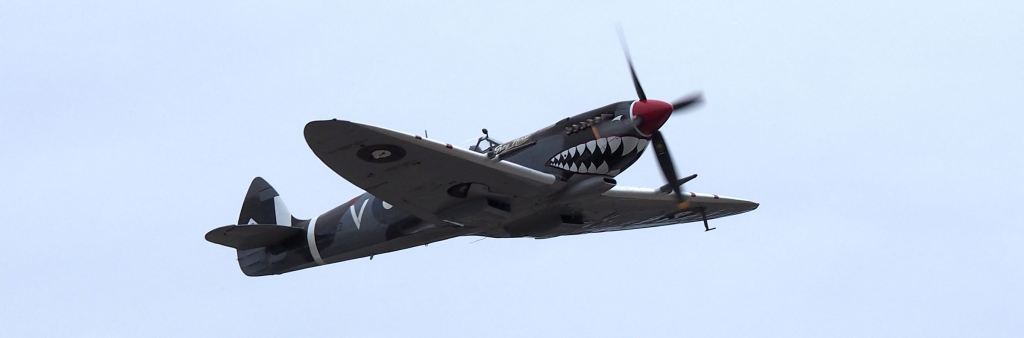
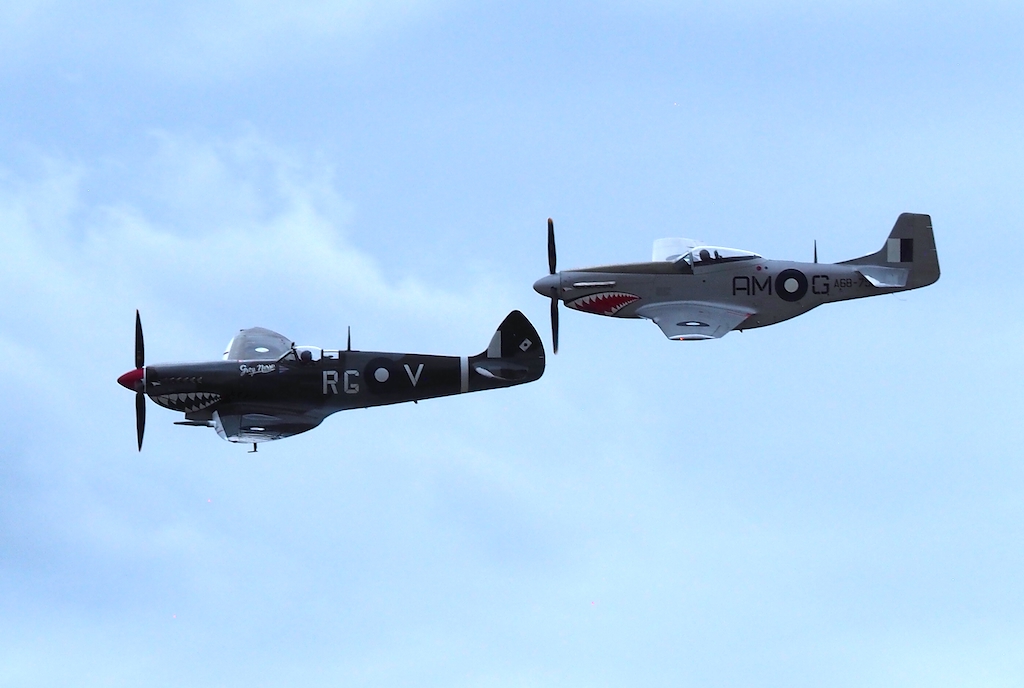
Among the most evocative of aircraft the aircraft on display was the Supermarine Spitfire Mk VIII. Its Rolls Royce Merlin V-12, 27 litre engine produced a famously distinct note as it moved through the sky with an almost effortless grace, its elliptical wings still carrying the aerodynamic purity that defined the Spitfire lineage. Even in brief passes, it conveyed a sense of lightness and precision, a design shaped as much by urgency and necessity as by remarkable aerodynamic refinement.
Grumman Avenger

In stark contrast, the Grumman Avenger made its presence known long before it was fully visible. Originally designed as a carrier-based torpedo bomber for the US Navy, the Grumman TBF Avenger remains strikingly large even by modern standards. On the ground its scale is almost surprising, with a broad, purposeful fuselage and foldable wings designed for carrier operations. In the air it carries a heavy, deliberate ‘big is beautiful’ authority.
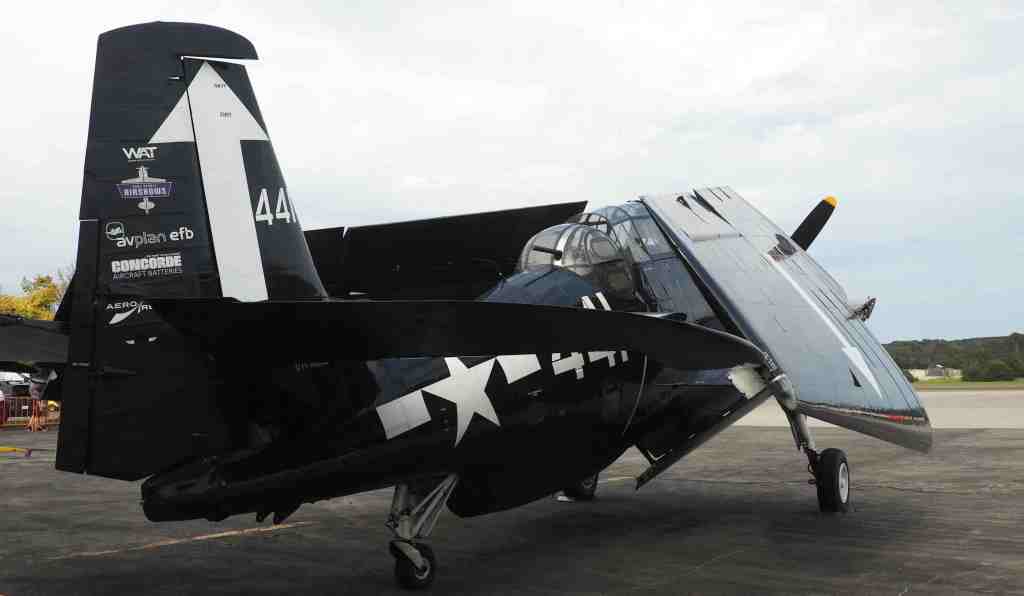
Its rarity today only amplifies the impact. Of nearly 10,000 built during the war, only a few dozen remain airworthy. Seeing one at Tyabb was therefore disorienting in the best sense, creating an immediate awareness of scale and mass that photographs never quite convey. It is an aircraft that seems almost too large for carrier service, yet once airborne moves with a steady inevitability, recalling the crowded Pacific decks from which machines of this size once launched into combat.
P-51D Mustang
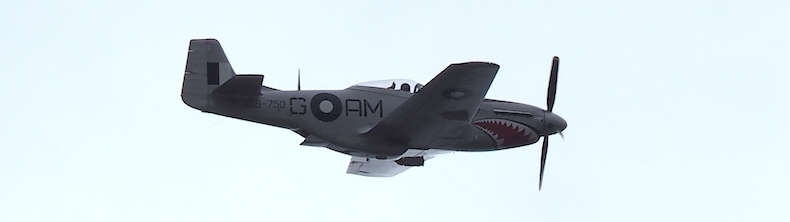
The P-51D Mustang brought a different energy entirely. Rather than take-off at Tyabb, it flew in from the Point Cook airbase and later performed in formation with the RAAF Roulettes. Developed in the United States and transformed by the adoption of the Rolls Royce Merlin engine, it became one of the defining long-range escort fighters of WWII. At Tyabb it was all speed and precision, slicing through the air in clean, fast passes that reflected its operational role escorting bomber formations deep into occupied Europe. Its presence remains one of the clearest expressions of how late-war engineering solved the problem of range, endurance, and air superiority in a single design.
Curtiss P-40F Warhawk
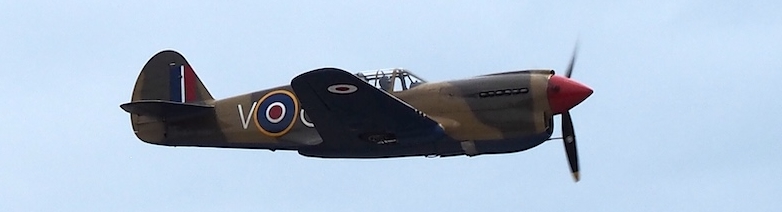
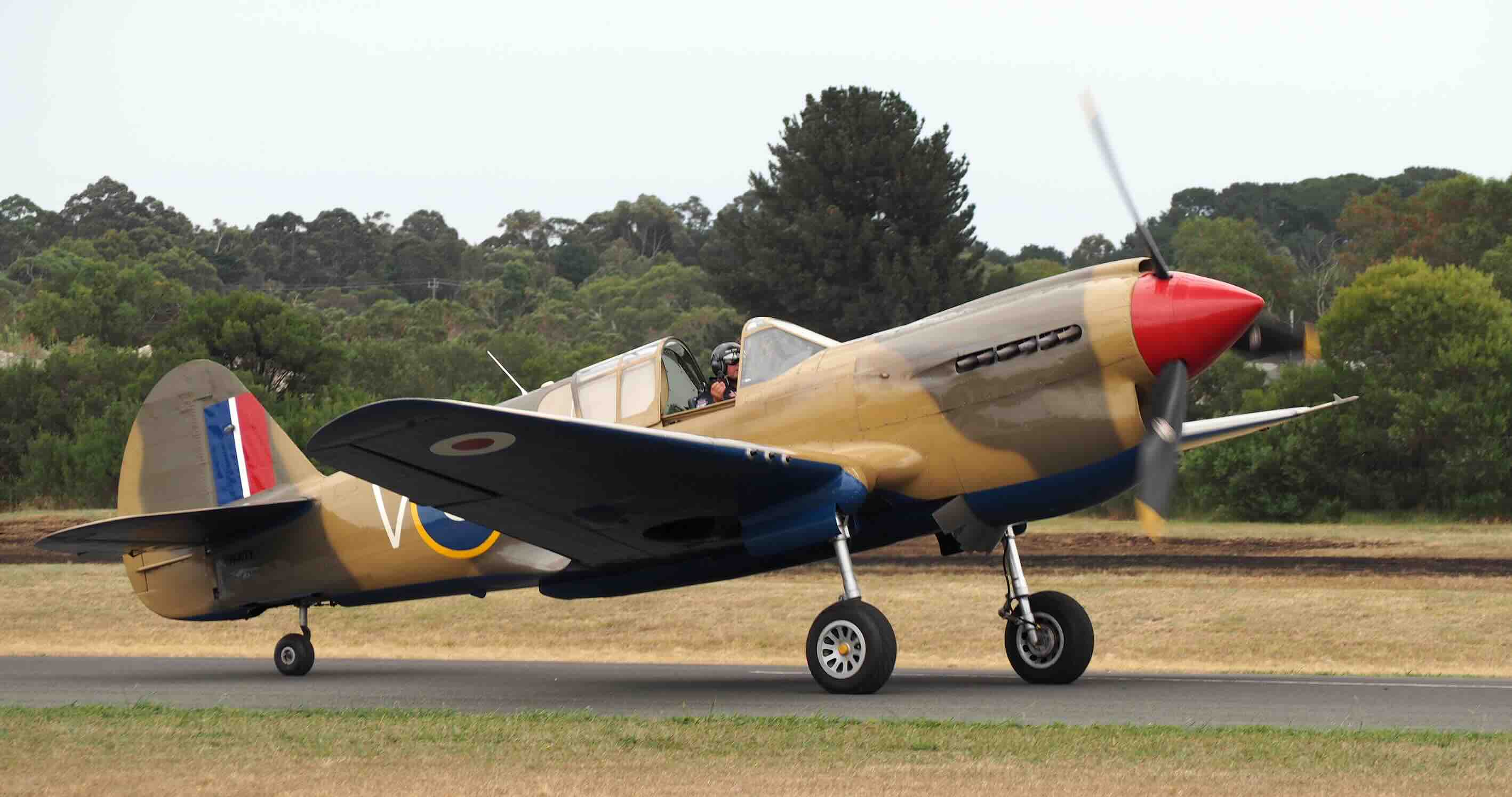
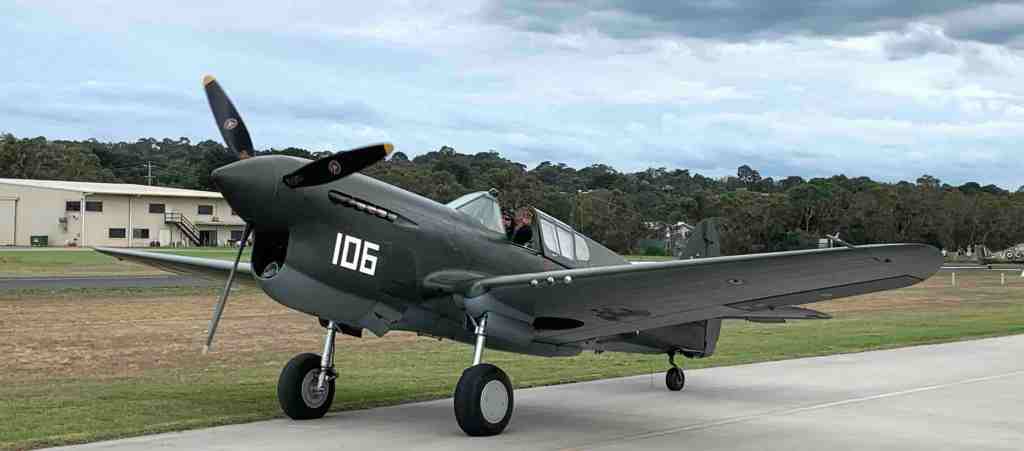
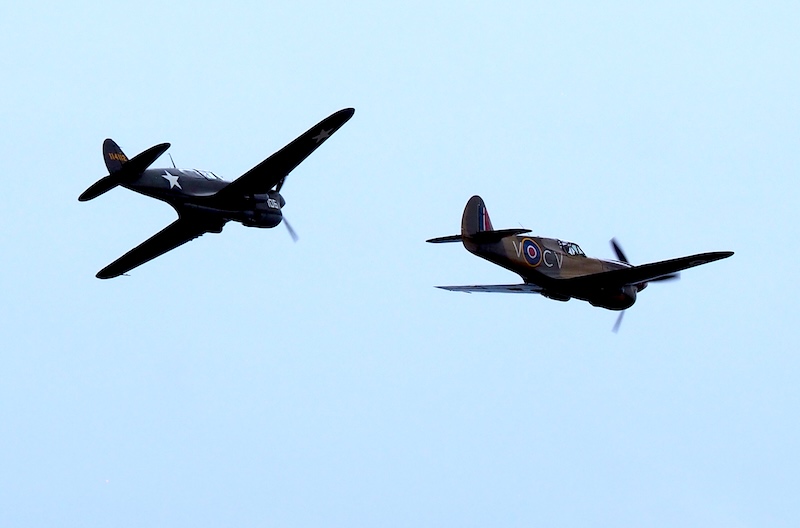
The Curtiss P-40F Warhawk offered a more grounded reminder of earlier wartime conditions, with two examples appearing at Tyabb. Rugged, direct and uncompromising, the Curtiss P-40 Warhawk served across North Africa, the Pacific and China, often in environments where durability mattered as much as performance. Its engine note carried a harder edge, less refined than later fighters, but entirely fitting for an aircraft that earned its reputation through sheer availability and resilience in difficult theatres of WWII.
Hawker Sea Fury
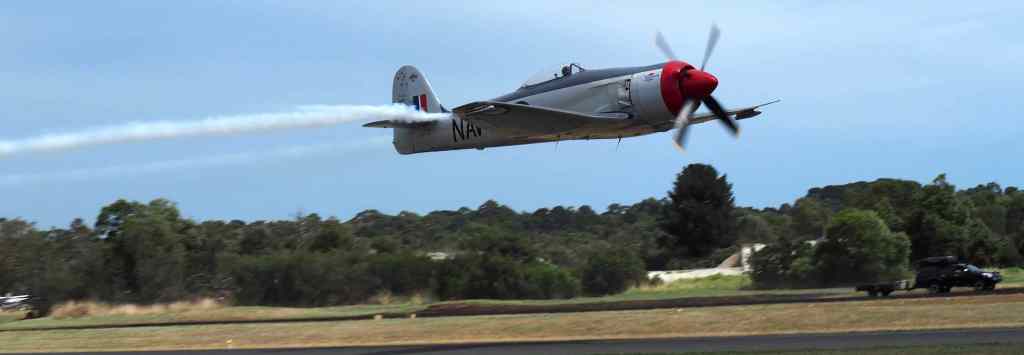
The Hawker Sea Fury and the Chance Vought Corsair formed one of the most compelling contrasts of the day, each representing the peak of WWII-era piston-engine naval fighter design in different ways.
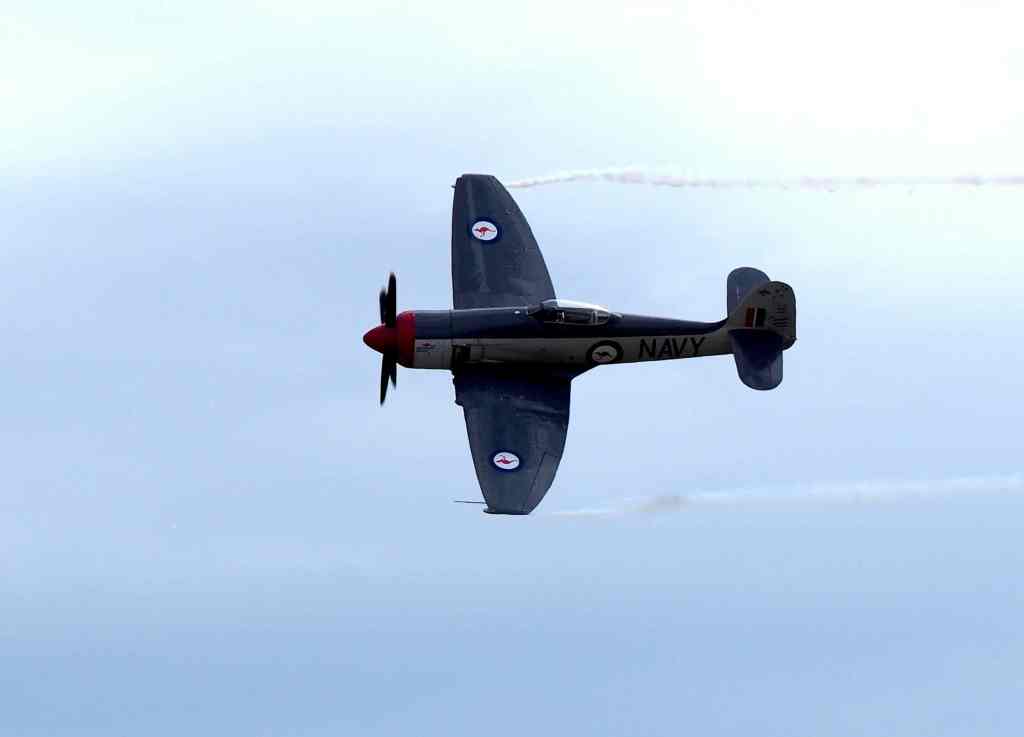
The Hawker Sea Fury, developed in Britain during the closing stages of WWII, arrived too late to see combat in that conflict but went on to serve with distinction in Korea, despite wide adoption of the jet. At Tyabb, its Bristol Centaurus radial engine produced a deep, rolling roar that built rapidly into a powerful surge of sound on take-off – an unparalleled sensation. In flight it had a sense of controlled urgency, accelerating with an authority that reflected its position as one of the fastest production piston fighters ever built (460 mph or 740 km/h).
Vought F4U Corsair
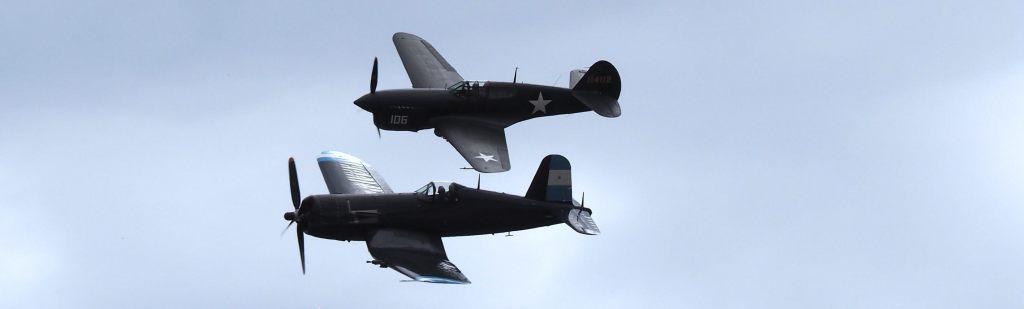
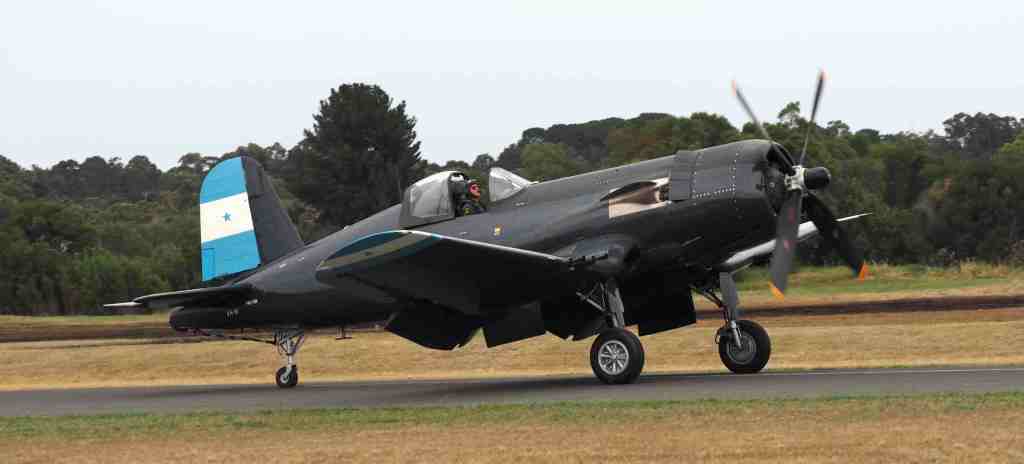
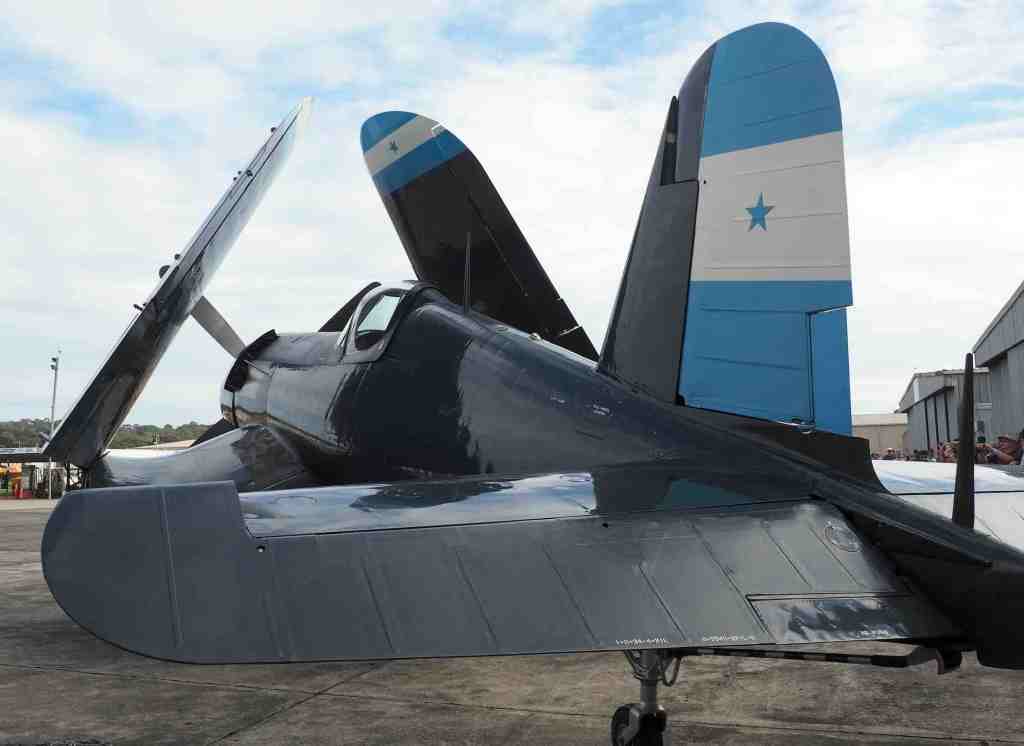
The Vought F4U Corsair, by contrast, carried the unmistakable silhouette of Pacific carrier warfare. Its long nose and inverted gull wings made it instantly recognisable even on the ground, a design shaped by the need to accommodate a large propeller while maintaining carrier compatibility. A proven combat veteran of intense operations across the Pacific theatre, it combined power and agility with a distinctly assertive presence in the air, its engine note sharp as it transitioned from taxi to take-off and climbed away from Tyabb.
Trainers
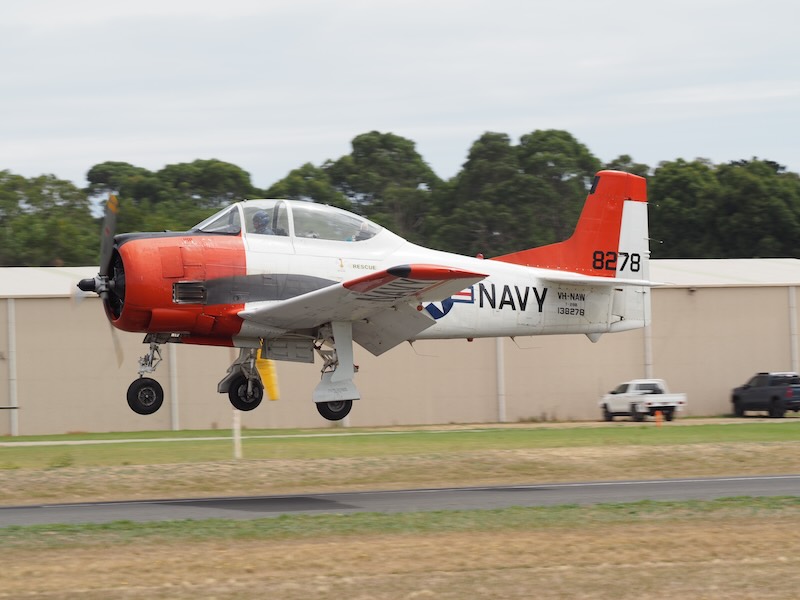
If the fighters represented combat performance, the trainer aircraft represented the foundation upon which every operational pilot was built. Aircraft such as the De Havilland Tiger Moth, Boeing Stearman, and North American Harvard were not glamorous, yet they were absolutely essential to the war effort. The Tiger Moth, with its open cockpit and fabric-covered wings, introduced thousands of pilots to flight itself, often in demanding and unforgiving conditions. These aircraft formed the first step in a carefully structured training pipeline, transforming civilians into aircrew capable of operating complex combat aircraft under pressure. Without them, the operational effectiveness of WWII air forces simply would not have existed.
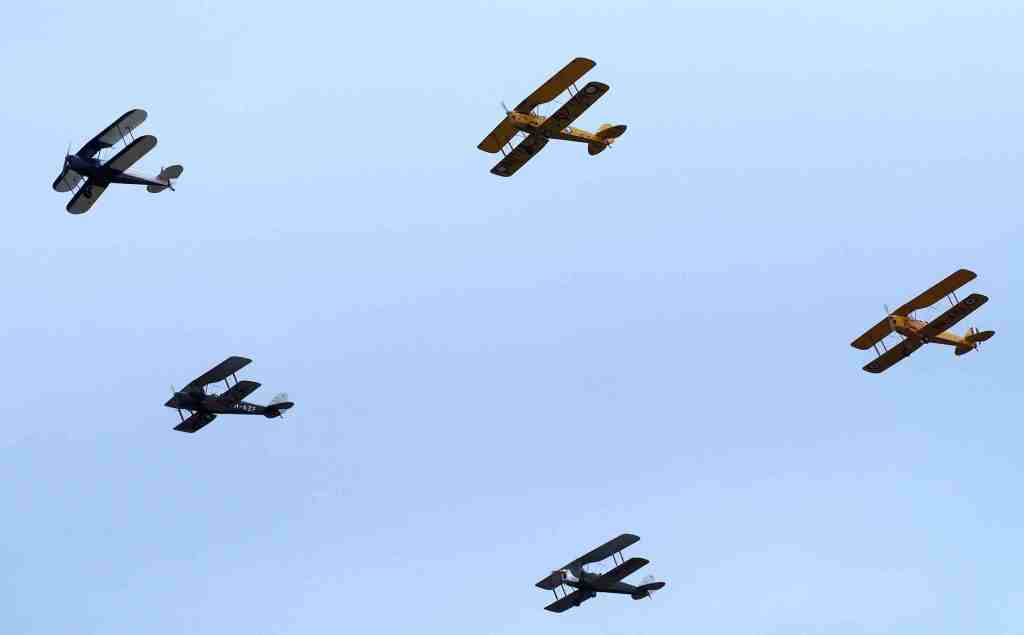
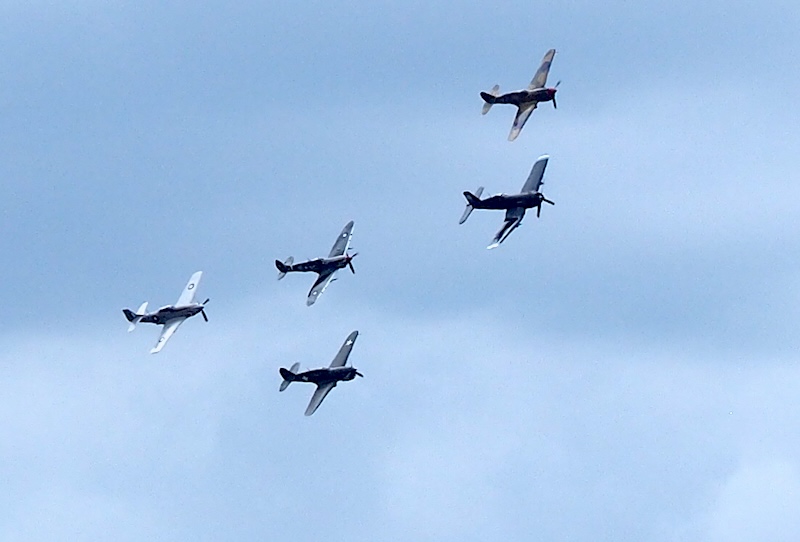
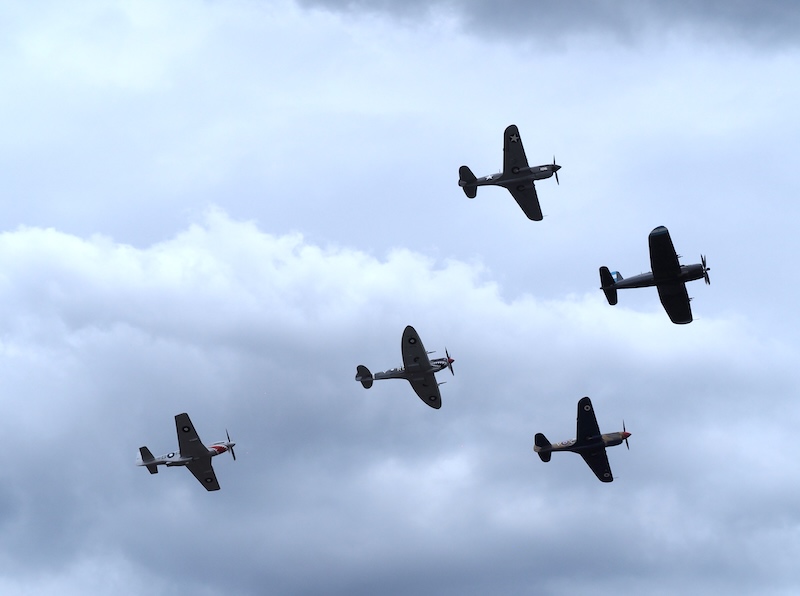
Within this environment, ww2stories.org found a natural alignment with its focus on the physical reality of WWII. Rather than treating history as abstraction, the Tyabb Airshow allowed direct engagement with the surviving engineering output of the conflict – the aircraft themselves, still capable of flight, still expressing in motion the industrial scale, technical ingenuity, and operational demands of the world’s largest ever conflict.
From that perspective, the experience on the ground was something quite different again. The sound, vibration, and sheer physical presence of these aircraft created a rare immediacy that is difficult to convey fully in words. For a few brief moments over Tyabb, WWII hisory was not merely being remembered by WWII enthusiasts – it was airborne.
Check out the new ww2stories.org YouTube channel WW2 Stories Media by clicking here (opens new window).
We value your opinion!
Your feedback is important to us. If you enjoyed this article and would like to see similar content, show your appreciation by clicking the ‘Claps’ icon below. Also, ensure you stay up-to-date with our latest articles by subscribing to our Newsletter. You’ll receive new posts directly to your email inbox. Thank you for your support!
‘History has to be shared to be appreciated’
It’s FREE! Subscribe to our Mailing List. We’ll keep you in the loop.
Footnotes
Link to ww2stories.org home page: Return