A shorter version of this article titled ‘Back in the fold: Finding a Ju-88 in the Aegean’ first appeared on Divernet UK in June 2025, courtesy of the author.
Nikolaos Sidiropoulos and Dr Kimon Papadimitriou embark on an unforgettable dive to uncover the long-lost wreck of a Junkers Ju-88 in the Aegean Sea, revealing an untouched piece of WWII history after more than 80 years beneath the waves.
Authored by Ross J. Robertson, with research by Nikolaos Sidiropoulos
Leutnant Gert Winterfeld’s anxiety was palpable as he piloted his Ju-88 A4 ‘L1+CK’ through the night sky on 13 December 1943. The mission had been a daring low-level bombing raid on Bari Harbour, Italy, undertaken by Gruppe I and III of Lehrgeschwader 1 (I. and III./LG1) Squadron. However, upon reaching their target, the weather had turned treacherous, and the enemy anti-aircraft defences were merciless. The crew had managed to drop their bombs, but confirming any hits had been impossible. What was supposed to be a routine operation had become a chaotic struggle against both nature and enemy fire, with two of their number shot out of the sky.
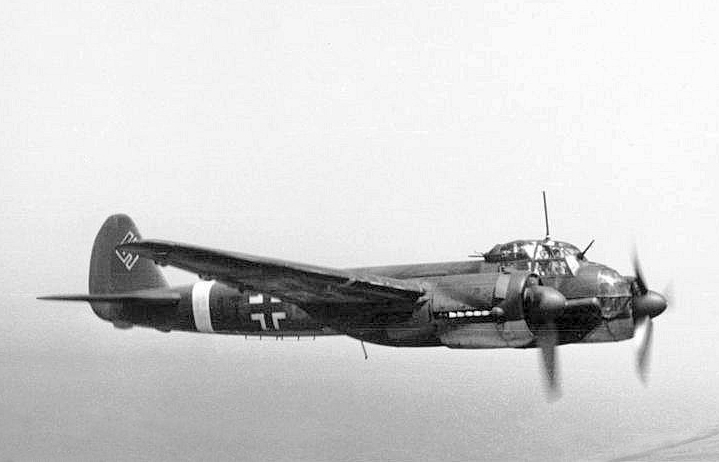
The attack had scattered the formation. Winterfeld and a few other aircraft followed orders and headed across the Adriatic towards Albania before turning towards Greece and their base at Elefsina, located some 23 kilometres (14 miles) west of Athens. Most of the other aircraft continued to Albania, landing at Podgorica or Tirana, then returned to base the next day.
As Winterfeld and his crew tried to find their way back, heavy cloud cover thwarted their efforts, and their situation grew increasingly desperate. To their dismay, wireless operator Unteroffizier (Corporal) Erwin Kielhorn reported that all radio contact had been lost, so no help could be gained that way. The only guidance they had was the aircraft’s compass, the flight time, and the hope of spotting familiar landmarks 3,500 metres below. The other crew members – Feldwebel (Sergeant) Franz Resch, the bombardier-observer, and Gefreiter (Private) Alfred Raidt, the gunner – peered outside, hoping to see something, anything, that might help them. However, the skies were dark, with thick clouds often obstructing the moon and restricting any chance of visual navigation.
Their Ju-88 had sustained some damage during the attack, but nothing too serious. The pitch of the droning engines changed as Winterfeld descended to a lower altitude to fly over the sea. However, the crew spotted no islands that might help pinpoint their location. Believing they were south of Attica, Winterfeld turned north, hoping to catch sight of Cape Sounion and navigate back to their airfield. Unbeknownst to them, they had flown too far east and had crossed more than halfway across the Aegean Sea.
As the minutes ticked by and the fuel gauge dipped dangerously low, each crew member silently contemplated the inevitable. Then, suddenly, an island with a small fishing boat harbour appeared on the horizon. Running on fumes and out of options, Winterfeld made the decision to attempt a ditching.
Source: Papadimitriou & Sidiropoulos ©
They soared over the island, launching red flares to signal for help. Winterfeld issued orders over the intercom: Kielhorn was to release the canopy to allow egress and prepare the inflatable life raft.
Fortunately, moonlight was now lighting their way. Approaching from the south, Winterfeld fought to keep the Ju-88 straight and level as he reduced airspeed to the brink of stalling. Ironically, the slower they flew, the faster the sea seemed to rush up to meet them as they lost altitude. Ditching required precision and nerve, with every twitch of the stick threatening disaster. At around 80 metres, Winterfeld gave the command for Kielhorn to release the canopy. In an instant, it was caught by the rushing air, smashing into the tail fin and ripping half of it off with a violent jolt that sent a shudder through the aircraft. Winterfeld immediately lost all control, and the Ju-88 plunged into the water, briefly disappearing before resurfacing.
By some miracle, they were all relatively unscathed, but their situation remained dire. Metre-high waves crashed over them as the aircraft began to sink. They had only moments to unfasten their seat belts and evacuate. Kielhorn struggled with the life raft, which failed to deploy, leaving them adrift in the water while their aircraft disappeared into the depths below. The moon that had guided them during the landing vanished behind a cloud, plunging them into darkness where they could no longer see each other. The only visible landmark for Winterfeld was a small rocky outcrop on the island, so he headed towards it.
Source: Papadimitriou & Sidiropoulos ©
“My life jacket hadn’t inflated, which, in the end, was a blessing as it allowed me to move freely,” Winterfeld recalls in Peter Taghon’s book, The Lehrgeschwader 1: The Griffon Squadron, Vol. 2. “I couldn’t free myself from my suit and boots and swam desperately, my fingers cramping and locking. Slowly, I approached the shore, which gave me hope. When I finally reached the shore, a man appeared, and we managed to communicate in broken English. He told me I was on Psara, a small island near Chios.”
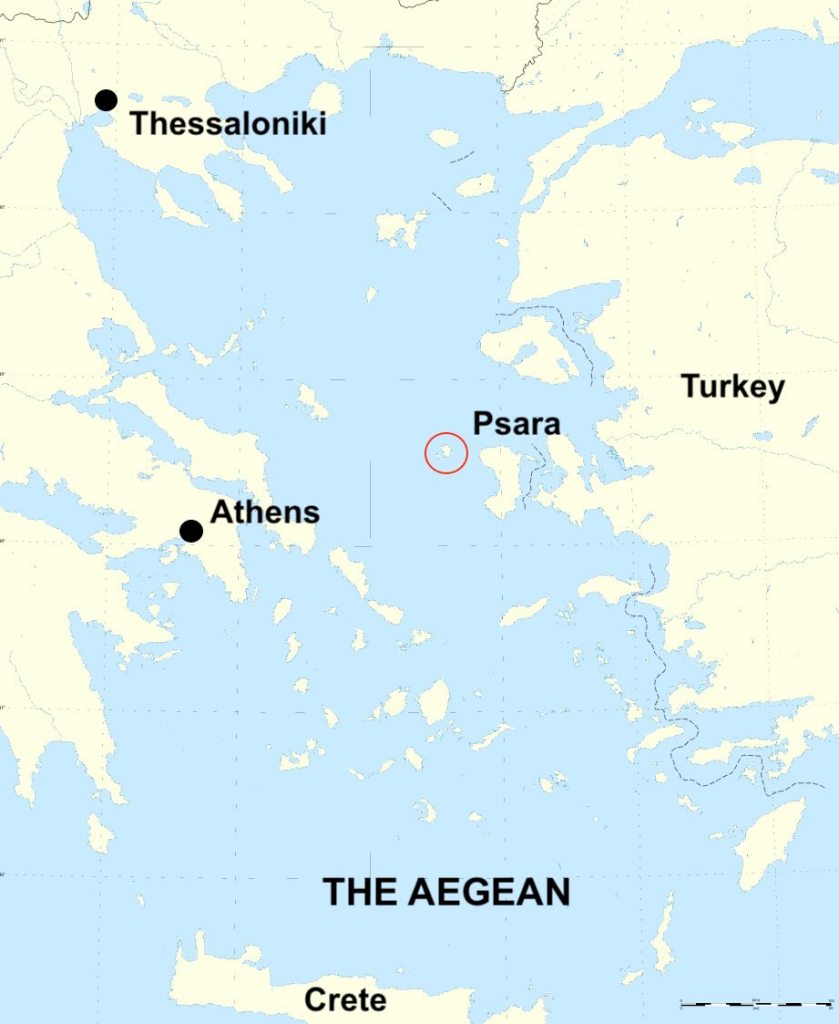
The local man guided Winterfeld to the island’s mayor, who greeted him with a warm, reassuring welcome. Here Winterfeld was relieved to find his gunner, Raidt, safe and sound. They learned that their distress flares had indeed been spotted, but the other two crew members were still missing. A small boat had been dispatched to their initial landing site, and a local boy had alerted the small German naval garrison stationed at the island’s lighthouse.
After receiving dry clothes, a meal of whatever could be scrounged, and generous servings of ouzo and raki, Winterfeld and Raidt were finally able to rest and recover from their ordeal. The next day, they met with the sailors of the garrison, who delivered the sombre news that the bodies of Resch and Kielhorn had been discovered. The two men were found in the water still wearing their life jackets. Their remains were transported to Chios, where Winterfeld and Raidt were also headed as they began their way back to their squadron. Before moving on, both attended the burial of their fallen comrades on Chios.
An Eyewitness
This account deviates slightly from what was recalled by a local resident who lived on the island during WWII, Aristidis Agapousis. On 19 June 2024, his son Manolis met with Nikolaos Sidiropoulos and Dr Kimon Papadimitriou, co-founders of the Underwater Survey Team (UST), a group of volunteer shipwreck researchers and enthusiasts based in Greece. They were on the island for a TV documentary, ‘Thalatta – Secrets of the Aegean’, when Manolis happened to mention that in the 1950s, it was possible to see a submerged aircraft in the water using just a glass-bottom viewing bucket. This was music to their ears. Both Nikolaos and Kimon knew that the identity of a missing Ju-88 in the Aegean had been determined by Manolis Roxanas. However, its exact location was still unknown.
Citing his father’s story, Manolis shared the fascinating tale: “The German airmen didn’t know if there was an airfield nearby,” Manolis began, “they didn’t really know where they were, so the pilot decided to make a forced landing at sea. They ditched below Mavri Rachi – that’s what it’s called here – from Palaiokastro down by the windmill. That’s where it sank, east of Mavri Rachi.”
The four crew members on board survived the crash. “Two of them started swimming east – I don’t know why – as they were near the shore and should have seen the mountain, Mavri Rachi, although it was night. These two poor souls drowned,” Manolis recounted with a sombre tone. “The other two made it to the island, coming out near Mavri Rachi, at Bourtzi, which is a place like a small castle.”
From there, the survivors saw a faint light. “They saw the light of the lantern in the church of the Transfiguration of the Saviour, which is in the middle of the village. In the darkness, it was the only light they saw, so they headed towards that light,” Manolis explained.
They arrived at a house near the church and knocked on the door. The man who answered didn’t speak their language and couldn’t understand them. “He went and woke up my father, who spoke English, French, Italian, and Turkish. He had grown up in Constantinople and was well-educated,” Manolis said proudly. “They said to him, ‘Come, Aristidis, some foreigners have arrived’, and so on. My father went there and communicated with them in French.”
The survivors were anxious and asked if there were any Englishmen on the island. “They seemed frightened,” Manolis noted. His father reassured them, explaining that there was a small garrison of about 15 Germans stationed at the island’s outer lighthouse. “They took them in, looked after them, fed them, and gave them dry clothes since theirs were wet,” Manolis continued. The islanders showed great hospitality, despite their deprived circumstances. “The next day, they handed them over to the garrison, who took them to Chios.” The bodies of the other two who had drowned were also found. “They sent them too, and they were buried in Chios,” Manolis added, his voice solemn.
Whether or not Winterfeld and Raidt crawled out of the sea and were saved by a guiding light is largely inconsequential. Nor is it relevant whether the Germans conversed in French or broken English. No matter what discrepancies there may be, the essence of the story aligns with Winterfeld’s earlier account and provides details about the extraction point, aiding in the search for the wreck.
Source: Papadimitriou & Sidiropoulos ©
Actionable Data
Indeed, the accounts from the pilot and the witness provided a haunting glimpse into the last moments of the Ju-88 before it was ditched into the Aegean. Armed with these historical narratives, Nikolaos and Kimon began their search for the precise location of the sunken aircraft. Insights from Manolis, combined with valuable information from Spiros Louloudias – a local fisherman who had navigated the waters off Psara until the 1970s – proved particularly crucial. Spiros recalled halting his fishing expeditions in a certain area after his gear became ensnared by a professional boat’s abandoned equipment. With his guidance, they pinpointed the coordinates and depth measurements, which aligned perfectly with the marked foul ground on the nautical charts of the area.
Armed with this knowledge, Nikolaos and Kimon resolved to undertake a UST reconnaissance dive, focused on locating and photographing the remains of the aircraft. They hoped that, should they successfully find the wreck, the video footage captured could be used to create a detailed 3D model of the aircraft, thereby allowing for a full view of the find.
Diving the Wreck
Nikolaos recounts the moment of discovery:
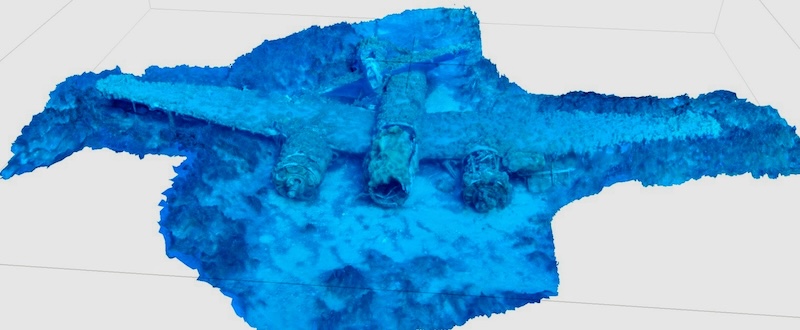
As I descended toward the seabed, the shape of the Junkers Ju-88 slowly materialised through the Aegean’s blue-green waters. The aircraft lay at a depth of 25 metres, its body stretched out on a sandy bed, surrounded by patches of seagrass swaying gently in the current. It was almost surreal knowing that Kimon and I were the first to set eyes on this wreck so close in more than 80 years!
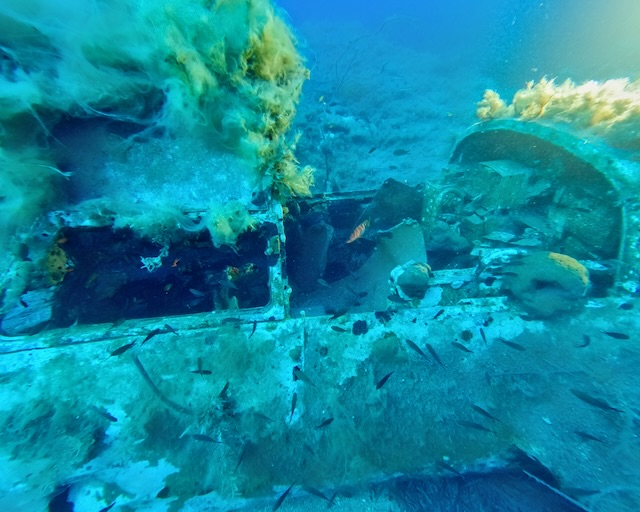
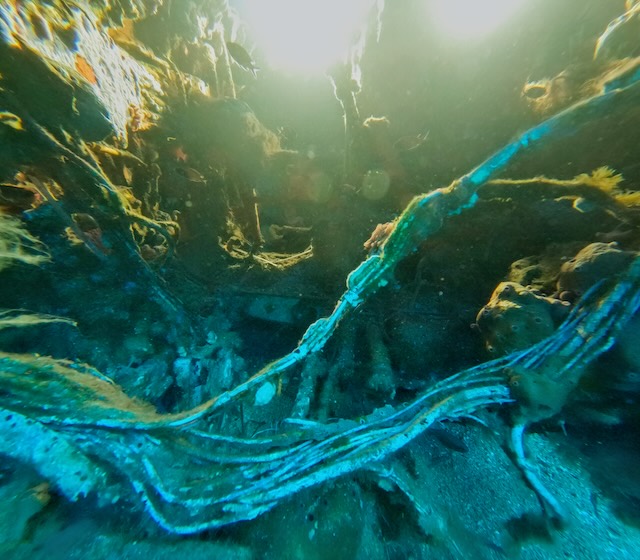
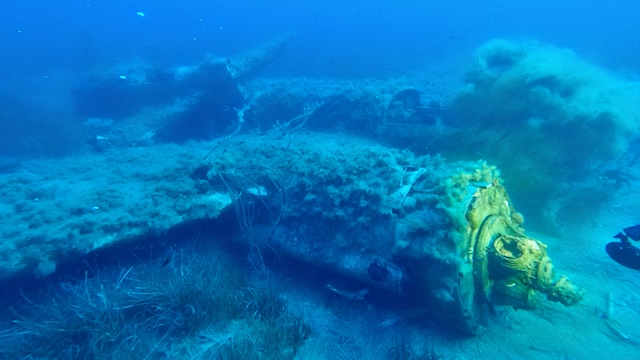
The fuselage was remarkably well-preserved, extending before us, with the strange position of the tail section immediately noticeable – it had broken off and was now resting inverted and the wrong way around on the main fuselage. No doubt it had been snagged by fishing nets and dragged into its current position, a reminder of the forces that had disturbed the wreck long after its initial ditching. Parts of the net still clung to the horizontal stabilisers, which were almost perfectly intact.
We continued to circle the broken-off tail section. The hatch for the tail landing gear was open – a peep inside revealed the retracted tail wheel and mechanism. At the very end of the tail section, upside down as it was, we could make out the remnants of the rudder attachment point, as well as where the vertical stabiliser had once been mounted. Above this, housed in a reinforced skid, in case the tail wheel failed to deploy, two holes for jettisoning fuel were clearly distinguishable.
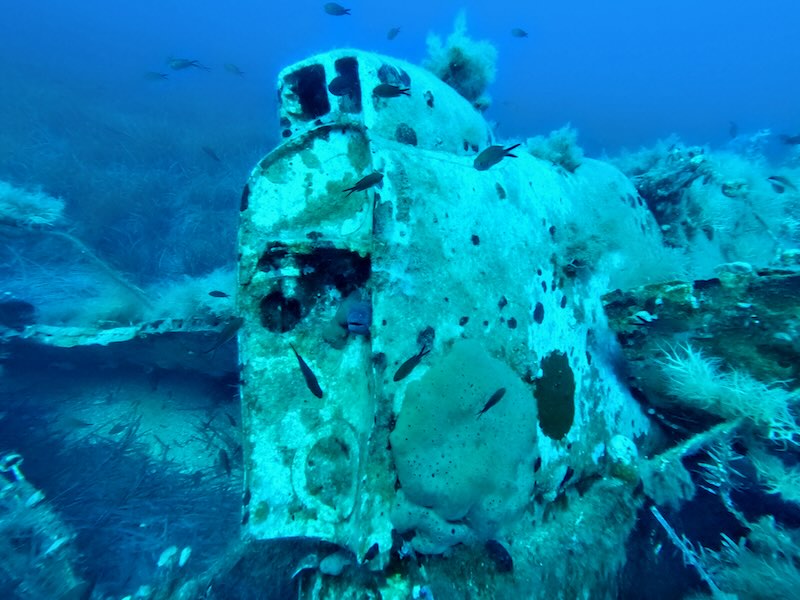
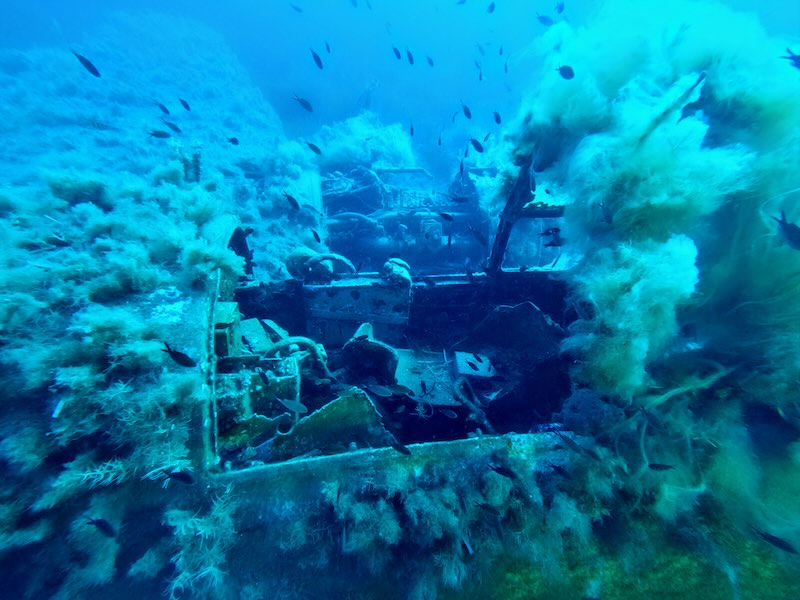
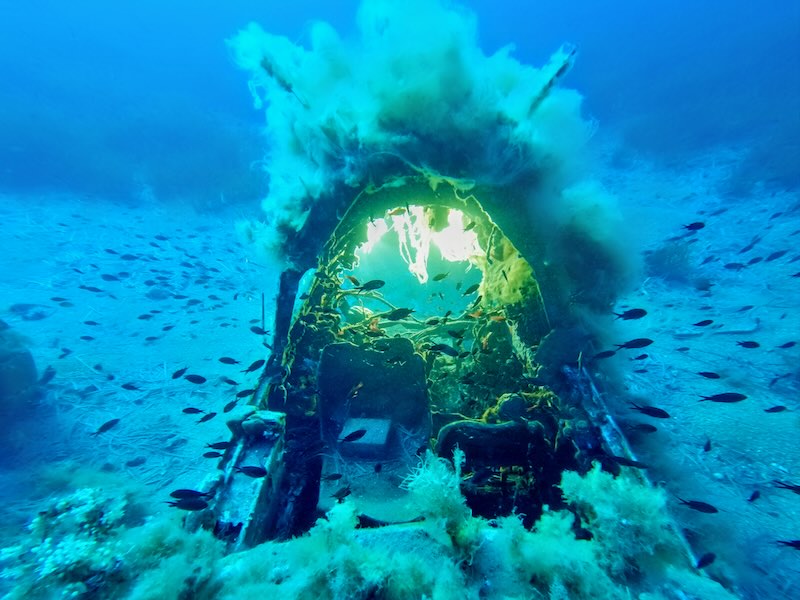
Looking into the fuselage from the break point towards the cockpit, the inner structural ribs were barely discernible through the mass of marine growth and riot of colour. Spherical oxygen bottles, used for the crew’s air supply at altitude – likely still containing their pressurised contents – remained strapped inside the fuselage, an unexpected sight for a plane of this type. Ju-88s typically had cylindrical bottles, with spherical-shaped ones usually found in single-engine fighters like the Bf-109 or the Fw-190.
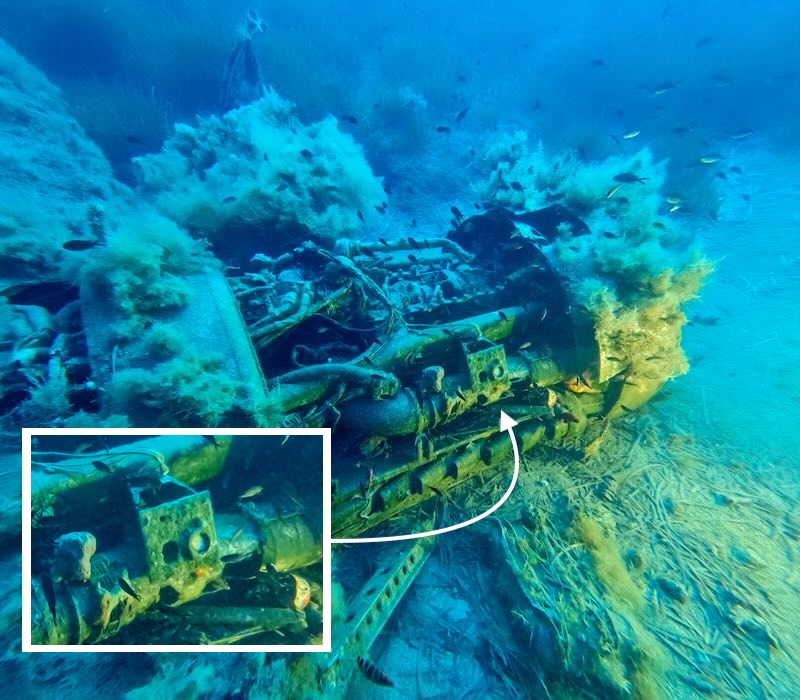
The two Jumo 211 engines were still mounted on the wings, though the wooden propellers had long disintegrated, and the spinner cones were missing. The port engine was exposed, missing its cowling, revealing the internal gauges that had once been essential to the crew – the indicators for oil pressure, temperature, and propeller pitch were in place, but their glass covers had long since turned opaque. These would have been illuminated at night. I couldn’t help but think of the pilot, who once relied on these very dials as he looked over to the engine from the cockpit.
Source: Papadimitriou & Sidiropoulos ©
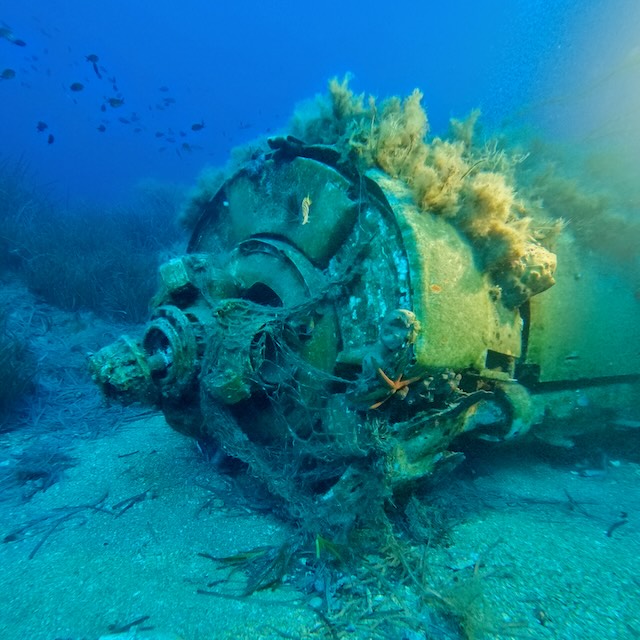
propellers having long since disintegrated.
Source: Papadimitriou & Sidiropoulos ©
Moving closer, the collapsed port landing gear under the wing came into view. Remarkably, the tyre still appeared to be inflated – a small but striking detail that contrasted sharply with the surrounding decay. The braking system was also visible, its mechanical parts now hosting small sea creatures alongside the ever-present green carpet of algae that covered all metal surfaces, slowly reclaiming this man-made object for the ocean.
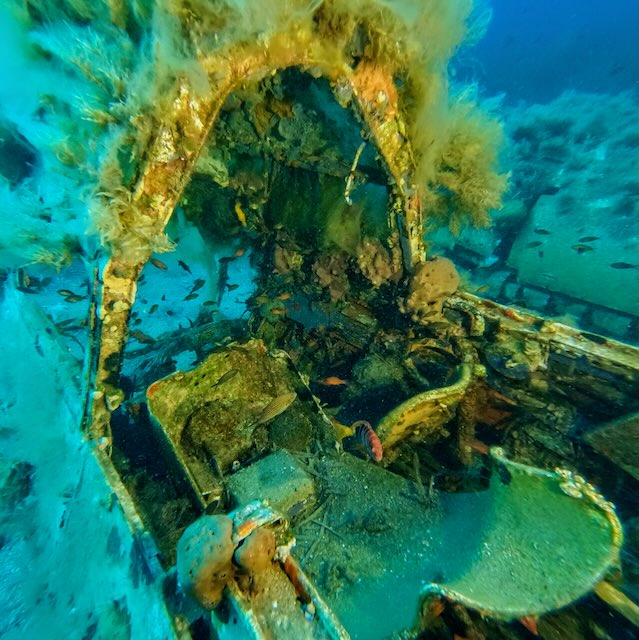
The cockpit itself was mostly bare, the canopy long gone, jettisoned as the crew prepared to ditch and abandon the plane. The pilot’s seat remained in place, its distinctive armoured backrest still recognisable, tilted back against the frame. Bits of the canopy’s fixed section are covered in marine life, distorting its original shape. I could picture the cramped quarters where the crew once operated, the bombardier’s seat still visible beside the pilot’s, with the gunner and radio operator positioned just behind them.
Hovering over the wreck, I felt a profound sense of connection to the past. This aircraft, now resting silently on the seabed, had once flown missions, manned by a crew whose fates were known but whose story remained incomplete. It had become a silent monument to the past, awaiting discovery beneath the waves. And now, after decades of being lost to history, it lay before our very eyes, its story unfolding piece by piece, just waiting to be told as soon as we reached back to the surface.
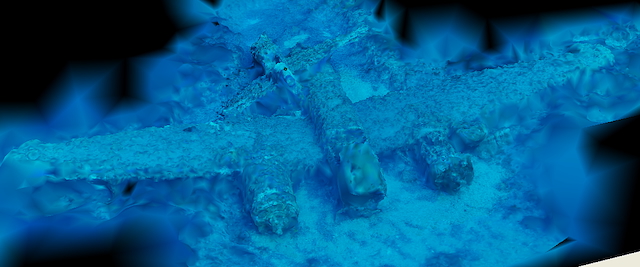
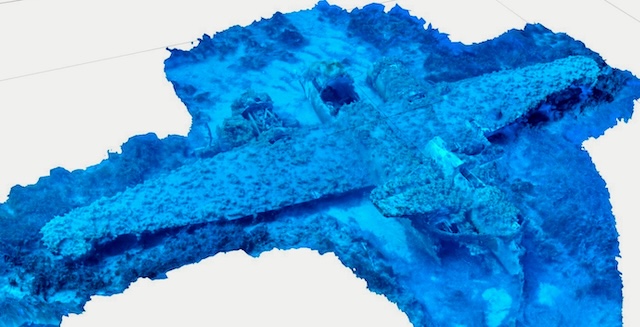
Source: Papadimitriou & Sidiropoulos ©
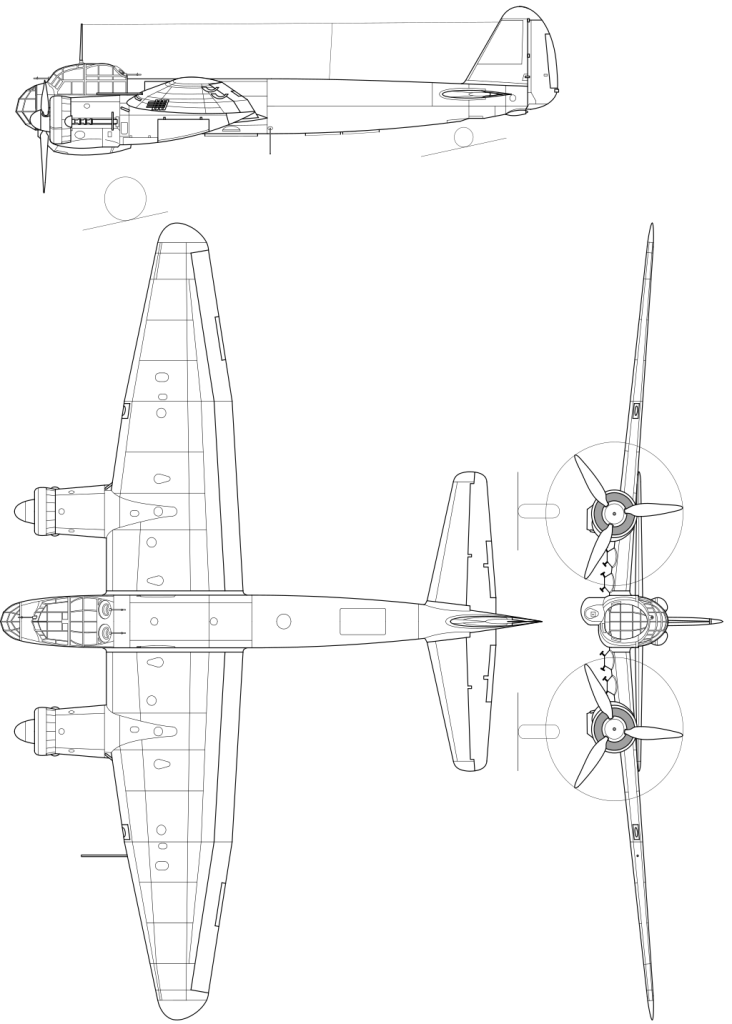
Acknowledgements
Both the creators and the Underwater Survey Team (UST: wreckhistory.com) thank Manolis Agapousis for sharing his father’s account, Manolis Roxanas for providing aircraft and crew identification, Spyros Louloudias for indicating the location, and Thomas Panagiotopoulos, captain of the support vessel Arctic. The pilot’s testimony was found in Peter Taghon’s book ‘La Lehrgeschwader 1, l’escadre au griffon. Tome 2’.
About the Creators
NIKOLAOS SIDIROPOULOS is a passionate diver and co-founder of the Underwater Survey Team (UST). Since starting his diving journey in 2002, he has achieved various certifications, including TECREC 50. Nikolaos conducts archival research on shipwrecks, writes articles, gives lectures, and creates documentaries to promote the history and significance of maritime heritage.
ROSS J ROBERTSON, an Advanced Open Water and Nitrox Diver, is an author and educator with a keen interest in Aegean shipwrecks and Greek WW2 history. Bringing these elements together in numerous magazine and newspaper articles, he is also the curator of the ww2stories.org website.
Featured cover image: Papadimitriou & Sidiropoulos ©
Link to ww2stories.org home page: Return
Check out the new ww2stories.org YouTube channel WW2 Stories Media by clicking here (opens a new window).
Greek Version:
Ο Νικόλαος Σιδηρόπουλος και ο Δρ Κίμων Παπαδημητρίου ξεκινούν μια αξέχαστη κατάδυση για να εντοπίσουν το χαμένο ναυάγιο ενός Junkers Ju-88 στο Αιγαίο, αποκαλύπτοντας ένα ανέγγιχτο κομμάτι της ιστορίας του Β’ Παγκοσμίου Πολέμου που παραμένει για περισσότερο από 80 χρόνια κάτω από τα κύματα.
Συγγραφέας: Ross J. Robertson, με έρευνα από τον Νικόλα Σιδηρόπουλο
Η αγωνία του Υπολοχαγού Γκερτ Βίντερφελντ ήταν έκδηλη καθώς χειριζόταν το Ju-88 A4 ‘L1+CK’ στον νυχτερινό ουρανό της 13ης Δεκεμβρίου του 1943. Η αποστολή ήταν μια τολμηρή επιδρομή βομβαρδισμού από χαμηλό ύψος στο λιμάνι του Μπάρι, στην Ιταλία, από τις Ομάδες I και III της Μοίρας Lehrgeschwader 1 (I. και III./LG1). Ωστόσο, όταν έφτασαν στον στόχο τους, ο καιρός είχε γίνει απειλητικός και η αντιαεροπορική άμυνα ανελέητη. Το πλήρωμα κατάφερε να ρίξει τις βόμβες του, αλλά ήταν αδύνατο να επιβεβαιώσει τυχόν επιτυχίες. Αυτό που υποτίθεται ότι θα ήταν μια επιχείρηση ρουτίνας είχε μετατραπεί σε έναν χαοτικό αγώνα τόσο εναντίον της φύσης όσο και των εχθρικών πυρών, με δύο από τα αεροσκάφη της ομάδας τους να καταρρίπτονται.
Η επίθεση είχε σαν αποτέλεσμα τα αεροσκάφη του σχηματισμού να διασκορπίστούν. Ο Βίντερφελντ και μερικά άλλα αεροσκάφη ακολουθόντας εντολές, κατευθύνθηκαν προς την Αλβανία, διασχίζοντας την Αδριατική πριν στρέψουν προς την Ελλάδα και τη βάση τους στην Ελευσίνα, η οποία βρίσκεται περίπου 23 χιλιόμετρα δυτικά της Αθήνας. Τα περισσότερα από τα υπόλοιπα αεροσκάφη συνέχισαν προς την Αλβανία, προσγειώθηκαν στην Ποντγκόριτσα ή στα Τίρανα για να επιστρέψουν στη βάση την επόμενη μέρα.
Καθώς ο Βίντερφελντ και το πλήρωμά του προσπαθούσαν να βρουν τον δρόμο της επιστροφής, η πυκνή νέφωση ακύρωνε τις προσπάθειές τους και η κατάσταση γινόταν όλο και πιο απελπιστική. Προς μεγάλη τους απογοήτευση, ο χειριστής ασυρμάτου, Δεκανέας Έρβιν Κίελχορν, ανέφερε ότι είχαν χάσει κάθε ραδιοφωνική επαφή, οπότε δεν θα μπορούσαν να λάβουν καμία βοήθεια από εκεί. Η μόνη καθοδήγηση που είχαν ήταν η πυξίδα του αεροσκάφους, ο χρόνος πτήσης και η ελπίδα να εντοπίσουν γνωστά σημάδια 3.500 μέτρα κάτω τους. Τα υπόλοιπα μέλη του πληρώματος – ο Λοχίας Φραντς Ρες, ο παρατηρητής-βομβαρδιστής, και ο Στρατιώτης Άλφρεντ Ράιντ, ο πολυβολητής – κοίταζαν έξω, ελπίζοντας να δουν κάτι, οτιδήποτε, που θα τους βοηθούσε. Ωστόσο, ο ουρανός ήταν σκοτεινός, με πυκνά σύννεφα να κρύβουν συνεχώς το φεγγάρι, αποκλείοντας κάθε πιθανότητα οπτικής πλοήγησης.
Το Ju-88 τους είχε υποστεί κάποιες ζημιές κατά την επίθεση, αλλά τίποτα αρκετά σοβαρό. Ο τόνος του βόμβου των κινητήρων άλλαξε καθώς ο Βίντερφελντ κατέβηκε σε χαμηλότερο υψόμετρο για να πετάξει πάνω από τη θάλασσα. Ωστόσο, το πλήρωμα δεν εντόπισε κανένα νησί που να μπορούσε να βοηθήσει στον προσδιορισμό της θέσης τους. Πιστεύοντας ότι βρίσκονταν νότια της Αττικής, ο Βίντερφελντ στράφηκε προς τον βορρά, ελπίζοντας να δει το ακρωτήριο Σούνιο και να πλοηγηθεί πίσω στο αεροδρόμιό τους. Χωρίς να το γνωρίζουν, είχαν πετάξει πολύ πιο ανατολικά και είχαν διανύσει περισσότερο από τη μισή απόσταση του Αιγαίου Πελάγους.
Καθώς τα λεπτά περνούσαν και ο δείκτης καυσίμων έπεφτε επικίνδυνα χαμηλά, κάθε μέλος του πληρώματος σκεφτόταν σιωπηλά το αναπόφευκτο. Τότε, ξαφνικά, εμφανίστηκε στον ορίζοντα ένα νησί με ένα μικρό αλιευτικό καταφύγιο. Έχοντας ξεμείνει από καύσιμα και επιλογές, ο Βίντερφελντ πήρε την απόφαση να προσθαλασσωθεί.
Source: Papadimitriou & Sidiropoulos ©
Πέταξαν πάνω από το νησί, εκτοξεύοντας κόκκινες φωτοβολίδες για να ζητήσουν βοήθεια. Ο Βίντερφελντ εξέδωσε εντολές μέσω της ενδοεπικοινωνίας: ο Κίελχορν έπρεπε να ανοίξει την
καλύπτρα του πιλοτηρίου για να επιτρέψει την έξοδο και να ετοιμάσει την φουσκωτή σχεδία.
Ευτυχώς, το φως του φεγγαριού τώρα τους καθοδηγούσε. Προσεγγίζοντας από νότια, ο Βίντερφελντ πάλευε να κρατήσει το Ju-88 οριζοντιωμένο καθώς μείωνε την ταχύτητα πτήσης στο όριο της απώλειας στήριξης. Παραδόξως, όσο πιο αργά πετούσαν, τόσο πιο γρήγορα η θάλασσα φαινόταν να ανεβαίνει για να τους συναντήσει καθώς έχαναν ύψος. Η προσθαλάσσωση απαιτούσε ακριβείς και αποφασιστικούς χειρισμούς, με κάθε κίνηση του πηδαλίου να ελλοχεύει την καταστροφή. Σε υψόμετρο περίπου 80 μέτρων, ο Βίντερφελντ έδωσε την εντολή στον Κίελχορν να απορρίψει την καλύπτρα. Αμέσως, η καλύπτρα παρασύρθηκε από τον αέρα και χτύπησε στο πηδάλιο της ουράς, αποσπώντας το μισό με έναν βίαιο κραδασμό που έκανε το αεροσκάφος να κλυδωνιστεί. Ο Βίντερφελντ έχασε αμέσως τον έλεγχο, και το Ju-88 βρέθηκε μέσα στο νερό, για μια σύντομη εξαφάνιση πριν επανέλθει στην επιφάνεια.
Ως εκ θαύματος, όλοι βγήκαν σχεδόν αλώβητοι, αλλά η κατάστασή τους παρέμενε απελπιστική. Κύματα ύψους ενός μέτρου τους χτυπούσαν καθώς το αεροσκάφος άρχισε να βυθίζεται. Είχαν μόνο λίγες στιγμές για να λύσουν τις ζώνες ασφαλείας και να εγκαταλείψουν το αεροσκάφος. Ο Κίελχορν πάλευε με τη φουσκωτή σχεδία, η οποία δεν άνοιξε, αφήνοντάς τους να επιπλέουν στο νερό ενώ το αεροσκάφος χανόταν στα βάθη. Το φεγγάρι που τους καθοδηγούσε κατά τη διάρκεια της προσθαλάσσωσης εξαφανίστηκε πίσω από ένα σύννεφο, βυθίζοντάς τους στο σκοτάδι όπου δεν μπορούσαν πλέον να διακρίνουν ο ένας τον άλλον. Το μόνο ορατό σημάδι για τον Βίντερφελντ ήταν μια μικρή βραχώδης προεξοχή στο νησί, οπότε κατευθύνθηκε προς τα εκεί.
Source: Papadimitriou & Sidiropoulos ©
«Το σωσίβιό μου δεν είχε φουσκώσει, κάτι που στο τέλος ήταν ευλογία καθώς μου επέτρεψε να κινούμαι ελεύθερα», θυμάται ο Βίντερφελντ στο βιβλίο του Πέτερ Τάγκχον, The Lehrgeschwader 1: The Griffon Squadron, Vol. 2. «Δεν μπορούσα να απαλλαγώ από τη στολή μου και τις μπότες μου και κολυμπούσα απεγνωσμένα, με τα δάχτυλά μου να παθαίνουν κράμπες. Σιγά-σιγά, πλησίασα στην ακτή, κάτι που μου έδωσε ελπίδα. Όταν τελικά έφτασα στην ακτή, εμφανίστηκε ένας άνθρωπος και καταφέραμε να συνεννοηθούμε σε σπαστά αγγλικά. Μου είπε ότι βρισκόμουν στα Ψαρά, ένα μικρό νησί κοντά στη Χίο».
Source: Papadimitriou & Sidiropoulos ©
Ένας αυτόπτης μάρτυρας
Source: Papadimitriou & Sidiropoulos ©
Source: Papadimitriou & Sidiropoulos ©
Αυτή η αφήγηση αποκλίνει ελαφρώς από όσα θυμόταν ο Αριστείδης Αγαπούσης, ένας ντόπιος που ζούσε στο νησί κατά τη διάρκεια του Β’ Παγκοσμίου Πολέμου. Στις 19 Ιουνίου 2024, ο γιος του, Μανώλης, συναντήθηκε με τον Νικόλα Σιδηρόπουλο και τον Δρ. Κίμωνα Παπαδημητρίου, συνιδρυτές της Ομάδας Εναλίων Αποτυπώσεων (ΟΕΑ), μιας ομάδας εθελοντών και ενθουσιωδών ερευνητών ναυαγίων με έδρα την Ελλάδα. Ήταν στο νησί για ένα τηλεοπτικό ντοκιμαντέρ, με τίτλο «Θάλαττα – Τα Μυστικά του Αιγαίου», όταν ο Μανώλης ανέφερε τυχαία ότι τη δεκαετία του 1950 μπορούσε κανείς να δει ένα βυθισμένο αεροσκάφος στη θάλασσα χρησιμοποιώντας ένα βυθοσκόπιο (ή «γυαλί» – μέσο παρατήρησης του βυθού, εν είδη κουβά με γυάλινο πάτο). Αυτό ήταν σαν μελωδία στα αυτιά τους. Και ο Νικόλας και ο Κίμων γνώριζαν ότι η ταυτότητα ενός αγνοούμενου Ju-88 σε αυτήν τη περιοχή του Αιγαίου είχε προσδιοριστεί από τον Μανώλη Ροξανά. Ωστόσο, η ακριβής θέση του παρέμενε ακόμα άγνωστη.
Αναφερόμενος στην ιστορία του πατέρα του, ο Μανώλης μοιράστηκε την ενδιαφέρουσα διήγηση: «Οι Γερμανοί αεροπόροι δεν ήξεραν αν υπήρχε κάποιο αεροδρόμιο κοντά,» άρχισε ο Μανώλης, «δεν ήξεραν πραγματικά πού βρίσκονταν, έτσι ο πιλότος αποφάσισε να κάνει αναγκαστική προσθαλάσσωση. Προσθαλασσώθηκαν κάτω από τη Μαύρη Ράχη – έτσι λέγεται εδώ – από το Παλαιόκαστρο κάτω από τον ανεμόμυλο. Εκεί βυθίστηκε, ανατολικά της Μαύρης Ράχης.»
Τα τέσσερα μέλη του πληρώματος επέζησαν από τη συντριβή. «Δύο από αυτούς άρχισαν να κολυμπούν προς τα ανατολικά – δεν ξέρω γιατί – καθώς βρίσκονταν κοντά στην ακτή και έπρεπε να έχουν δει το βουνό [δυτικά], τη Μαύρη Ράχη, παρόλο που ήταν νύχτα. Αυτοί οι δύο καημένοι πνίγηκαν», αφηγήθηκε ο Μανώλης με έναν τόνο θλίψης. «Οι άλλοι δύο έφτασαν στο νησί, βγαίνοντας κοντά στη Μαύρη Ράχη, στο Μπούρτζι, που είναι ένας τόπος σαν ένα μικρό κάστρο.»
Από εκεί, οι επιζώντες είδαν ένα αμυδρό φως. «Είδαν το φως του φαναριού στην εκκλησία της Μεταμορφώσεως του Σωτήρος, που βρίσκεται στη μέση του χωριού. Μέσα στο σκοτάδι, ήταν το μόνο φως που είδαν, γι’ αυτό και κατευθύνθηκαν προς εκείνο το φως», εξήγησε ο Μανώλης.
Έφτασαν σε ένα σπίτι κοντά στην εκκλησία και χτύπησαν την πόρτα. Ο άνθρωπος που άνοιξε δεν μιλούσε τη γλώσσα τους και δεν μπορούσε να τους καταλάβει. «Πήγε και ξύπνησε τον πατέρα μου, που μιλούσε αγγλικά, γαλλικά, ιταλικά και τουρκικά. Είχε μεγαλώσει στην Κωνσταντινούπολη και ήταν καλά μορφωμένος», είπε περήφανα ο Μανώλης. «Του είπε, ‘Έλα, Αριστείδη, ήρθαν κάποιοι ξένοι’ και τα λοιπά. Ο πατέρας μου πήγε εκεί και συνεννοήθηκε μαζί τους στα γαλλικά.»
Οι επιζώντες ήταν ανήσυχοι και ρώτησαν αν υπήρχαν Άγγλοι στο νησί. «Έδειχναν τρομαγμένοι», παρατήρησε ο Μανώλης. Ο πατέρας του τους καθησύχασε, εξηγώντας ότι υπήρχε μια μικρή φρουρά περίπου 15 Γερμανών στον έξω φάρο του νησιού. «Τους πήραν μέσα, τους περιποιήθηκαν, τους τάισαν και τους έδωσαν στεγνά ρούχα, καθώς τα δικά τους ήταν βρεγμένα», συνέχισε ο Μανώλης. Οι νησιώτες έδειξαν μεγάλη φιλοξενία, παρά τις δύσκολες συνθήκες που ζούσαν. «Την επόμενη μέρα, τους παρέδωσαν στη φρουρά, η οποία τους μετέφερε στη Χίο.» Βρέθηκαν επίσης οι σοροί των δύο που είχαν πνιγεί. «Τους έστειλαν κι αυτούς και τους έθαψαν στη Χίο», πρόσθεσε ο Μανώλης με φωνή γεμάτη σεβασμό.
Είτε ο Βίντερφελντ και ο Ράιντ βγήκαν από τη θάλασσα και σώθηκαν από το φως του φαναριού, είτε όχι, είναι σε μεγάλο βαθμό ασήμαντο. Ούτε είναι σημαντικό εάν οι Γερμανοί επικοινώνησαν στα γαλλικά ή στα σπαστά αγγλικά. Όποιες κι αν είναι οι διαφορές, η ουσία της ιστορίας ευθυγραμμίζεται με την προηγούμενη αφήγηση του Βίντερφελντ και παρέχει λεπτομέρειες σχετικά με το σημείο διάσωσης, βοηθώντας στην αναζήτηση του ναυαγίου.
ο πλευρικός πίνακας οργάνων, ορατός από τον πιλότο μέσω του θαλάμου διακυβέρνησης. Source: Papadimitriou & Sidiropoulos ©
Χρήσιμα δεδομένα
Πράγματι, οι αφηγήσεις του πιλότου και του μάρτυρα πρόσφεραν μια τρομακτική εικόνα για τις τελευταίες στιγμές του Ju-88 πριν εγκαταλειφθεί στο Αιγαίο. Οπλισμένοι με αυτές τις ιστορικές αφηγήσεις, ο Νικόλας και ο Κίμων ξεκίνησαν την αναζήτησή τους για την ακριβή τοποθεσία του βυθισμένου αεροσκάφους. Οι πληροφορίες του Μανώλη, σε συνδυασμό με πολύτιμα δεδομένα από τον Σπύρο Λουλουδιά – έναν ντόπιο ψαρά που πλοηγούσε στα νερά γύρω από τα Ψαρά μέχρι τη δεκαετία του 1970 – αποδείχθηκαν ιδιαίτερα κρίσιμες. Ο Σπύρος θυμόταν ότι σταμάτησε τα ψαρέματα σε μια συγκεκριμένη περιοχή όταν οι πετονιές του άρχισαν να μπλέκονται στα αλιευτικά εργαλεία που είχε εγκαταλείψει ένα επαγγελματικό σκάφος. Με την καθοδήγησή του, εντόπισαν την θέση και το βάθος τα οποία ταυτίζονταν απόλυτα με αυτά της επισήμανσης για ακάθαρτο βυθό στους ναυτικούς χάρτες της περιοχής.
Εφοδιασμένοι πλέον με αυτά τα δεδομένα, ο Νικόλας και ο Κίμων αποφάσισαν να πραγματοποιήσουν μια αναγνωριστική κατάδυση, με αντικειμενικούς στόχους τον εντοπισμό και τη φωτογράφιση των πιθανών υπολειμμάτων του αεροσκάφους. Ήλπιζαν ότι, αν κατάφερναν να βρουν το ναυάγιο, τα βίντεο που θα τραβούσαν θα μπορούσαν να χρησιμοποιηθούν για τη δημιουργία ενός λεπτομερούς τρισδιάστατου μοντέλου του αεροσκάφους, που θα τους παρείχε έτσι μια πλήρη εικόνα του ευρήματος.
Καταδύσεις στο Ναυάγιο
Ο Νικόλας αφηγείται τη στιγμή της ανακάλυψης:
Καθώς κατέβαινα προς τον βυθό, το σχήμα του Junkers Ju-88 άρχισε σιγά-σιγά να υλοποιείται μέσα από τα γαλαζοπράσινα νερά του Αιγαίου. Το αεροσκάφος βρισκόταν σε βάθος 25 μέτρων, το σώμα του απλωμένο σε αμμώδη βυθό, περιτριγυρισμένο από κηλίδες ποσειδωνίας που λικνίζονταν απαλά στο ρεύμα. Ήταν σχεδόν εξωπραγματικό να γνωρίζουμε ότι ο Κίμων κι εγώ ήμασταν οι πρώτοι που αντικρίζαμε αυτό το ναυάγιο από τόσο κοντά μετά από περισσότερα από 80 χρόνια!
Η άτρακτος ήταν αξιοσημείωτα καλά διατηρημένη, απλωμένη μπροστά μας, με την παράξενη θέση του τμήματος της ουράς να είναι αμέσως εμφανής – είχε αποκοπεί και βρισκόταν αναποδογυρισμένη πάνω στην άτρακτο, και σε αντίθετη με αυτήν κατεύθυνση. Χωρίς αμφιβολία, είχε μπλεχτεί σε δίχτυα ψαρέματος και σύρθηκε στη σημερινή της θέση, μια υπενθύμιση των δυνάμεων που είχαν διαταράξει το ναυάγιο κατά την αρχική πρόσκρουση στην επιφάνεια του νερού. Μέρη του διχτυού εξακολουθούσαν να κρέμονται από τα οριζόντια ουραία πτερύγια, τα οποία ήταν σχεδόν άθικτα.
Συνεχίσαμε να κυκλώνουμε το αποκομμένο τμήμα της ουράς. Η πόρτα για τον τροχό προσγείωσης της ουράς ήταν ανοιχτή – μια ματιά μέσα αποκάλυψε τον ανασυρμένο τροχό της ουράς και τον μηχανισμό του. Στο άκρο του τμήματος της ουράς, αναποδογυρισμένο όπως ήταν, μπορούσαμε να διακρίνουμε τα υπολείμματα του σημείου προσάρτησης του πηδαλίου, καθώς και το σημείο όπου στηρίζονταν κάποτε το κάθετο σταθερό πτερύγιο. Πάνω από αυτό, μέσα σε μια ενισχυμένη εγκοπή, για την περίπτωση που ο τροχός της ουράς δεν άνοιγε, διακρίνονταν καθαρά δύο τρύπες για την εκκένωση καυσίμων.
Κοιτάζοντας την άτρακτο από το σημείο θραύσης προς το πιλοτήριο, οι εσωτερικές δομικές πτυχώσεις ήταν δύσκολα διακριτές μέσα από την πληθώρα της θαλάσσιας βλάστησης και την έκρηξη χρωμάτων. Σφαιρικές φιάλες οξυγόνου, που χρησιμοποιούνταν για παροχή του στο πλήρωμα σε μεγάλο ύψος – πιθανότατα ακόμα γεμάτες με πίεση – παρέμεναν δεμένες μέσα στην άτρακτο, ένα απροσδόκητο θέαμα για ένα αεροπλάνο αυτού του τύπου. Τα Ju-88 συνήθως είχαν κυλινδρικές φιάλες, ενώ οι σφαιρικές συνήθως βρίσκονταν σε μονοκινητήρια μαχητικά όπως τα Bf-109 ή Fw-190.
Οι δύο κινητήρες Jumo 211 παρέμεναν τοποθετημένοι στα φτερά, αν και οι ξύλινες έλικες είχαν προ πολλού αποσυντεθεί και οι κώνοι των ελίκων έλειπαν. Ο αριστερός κινητήρας ήταν εκτεθειμένος, χωρίς το κάλυμμά του, αποκαλύπτοντας τα εσωτερικά όργανα που ήταν κάποτε ζωτικής σημασίας για το πλήρωμα – οι δείκτες για την πίεση λαδιού, τη θερμοκρασία και τη γωνία των ελίκων βρίσκονταν στη θέση τους, αλλά τα γυάλινα καλύμματα τους είχαν προ πολλού γίνει αδιαφανή. Αυτά θα φωτίζονταν τη νύχτα. Δεν μπορούσα να μη σκεφτώ τον πιλότο, που κάποτε βασιζόταν σε αυτά τα όργανα καθώς κοιτούσε προς τον κινητήρα από το πιλοτήριο.
Πλησιάζοντας περισσότερο, το κατεστραμμένο αριστερό σύστημα προσγείωσης κάτω από το φτερό έγινε ορατό. Αξιοσημείωτο ήταν ότι το λάστιχο φαινόταν να είναι ακόμα φουσκωμένο – μια μικρή αλλά εντυπωσιακή λεπτομέρεια που ερχόταν σε έντονη αντίθεση με την περιβάλλουσα φθορά. Το σύστημα φρένων ήταν επίσης ορατό, με τα μηχανικά του μέρη τώρα να φιλοξενούν μικρά θαλάσσια πλάσματα, μαζί με το πανταχού παρόν πράσινο χαλί από άλγη που κάλυπτε όλες τις μεταλλικές επιφάνειες, αποδίδοντας σταδιακά αυτό το ανθρώπινο κατασκεύασμα στη Θάλασσα.
Το ίδιο το πιλοτήριο ήταν κατά κύριο λόγο άδειο, η καλύπτρα είχε προ πολλού απορριφθεί, όταν το πλήρωμα προετοιμαζόταν να εγκαταλείψει το αεροπλάνο. Το κάθισμα του πιλότου παρέμενε στη θέση της, με το χαρακτηριστικό αλεξίσφαιρο στήριγμα της πλάτης ακόμα αναγνωρίσιμο, γερμένο πίσω στο πλαίσιο. Μερικά κομμάτια της σταθερής καλύπτρας ήταν καλυμμένα με θαλάσσια ζωή, παραμορφώνοντας το αρχικό τους σχήμα. Μπορούσα να φανταστώ τον στενό χώρο όπου κάποτε λειτουργούσε το πλήρωμα, η θέση του βομβαρδιστή ήταν ακόμα ορατή δίπλα στον πιλότο, με τις θέσεις του πυροβολητή και του χειριστή ασυρμάτου να βρίσκονται ακριβώς πίσω τους.
Καθώς αιωρούμουν πάνω από το ναυάγιο, ένιωσα μια βαθιά αίσθηση σύνδεσης με το παρελθόν. Αυτό το αεροσκάφος, τώρα ακίνητο στον βυθό, κάποτε εκτελούσε αποστολές, με ένα πλήρωμα του οποίου οι τύχες είναι γνωστές, αλλά η ιστορία τους παρέμενε ανολοκλήρωτη. Είχε γίνει ένα σιωπηλό μνημείο του παρελθόντος, περιμένοντας την ανακάλυψή του κάτω από τα κύματα. Και τώρα, μετά από δεκαετίες που ήταν χαμένο στον χρόνο, βρισκόταν μπροστά στα μάτια μας, η ιστορία του αποκαλυπτόταν κομμάτι-κομμάτι, περιμένοντας να ειπωθεί μόλις επιστρέφαμε στην επιφάνεια.
Source: Papadimitriou & Sidiropoulos ©
Ευχαριστίες
Η Ομάδα Εναλίων Αποτυπώσεων (ΟΕΑ: wreckhistory.com) θα ήθελε να ευχαριστήσει τον Μανώλη Αγαπούση που μοιράστηκε την αφήγηση των γεγονότων που έζησε ο πατέρας του, τον Μανώλη Ροξανά που παρείχε τα στοιχεία ταυτοποίησης του αεροσκάφους και των μελών του πληρώματος, τον Σπύρο Λουλουδιά που υπέδειξε την τοποθεσία όπου συνήθιζε να ψαρεύει και τον Θωμά Παναγιωτόπουλο, καπετάνιο του υποστηρικτικού σκάφους “Arctic”.
Επιλεγμένη εικόνα εξωφύλλου: Papadimitriou & Sidiropoulos ©
Check out the new ww2stories.org YouTube channel WW2 Stories Media by clicking here (opens a new window).
We value your opinion!
Your feedback is important to us. If you enjoyed this article and would like to see similar content, show your appreciation by clicking the ‘Claps’ icon below. Also, ensure you stay up-to-date with our latest articles by subscribing to our Newsletter. You’ll receive new posts directly to your email inbox. Thank you for your support!
‘History has to be shared to be appreciated’
Subscribe to our Mailing List. We’ll keep you in the loop.
Link to ww2stories.org home page: Return