The Voice Behind Beaufighter Strike
– A ww2stories.org Exclusive –
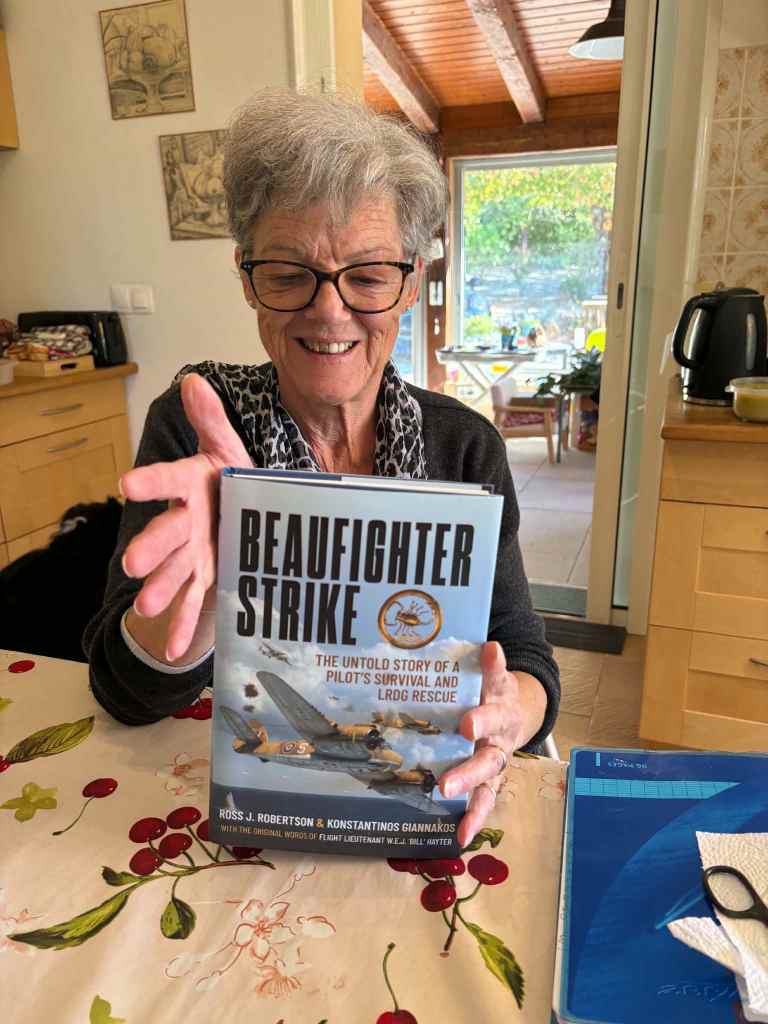
Some 80 years later, Bill Hayter’s lost wartime writings have resurfaced, revealing a remarkable first-hand account that helped inspire Beaufighter Strike published by Pen and Sword. Co-author Ross J. Robertson of ww2stories, explores these extraordinary writings in depth, revealing the man behind the story.
In August 2023, Britain at War magazine, UK, published a cover feature entitled ‘S’ for Sugar, ‘S’ for Survival, recounting the extraordinary story of RAF pilot (then) Flying Officer William ‘Bill’ Hayter and his navigator, Warrant Officer Tom Harper, after their Beaufighter was badly hit during an attack on Naxos harbour.
The story already had all the ingredients of an extraordinary wartime episode: a low level attack on Kriegsmarine shipping, intense anti-aircraft fire, a B-25G gunship shot down, a crippled Beaufighter, a desperate ditching and a struggle for survival on an enemy occupied Greek island.
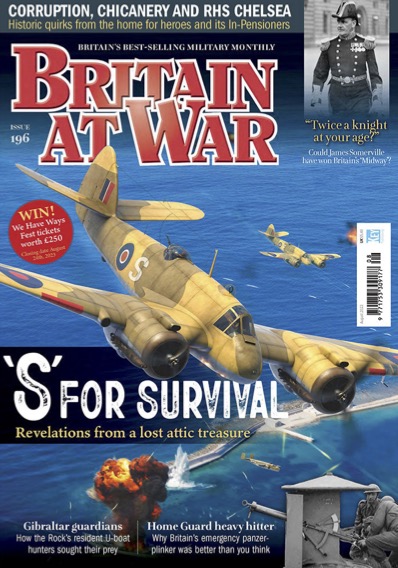
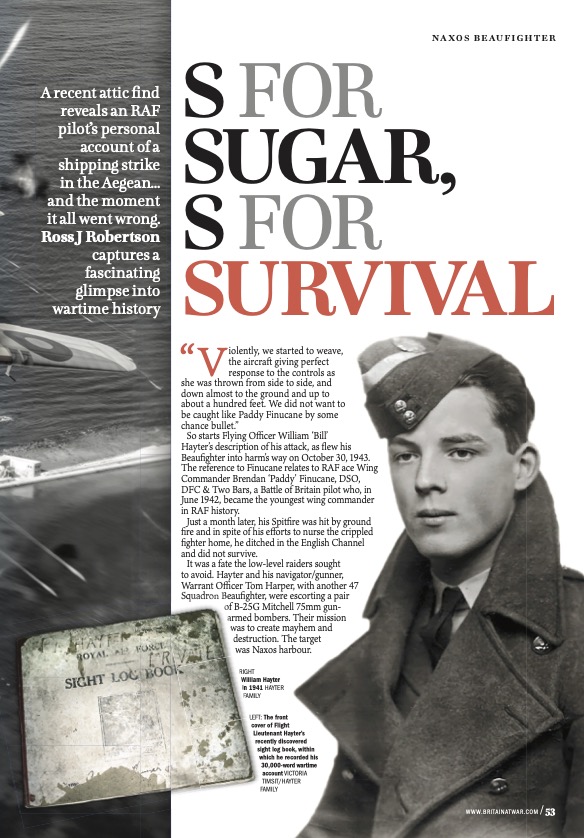
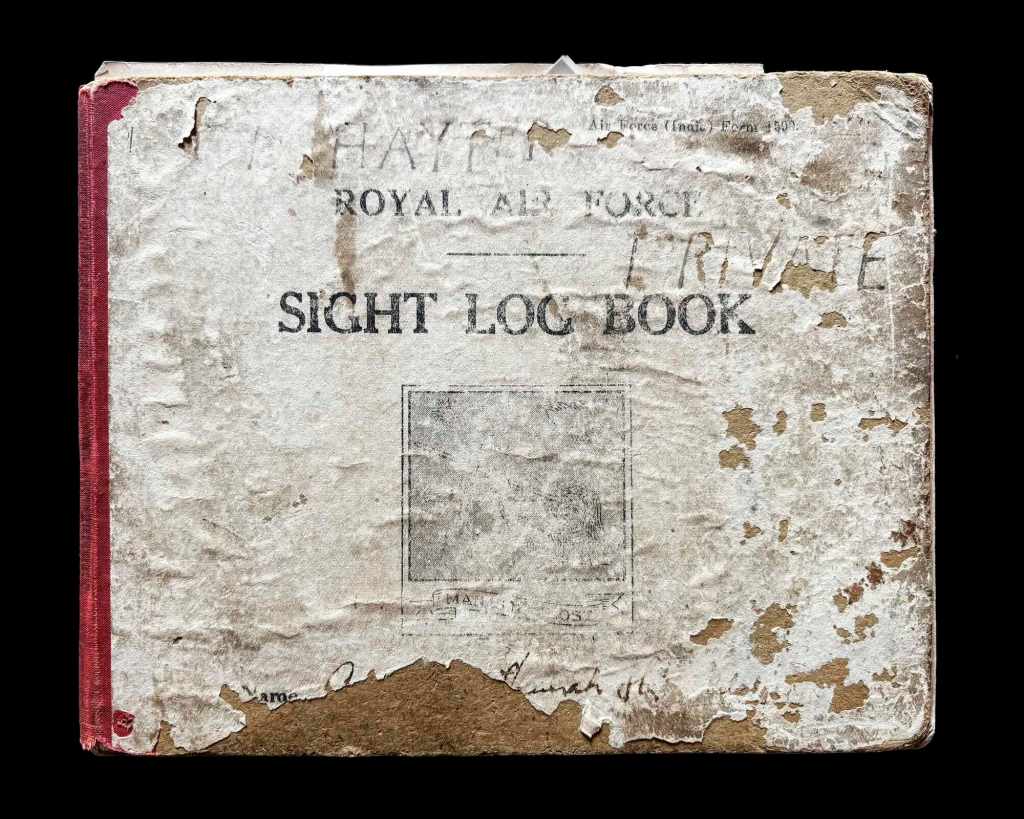
But there was another remarkable element to the story. The principal source for my article was Hayter’s own RAF Sight Log Book, discovered among his family possessions some 80 years after the events. Inside was a lengthy handwritten account of the Naxos operation and its aftermath, running to approximately 30,000 words.
The discovery of the Sight Log Book had already transformed the story. Then another piece of the puzzle emerged.
Hayter’s 1945 Agenda was subsequently found, providing a second body of personal material that complemented the Sight Log Book and added further depth to our understanding of his wartime experiences. As the two records were transcribed and brought together, it became clear that they offered much more than the source material for a magazine feature.
They provided the foundation for a book.
The Naxos attack itself was not entirely unknown. It had been documented in British, American and German archives and had also been written about by historians and authors, including the Long Range Desert Group (LRDG) specialist, Brendan O’Carroll. What had remained hidden was Hayter’s own detailed perspective on the operation and what followed.
That distinction is important. The significance of the discovery is not that it uncovered an unknown wartime action, but that it added an extraordinary first hand voice to an episode already preserved in the historical record.
A dangerous mission over Naxos
At 16:00 on 30 October 1943, Hayter and Harper took part in a combined attack on Kriegsmarine shipping in the harbour of Naxos, a Greek island in the Aegean.
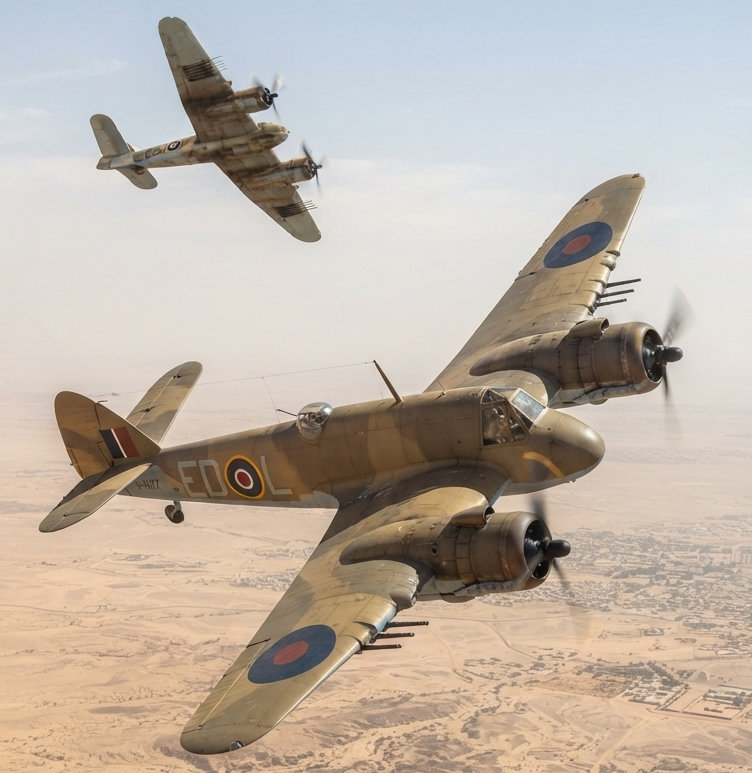
Hayter was flying Bristol Beaufighter JM317, ‘S’ for Sugar, with No. 47 Squadron RAF. Harper, a navigator and rear gunner from No. 603 Squadron, had been assigned to the mission that same day. His was one of two Beaufighters escorting a pair of American B-25G Mitchell gunships equipped with specially modified 75mm M4 tank cannon.
The attacking aircraft approached from the west at extremely low altitude, using the island’s terrain as cover. The attack achieved complete surprise, and it was only when the first three aircraft were already over the harbour that the German defenders managed to bring their anti-aircraft guns into action.
Hayter and Harper were the last of the four aircraft to clear the rise. By then, the attack was already underway and the harbour defences were concentrating their fire on the aircraft ahead of them.
It is at this point that Hayter’s account begins to separate itself from the formal record.
Beyond the official record
Combat Reports from German patrol vessels GA-01 and GA-54, together with Kriegsmarine War Diaries, record the attack from the perspective of the defenders. American records document the loss of one of the B-25Gs, while RAF documentation establishes the loss of Hayter’s Beaufighter and the eventual survival of its crew.
These records are indispensable, but they only tell us what happened.
Hayter tells us what it was like.
He describes the approach, the attack and the sudden realisation that his aircraft had been hit. He records the damage, the loss of fuel and the deterioration of the port engine, allowing the reader to follow the pilot’s thoughts and growing awareness that the stricken aircraft had only moments left.
That immediacy is one of the great strengths of the Sight Log Book. Hayter was not writing as a historian reconstructing the event decades later. He was recording his own experience, preserving details of what he saw and understood as the situation developed.
The result is an account that brings the brief, impersonal official record to life, adding the detail, atmosphere and human experience that operational reports simply cannot convey.
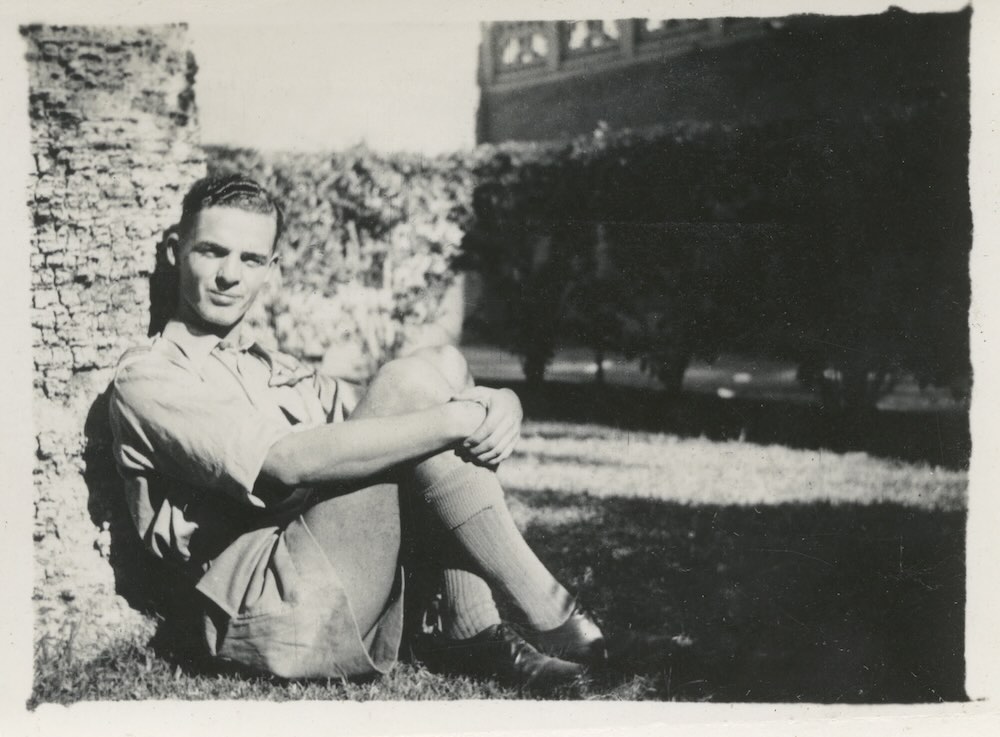
Source: Hayter family archives.
The quality of Hayter’s writing
The surviving records are remarkable not only for what they tell us, but for the way Hayter chose to record his experiences.
A wartime pilot’s personal record might be expected to consist of brief notes, technical observations or a straightforward recollection of events. Hayter’s writing is something quite different. It is detailed, observant and often unexpectedly lyrical, moving well beyond the mechanics of flying and fighting to reveal the man behind the uniform.
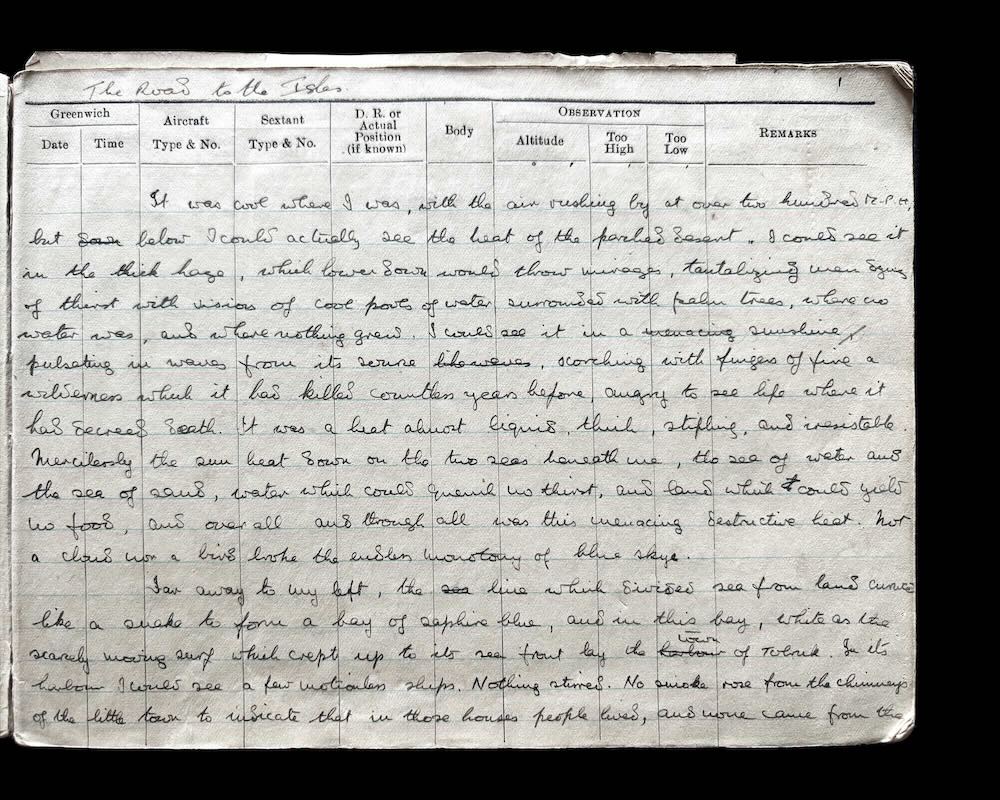
With the attack on Naxos harbour only minutes away, Hayter became absorbed by the landscape below. Looking towards Santorini, he described the island as ‘perfectly white’, its monastery ‘in complete isolation far above us’. The Aegean, he reflected, seemed to belong to another age, ‘a magic age of fantasy half familiar and half mystery’.
Source: Hayter family archives.
His thoughts then turned to the ancient world. ‘Apollo’s temple still crowns the isle of Delos,’ he wrote, while the marble of Paros seemed to await ‘the master touch of a new Praxiteles’.
‘So deep was the feeling,’ he recalled, ‘that it took precedence in my mind over the attack.’
This is not the voice of a man merely recording a military sortie. Hayter writes about places, people, history and his own reactions to what he encounters. Elsewhere, he describes life stationed in the desert, the anticipation of waiting for an operation to be given the green light, and the ways his comrades reacted to the unimaginable dangers they had to face.
The writings do not amount simply to a dramatic account of one combat mission, however extraordinary that mission was. They provide glimpses of a young man experiencing an entirely new world, observing it closely and trying to make sense of it as he moved through it.
There is no sense that Hayter was attempting to write a book, or even imagining a future reader. He was simply putting his experiences into words. Yet the result is a substantial and often compelling piece of personal writing, in which the action is only one part of a much larger story.
It is this breadth, as much as the drama of the events on Naxos itself, that makes his surviving records so valuable.
The 1945 Agenda
The later discovery of Hayter’s 1945 Agenda added another dimension to the material. Although much of it repeated passages from the Sight Log Book almost verbatim, it also contained additional observations and details that complemented it and broadened the picture of events.
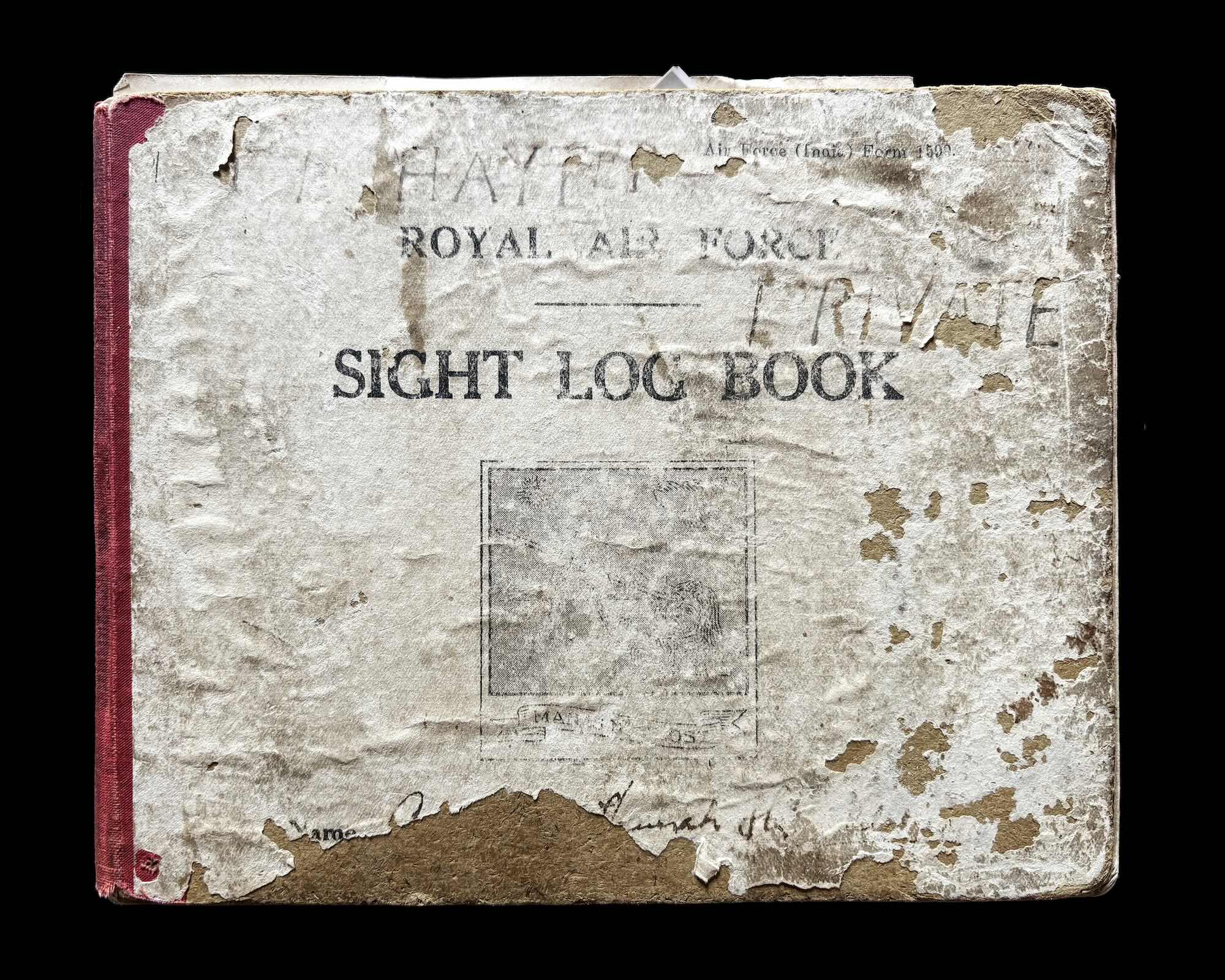
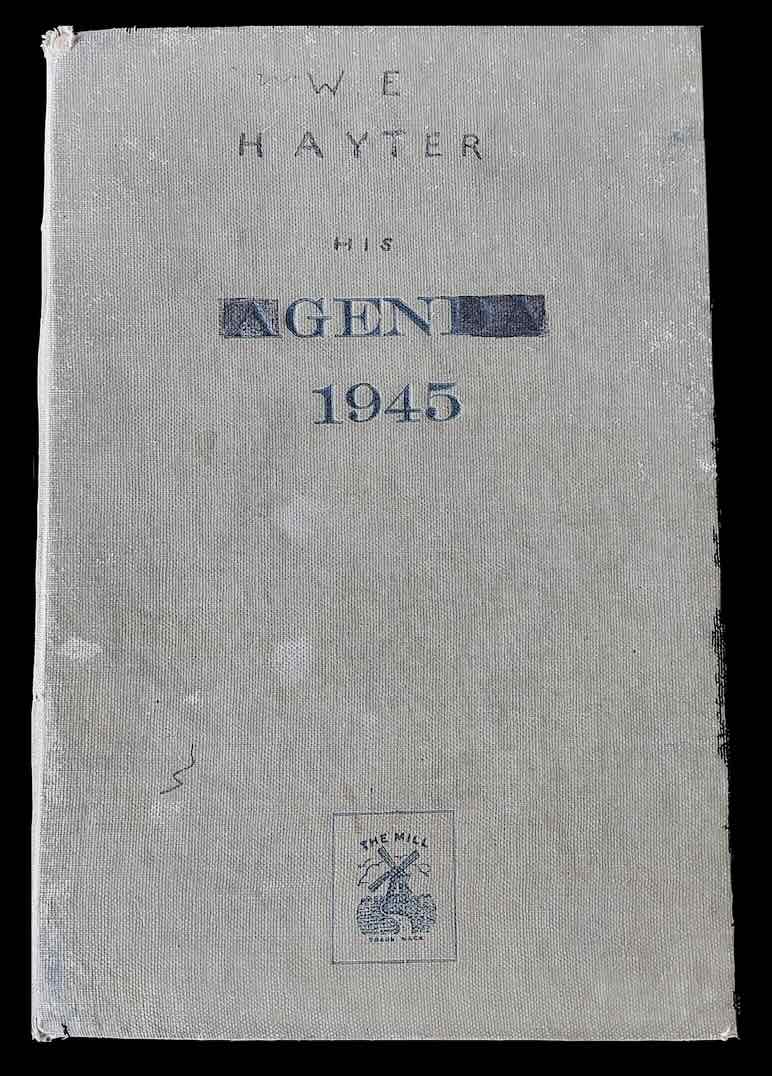
Swipe between the two original covers.
Source: Hayter Family Archives.
Why Hayter recorded the story twice is impossible to know. Perhaps he had misplaced the Sight Log Book and felt compelled to recreate it. Perhaps he simply wanted to preserve an account that remained important to him. It is even possible that putting his experiences into words provided some form of release. These are only possibilities, but the existence of two substantial accounts is itself striking.
What is not conjecture is that Hayter went to the trouble of recording the story twice. Whatever prompted him to do so, he left behind a remarkably detailed body of personal writing.
Once both records had been transcribed, they could be read together, revealing material considerably richer than the Sight Log Book alone. The additional material in the Agenda broadened the story and provided a deeper insight into Hayter’s experience and his relationships with his comrades in No. 47 Squadron. They were all young men, living in harsh conditions far from home and carrying out their wartime obligations under the ever-present spectre of death, a reality that could weigh heavily enough to affect their ability to fight.
For his family, the discovery was extraordinary. Hayter died in 1972, aged only 49, and had rarely spoken about the war. They had known that their father had been an RAF pilot like his father before him; they had not known that he had left behind such an extensive and revealing account.
The research
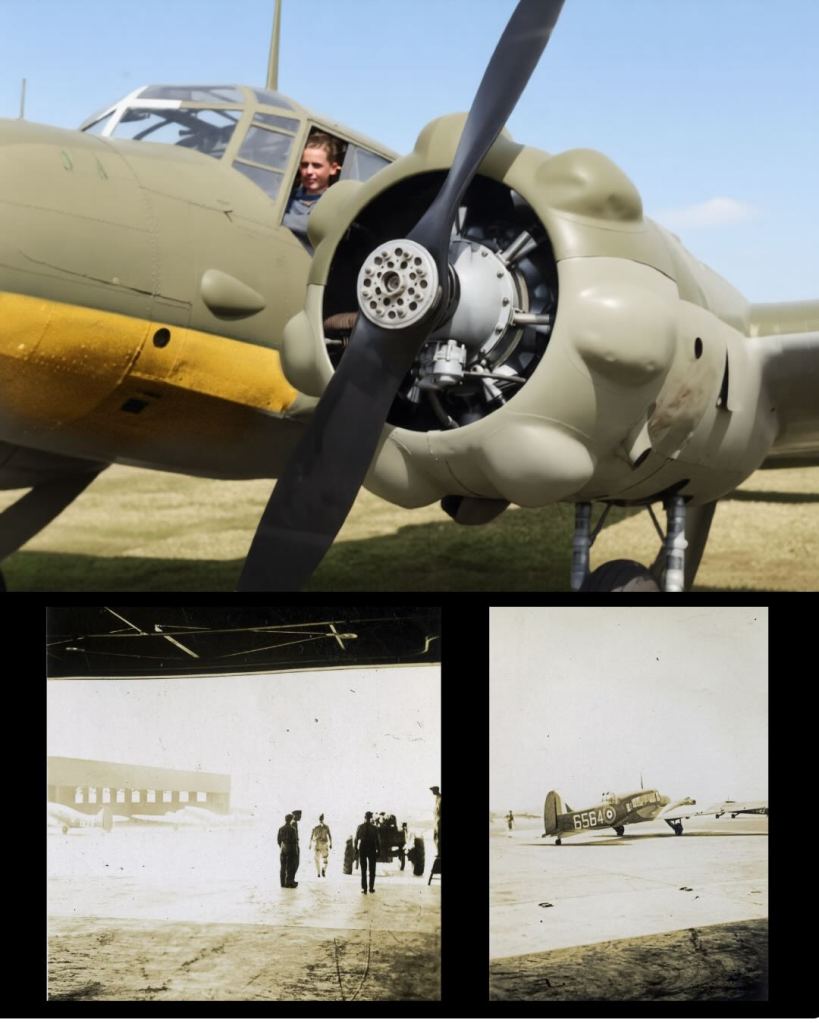
The discovery of the two records opened up a much wider research project. Working with my co-author, military historian and retired Hellenic Army officer Konstantinos Giannakos, we began to follow the threads that emerged from Hayter’s account, using archival sources to reconstruct his career and place his experiences at Naxos within the wider context of the war.
Source: Patricia Staunton.
The research took us both backwards and forwards from the events of 30 October 1943. We traced Hayter’s path through his earlier training and operational service, and followed what became of him afterwards. We also investigated the background of Tom Harper, whose own experiences proved an important part of understanding the partnership between pilot and navigator.
Beyond the two airmen, the research led into the little-known wartime history of Naxos itself. We explored the Greek resistance networks that helped Hayter and Harper after the ditching and the dangerous role played by local people, particularly George Sideris, who sheltered and assisted them. We also followed the involvement of the LRDG, whose covert operations in the Aegean eventually became part of the chain of events that brought the two airmen to safety.
The result was a project that extended far beyond a single aircraft and a single operation. Hayter’s writings provided the starting point, but the archives and personal stories surrounding them allowed us to reconstruct the wider human story in which his experience belonged.
From article to book
It was the combination of the two records that changed the scale of the project. The Sight Log Book had provided the foundation for the 2023 Britain at War feature; the discovery of the Agenda gave fresh impetus to the idea of creating a book.
What began with an extraordinary wartime account gradually became a project that demanded to be explored more fully. The more we learned, the more apparent it became that the material deserved a life beyond the pages of a magazine.
That was the point at which Beaufighter Strike truly began to take shape.
It has been a long journey from the original article to the finished book, but the purpose has remained simple: to preserve Hayter’s remarkable account and bring it to a wider audience.
More than 80 years later, Bill Hayter finally gets to tell his story in full, in the vivid and immediate voice of the man who was actually there.

Beaufighter Strike is available from Amazon and all good booksellers.
Check out the new ww2stories.org YouTube channel WW2 Stories Media by clicking here (opens a new tab).
Image Credits
Beaufighter Strike book cover: Artwork by Antonis Karidis; design by Pen & Sword Books.
Article cover featuring the RAF Sight Log Book: Victoria Timsit.
We value your opinion!
Your feedback is important to us. If you enjoyed this article and would like to see similar content, show your appreciation by clicking the ‘Claps’ icon below. Also, ensure you stay up-to-date with our latest articles by subscribing to our Newsletter. You’ll receive new posts directly to your email inbox. Thank you for your support!
‘History has to be shared to be appreciated’
It’s FREE! Subscribe to our Mailing List. We’ll keep you in the loop.
Link to ww2stories.org home page: Return